
ECI’s Internal Records of 2024 Elections: In 51 Seats of Two States and a UT, Votes Cast Do Not Match Votes Counted

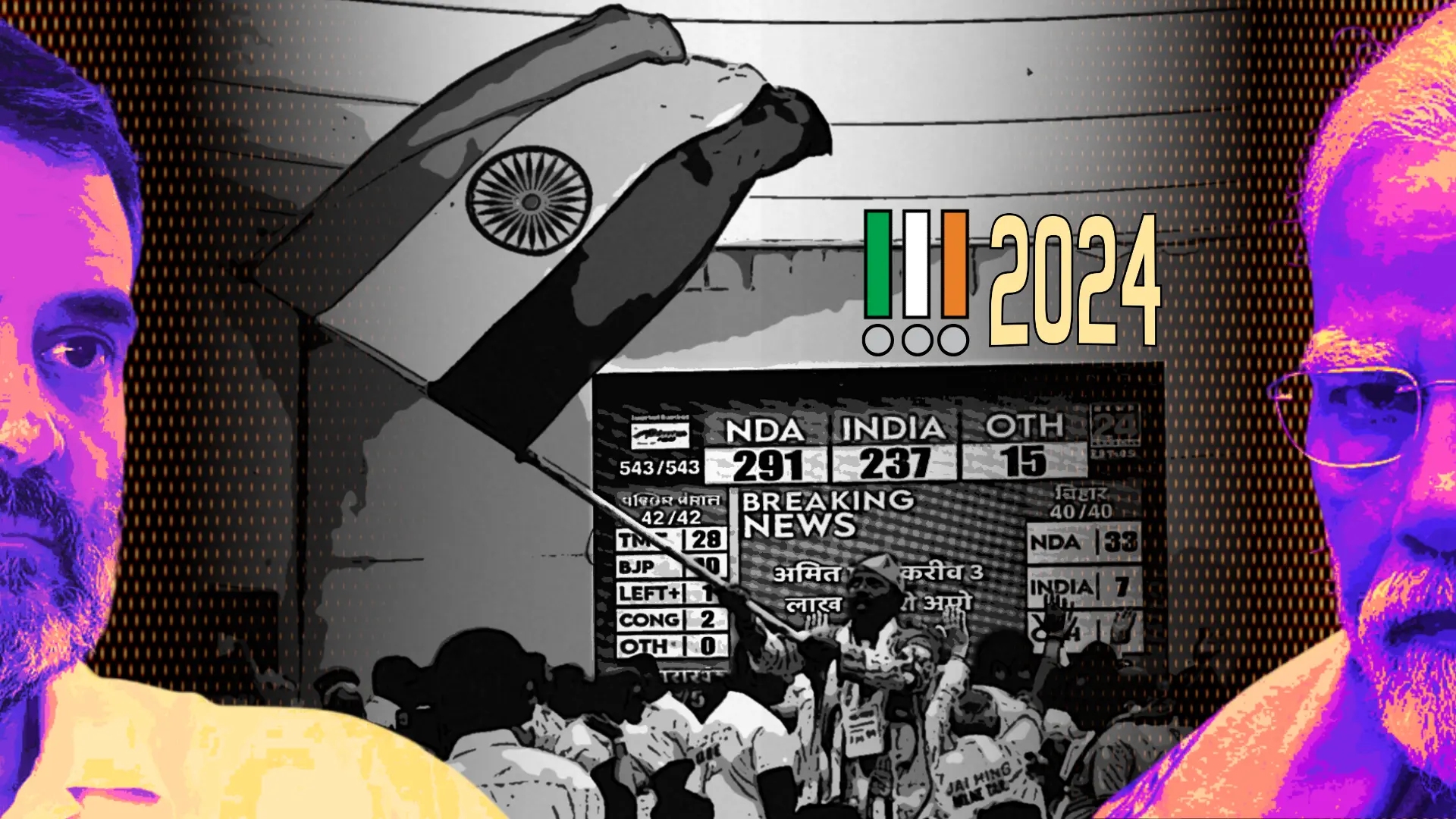


New Delhi: On February 7, 2025, opposition party leaders held a press conference levelling serious allegations on how the 2024 Maharashtra assembly election was conducted. Four months later, Congress alleged that the Bharatiya Janata Party (BJP) “rigged” the elections in 85 constituencies. In some of these, it claimed, lakhs of votes were cast even after the poll ended.
The Election Commission of India (ECI) dismissed the allegations. It pointed to its earlier 66-page response to the opposition parties, in which the commission explained its strict process of scrutinising electoral records to detect “electoral malpractice”.
The ECI declares results by counting the votes polled on electronic voting machines (EVMs). It also internally keeps a separate record of the number of voters who walk into a polling booth to cast their vote. Legally and logically, this number must match the number of votes counted on the EVMs.
Where the two numbers do not match, it is seen as a red flag that could point to voter suppression or bogus voting.
Ideally, the commission should have revealed these records to dispel the allegations of rigging. But it never makes them public.
This is the first time anyone outside the ECI has accessed and reviewed this data from the 2024 elections at such scale, covering 467 assembly and 63 parliamentary constituencies in Maharashtra, Haryana and Jammu & Kashmir. This story is the first part of the Election Audit series by The Reporters’ Collective.
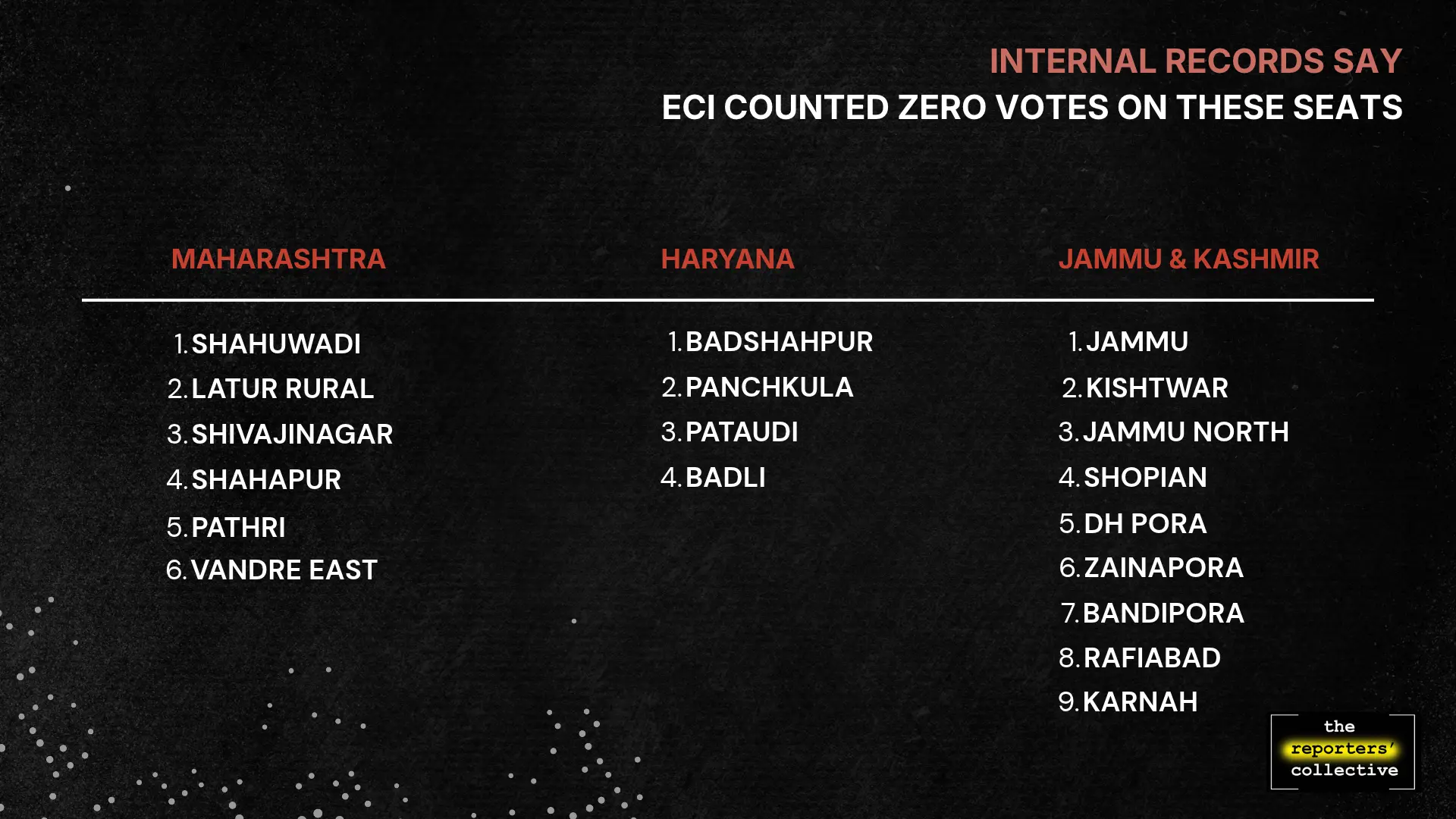
We found that in 51 assembly and parliamentary seats, the internal records suggest that the ECI had no way to verify possible rigging. In 19 of these, the ECI had failed to record the number of voters who went into the booths to vote. ECI officials had entered ‘0’ or ‘nil’ where the count was supposed to be recorded.
Ten of these seats are in Maharashtra and Haryana, of which seven were won by either BJP or BJP-led National Democratic Alliance.
A ‘0’ marked against the number of voter walk-ins can mean one of two things: either no one voted in these seats or the officials faked the records. Either way, the ECI declares the results even before these records are scrutinised.
We also found that in 32 electoral contests across the two states and one Union Territory (UT), the number of votes polled did not match the number of votes counted.
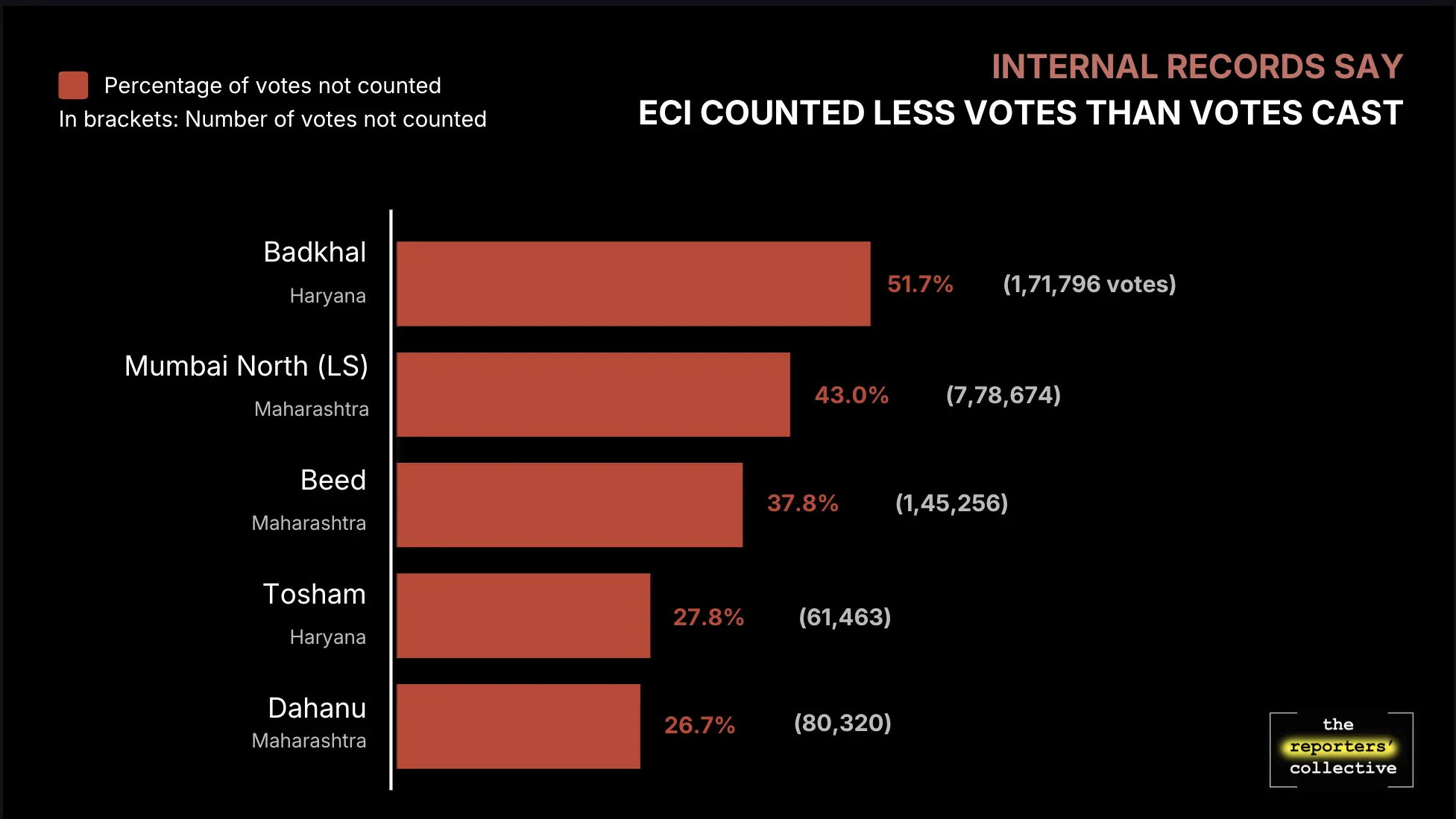
One of the biggest such discrepancies is in Haryana’s Badkhal assembly constituency, which went to the polls in October 2024. The ECI’s internal records show 3.32 lakh votes were polled. But the commission reported that it counted only 1.60 lakh votes on the EVMs.
Congress’ Vijay Pratap Singh, who narrowly lost the Badkhal assembly seat to BJP’s Dhanesh Adlakha by 6,181 votes, went to the Punjab and Haryana High Court alleging “vote chori” (vote theft). He sought copies of all election records and CCTV footage of polling day.
It was not just Singh. Separate cases were filed in Maharashtra, Haryana and Delhi seeking election records and an investigation into poll rigging. Earlier in May 2024, in a hearing in the Supreme Court, the ECI argued that these records, if shared publicly, could lead to “mischief and vitiation of [the] entire electoral space.”
On December 10, 2024, the Punjab and Haryana High Court directed the ECI to supply these records and the footage. Ten days later, the Narendra Modi-led BJP government went a step further and amended the election rules to bar citizens from accessing this data.
Including Badkhal, in 12 of the 32 seats, the number of votes counted on the EVMs was less than the number of votes cast by citizens.
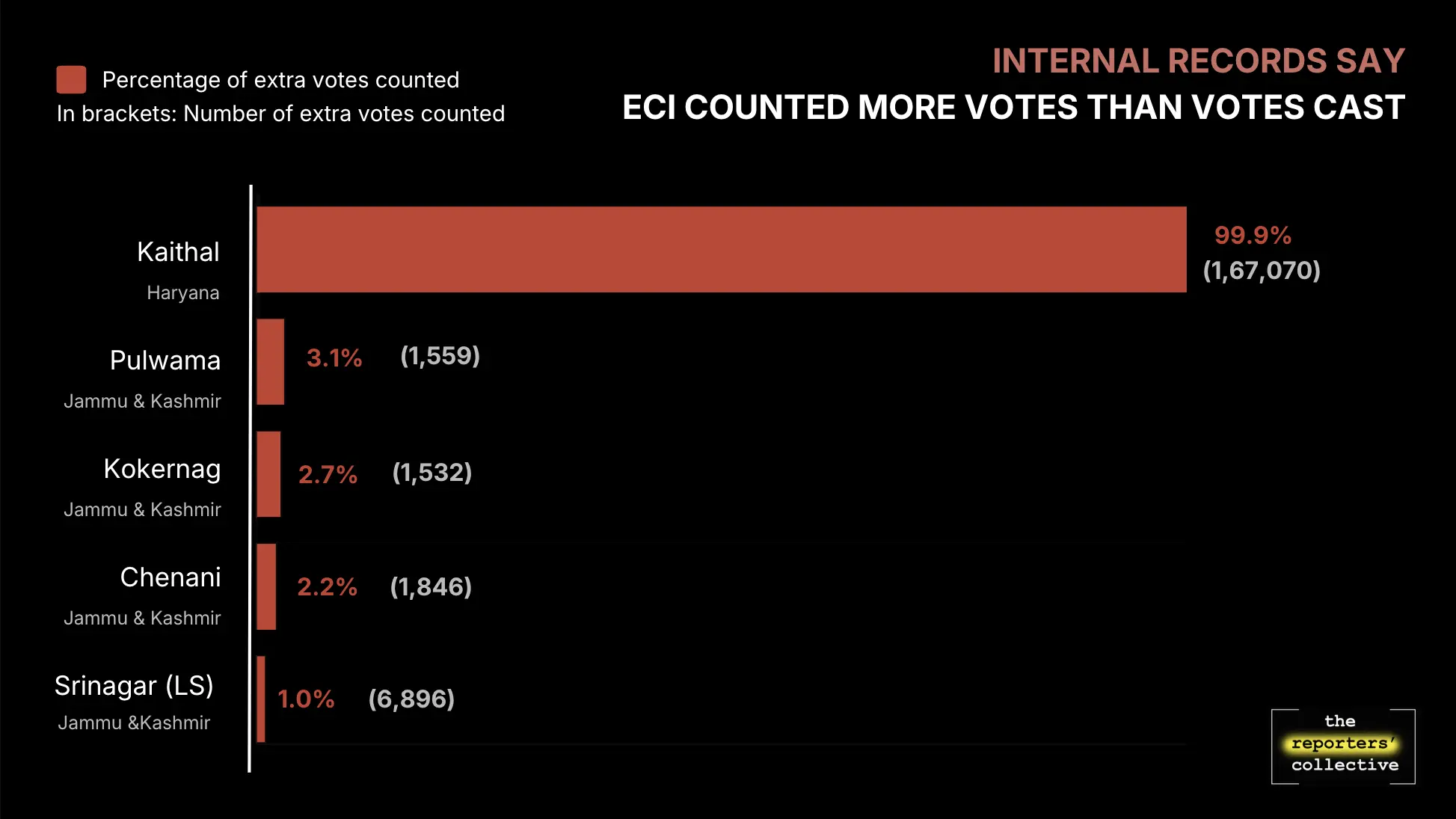
In the remaining 20 constituencies, the ECI internal records show the votes cast by citizens were fewer than the votes counted.
Either scenario points to possible voter suppression or bogus voting.
When the two counts do not match, going by the law, the ECI is required to treat it as a case of “electoral malpractice” that must be investigated.
In rare cases, a minor difference can exist, such as when someone’s vote is invalidated or a person enters the booth but decides not to vote.
The Collective accessed these internal election reports filed by the returning officers of 530 constituencies. We digitised, rechecked and evaluated a total of 4,212 physical records for this investigation. We hunted for records of all 531 seats but failed to find the report from one constituency, Devsar in Jammu and Kashmir.
The Quint’s Poonam Agarwal reported on a similar mismatch in the two sets of data from 373 seats in the 2019 Lok Sabha elections. However, the story relied on voter turnout data and vote count published on the ECI’s website.
The returning officer in charge of each constituency sends these reports to the ECI, within a fortnight of the elections being over. They aggregate all the electoral data collected at the booth-level in the constituency.
At each booth, separate polling officials are tasked with recording the two counts, one of the voters casting their votes and the other of the votes counted. These counts are the ECI’s primary record of the sanctity of elections in a constituency. Or the lack of it.
Until the 2019 general elections, the ECI used to put out booth-level polling data. It has since stopped making this crucial data public.
If the commission did, citizens and political parties, and not just its own officials in the constituencies, state offices and New Delhi headquarters, could be alerted to any case of possible rigging.
If one were to give the ECI the benefit of the doubt, the gross mismatch between the two counts, at the very least, reveals the commission’s inability to certify that bogus voting did not take place on 51 of the 530 parliamentary and assembly seats in the two states and one UT that went to the polls in 2024.
Imagine a bank, the custodian of people’s money, being unable to keep count of who deposited and who withdrew money. This mismatch we found in the election records is similar, with the ECI as the custodian of citizens’ voting rights.
The ECI faces accusations from opposition parties of allowing election rigging and the alteration of voter rolls during the Special Intensive Revision. Against this backdrop, the commission’s internal data, which we reviewed, shows it has failed to carry out its constitutional mandate of supervising and auditing the polling process meticulously and with transparency.
ECI’s Response: We Don’t know. Give Our Data To Us In Private.
We sent detailed questions to the ECI. They treated our journalistic queries as a complaint and sent it to their Public Grievance Redressal System.
They turned around and asked us to provide them their own data and said it too would be kept confidential. They wrote that the information would be kept “safe within the department and will not be shared with anyone.” You can read the ECI’s full response here.
The Reporters’ Collective will be making all the raw data and original ECI records public with the concluding part of this Election Audit series. We will not be submitting a ‘grievance’. Nor will we communicate with ECI in secret. We are making our questions to them public here.
{{cta-block}}
Unreliable ECI Supervision
Like Badkhal in Haryana, several other seats show major mismatches. The biggest such discrepancy is in Maharashtra’s Mumbai North parliamentary constituency, which sent Piyush Goyal to the Lok Sabha for the first time. Goyal defeated Congress’ Bhushan Patil by a huge margin.
According to the ECI’s internal records, total votes polled were 18.11 lakh in the constituency, but according to the result declared by the Commission, 10.33 lakh votes were cast in the constituency. This means, a whopping 7.78 lakh votes, 42.8 percent of the votes polled, were not counted on the EVMs.
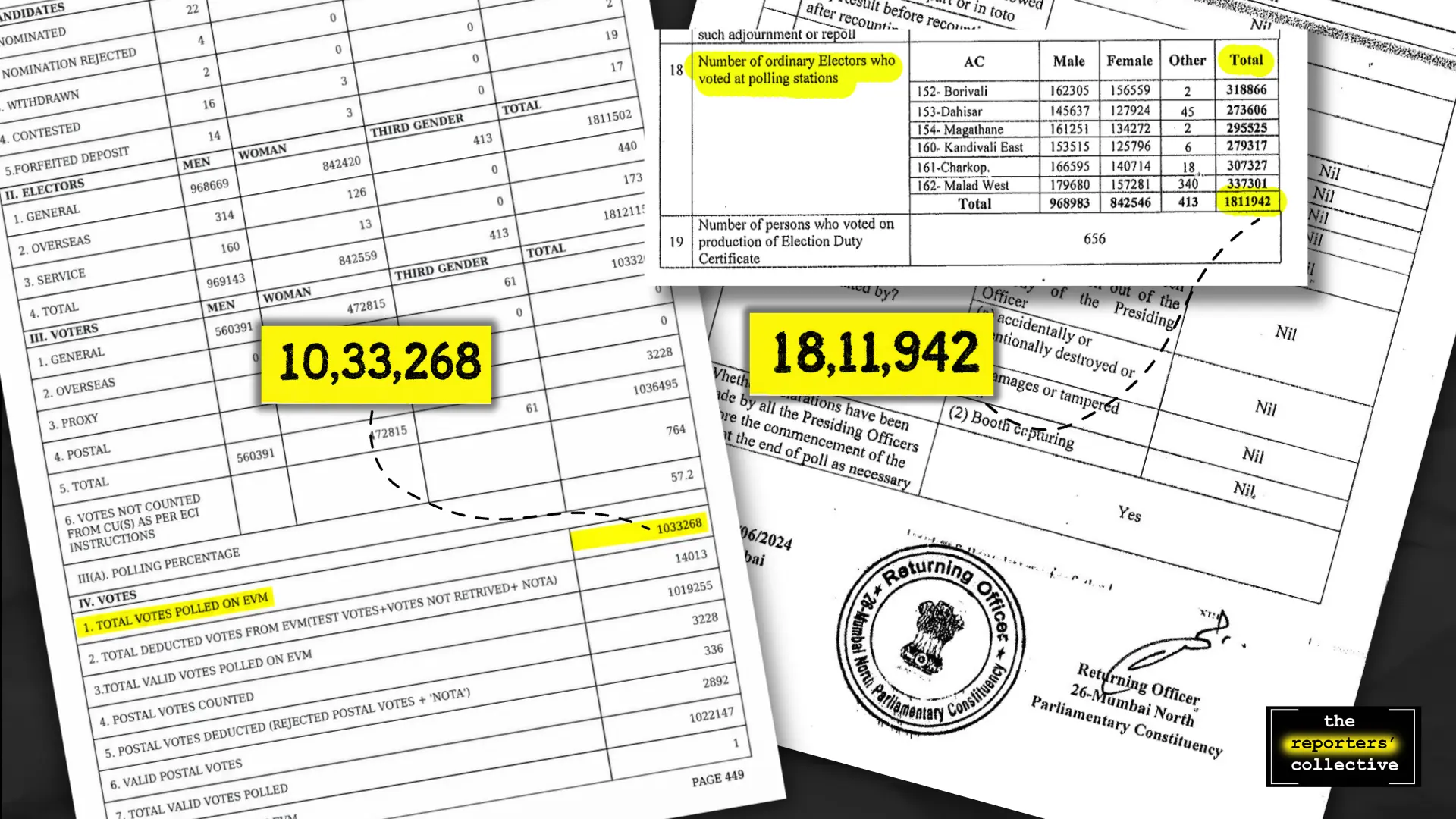
In both Mumbai North and Badkhal, ECI officials had recorded the total number of registered voters in the constituency as the number of votes polled. Going by the internal records, this would mean that 100% of the voters in these constituencies turned up to vote. But the official turnout declared by the ECI was much lower – 57 percent in Mumbai North and 48 percent in Badkhal.
Four other seats in the two states show similar records, where election officials entered the total number of registered voters as the number of votes polled.
While these cases may be dismissed as clerical errors, the discrepancies would hide any trace of rigging in these seats, if it did happen. This in itself defeats the purpose of maintaining and tallying these records.
The unreliability of the ECI’s records, supervision and audit of elections becomes clearer in several other cases. Take Haryana’s Kaithal assembly constituency where Congress’ Aditya Surjewala defeated BJP’s Leela Ram by a margin of 8,124 votes.
The ECI’s internal audit record says only 215 citizens voted across the entire constituency. Yet ECI officials counted 1,67,285 votes on the EVMs in Kaithal. The mismatch between the two counts is hard to believe.
Similarly, in Jammu & Kashmir’s Srinagar parliamentary seat, 6,72,942 votes were counted on the EVMs. But the internal records show only 6,66,046 votes were polled. The ECI counted 6,896 extra votes here. Aga Syed Ruhullah Mehdi had then won the seat for National Conference.
In Haryana, the ECI responded to Congress’ demand for repolls in 20 seats after the 2024 assembly elections with a 1,600-page response. “Each step in the electoral process in Haryana was flawless and executed under the watch of Congress candidates or agents,” the ECI countered.
After the Maharashtra assembly elections in 2024, the Nationalist Congress Party-Sharadchandra Pawar, or NCP(SP), submitted videos to the ECI as evidence of its allegations of voter suppression and bogus voting in two seats. It sought a re-poll. But the returning officers rejected its request.
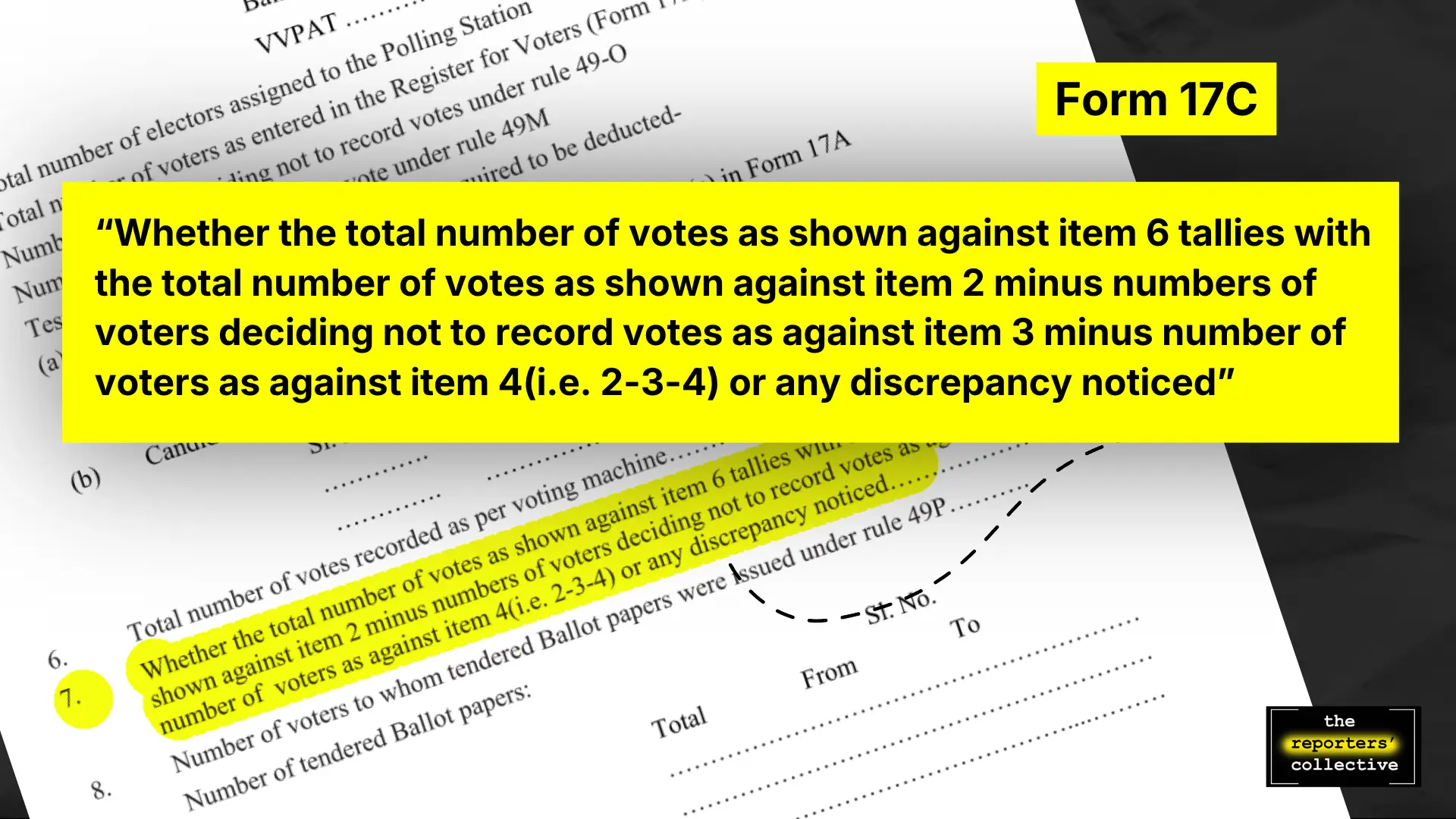
Since these reports by the returning officers are prepared at the constituency level it is difficult to identify specific booths where irregularities were recorded. That is possible only if one has access to Form 17C, which the presiding officer of each polling booth prepares. It records the number of voters who walked in to vote and the total votes polled on the EVM at that booth.
The internal records we accessed is a sheet of aggregated data from all booths prepared by the returning officer and filed with the ECI mandatorily.
In 2024, when the transparency non-profit Association for Democratic Reforms approached the Supreme Court, seeking access to all Form 17C records of the 2024 Lok Sabha elections, the ECI denied the request. It said there was “no legal mandate to provide Form 17C to any person other than the candidate or his agent”.
Soon after, the Union government amended the Conduct of Election Rules, 1961, to deny public access to these records. The amendment was notified at 10.23 pm on December 20, 2024.
How and Why the ECI Keeps a Voter Trail
Most of us know how polling is conducted at our local booths during elections. A citizen walks in, has her voter ID card checked, gets marked with ink and casts her vote on an EVM with a beep.
All of these steps are meticulously recorded by polling officials. This is needed as a check on any possible wrongdoing, such as when a voter walks in but is not allowed to vote, or a voter enters and votes more than once on the same EVM. Rigging of polls, in common parlance.
To counter such electoral malpractices, the ECI mandates maintaining two separate accounts of polling at the booth. At the end of the poll, both should tally.
The Conduct of Election Rules mandate keeping an account of every voter after they enter the polling booth.
This is recorded in another document, Form 17A, or the Register of Voters.
A polling officer first matches a voter’s identity with the voter roll, and only then marks their left index finger with indelible ink.
Another officer then records the voter’s details in the Register of Voters in serial order. The same officer then prepares a slip, with the voter’s serial number and hands it to the voter.
A third officer, who is in charge of the EVM, collects this slip and allows the voter to cast a vote.
ECI rules say that it is “absolutely essential” that voters cast their votes on the EVM in exactly the same order in which their names were entered in the Register of Voters.
After polling is over, the presiding officer presses the “Close” button on the EVM’s control unit. The unit then displays the total number of votes polled.
Legally, the total voter count in the Register of Voters and the number of votes polled on the EVM should match.
Except in two cases. When a voter walks into a booth but refuses to vote (Rule 49O), or when the presiding officer prevents a voter from voting for breaching the secrecy of the ballot (Rule 49M). Both numbers are usually minuscule at the constituency level.
At the close of the poll, the presiding officer tallies both records in Part 1 of Form 17C, also called the Account of Votes Recorded.
The day after polling, the returning officer scrutinises the Form 17C records of their constituency to detect what the ECI calls “concealed electoral malpractice”.
If the officer finds any red flag in the election records, they recommend a re-poll to the ECI. No repoll was conducted on any of the 51 seats where our analysis found mismatches.
THE FOLKS
BEHIND THE Story
Reporter


Reporter

Managing Editor


Founder

Editor

Design Editor

Reporter
Support independent Journalism
The Reporters’ Collective collaboratively produces investigative journalism. In many languages and mediums. We report truthfully and bring out facts that the powerful prefer to keep hidden from citizens.
Besides courage and integrity, such reporting requires resources. We need your support. We need citizens to donate to keep us going and keep our work free to read for those who can’t afford to pay. Your donations will help us remain independent and work without fear.
You can change how much you give or cancel your contributions at any time.
By proceeding, you are agreeing to our Terms and Conditions. To find out what personal data we collect and how we use it, please visit our Privacy Policy.


