

The story was reported as part of the 3rd TRC Investigative Reporting Fellowship.
Leh: At more than 14,000 feet above sea level, in the seemingly endless Pang plains in eastern Ladakh, indigenous Changpa nomads move their livestock through these pastures, as they have for generations, guiding yaks, sheep and goats between the seasonal grazing grounds. These plains sustain families, villages and one of the world’s finest pashmina economies. But the animals and nomads now have a new neighbour as the land is diverted for power companies.
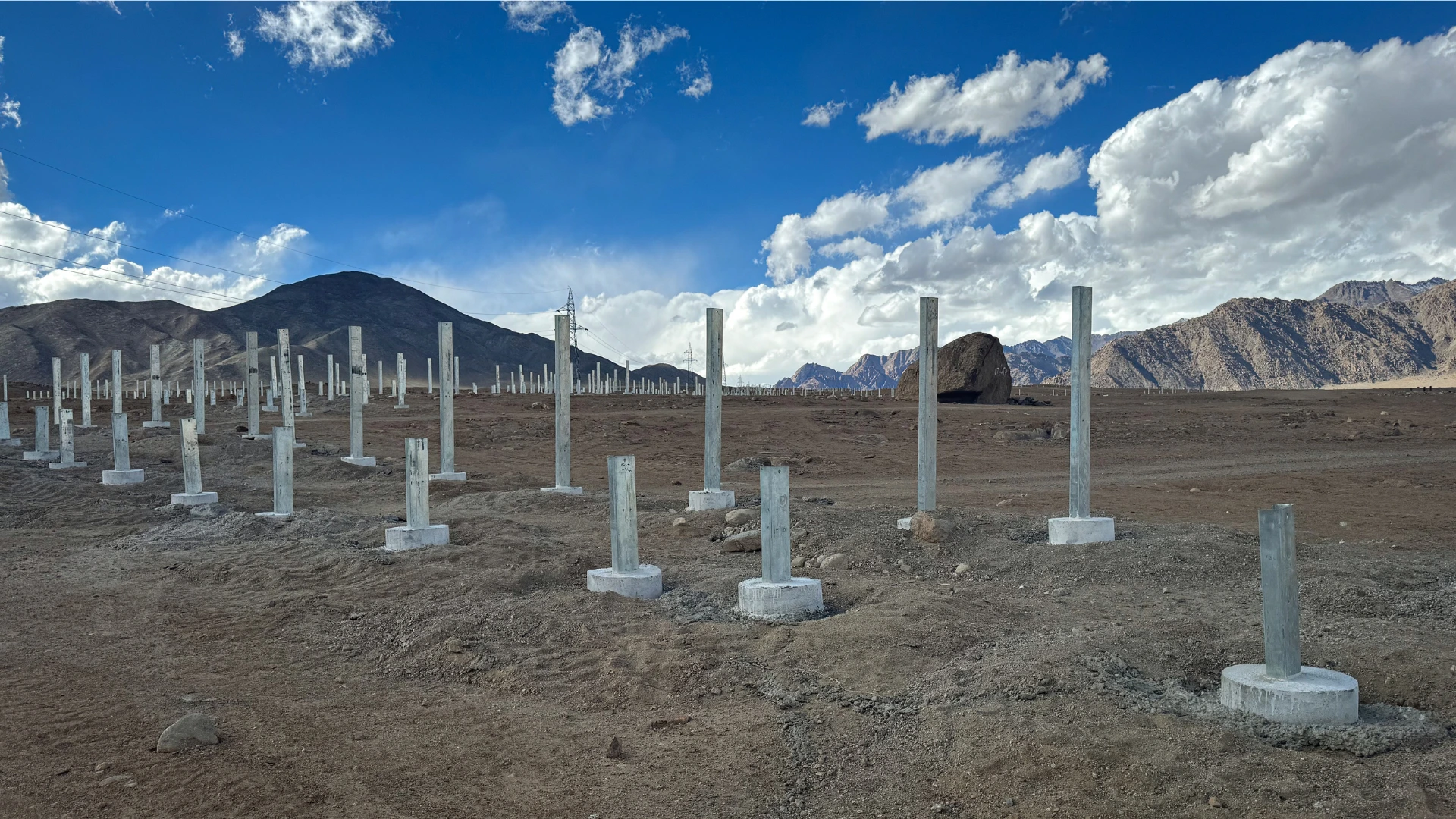
The 13 gigawatt (GW) ultra mega renewable energy (solar) project, which will be built over 48,250 acres in Pang is part of the Union government’s ambitious target of generating 35 GW of solar energy from the Himalayan highlands. Authorities claim solar parks, transmission corridors and associated infrastructure could transform the region into one of India’s largest clean-energy hubs, but locals argue that the political developments in the region have created uncertainty around such infrastructure projects.
The conflict emerging from this vision has little to do with the opposition to renewable energy and revolves more around a question that remains unsettled years after Ladakh’s separation from Jammu and Kashmir: Who controls Ladakh’s land?
That question sparks protests, constitutional demands, disputes over grazing rights, calls for statehood and growing demands for greater democratic safeguards. It has also resulted in the drafting of a series of documents, letters and official exchanges reviewed by The Reporters’ Collective that reveal mounting concern among local communities over how land for mega projects is being identified, allocated and transferred.
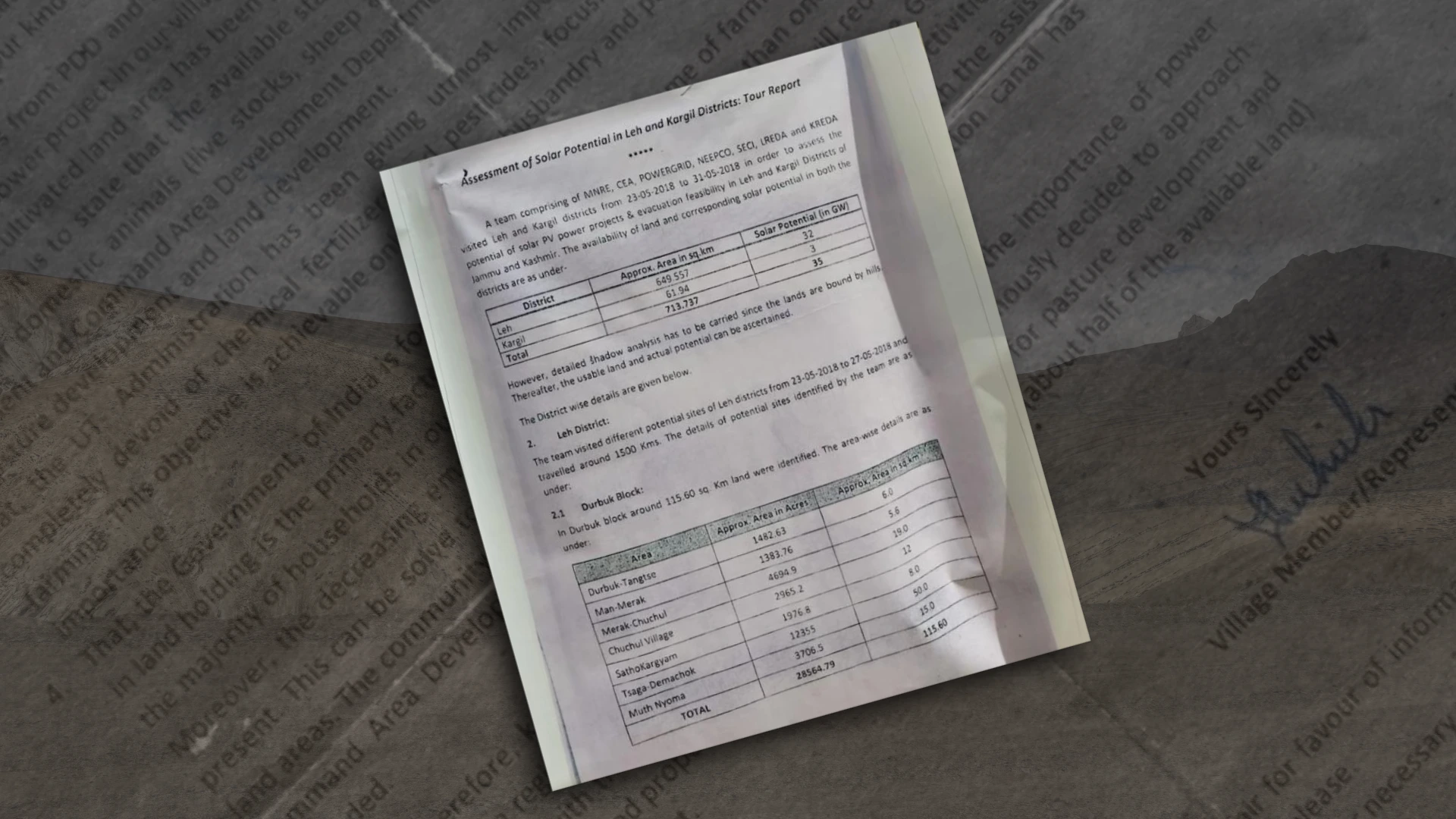
The debate gained fresh significance in April 2026 when the Union government confirmed that the Solar Energy Corporation of India (SECI) had completed an Environmental and Social Impact Assessment report for a proposed 13 GW renewable energy project in Ladakh.
The same month, the Union Minister of State for New and Renewable Energy Shripad Yesso Naik told parliament that the assessment had been shared with the Union Territory administration of Ladakh and the Ladakh Autonomous Hill Development Council (LAHDC), the district council, for review.
The public, however, cannot access the report. Naik said that the studies formed part of “internal project processes and that public dissemination remained subject to project confidentiality, competitive bidding requirements and data sensitivity.”
The assessment became symbolic of a larger problem for many Ladakhis.
Communities whose grazing lands fall within these project zones continue seeking information about plans that could alter their life and livelihoods while the elected representatives say they received only parts of the assessment process. Officials within different institutions provide varying accounts of who received which documents and when.
The details of the project, whose social and economic consequences are immense for the indigenous affected communities, remain out of bounds and difficult for them to independently evaluate.
{{cta-block}}
Unanswered Queries
Documents reviewed by The Collective show villagers from multiple locations writing repeatedly to authorities regarding land allocation, grazing rights and consultation procedures linked to renewable energy projects. Their letters describe a recurring concern: major decisions appear to be moving ahead while key questions regarding ownership, authority and consent remain unresolved.
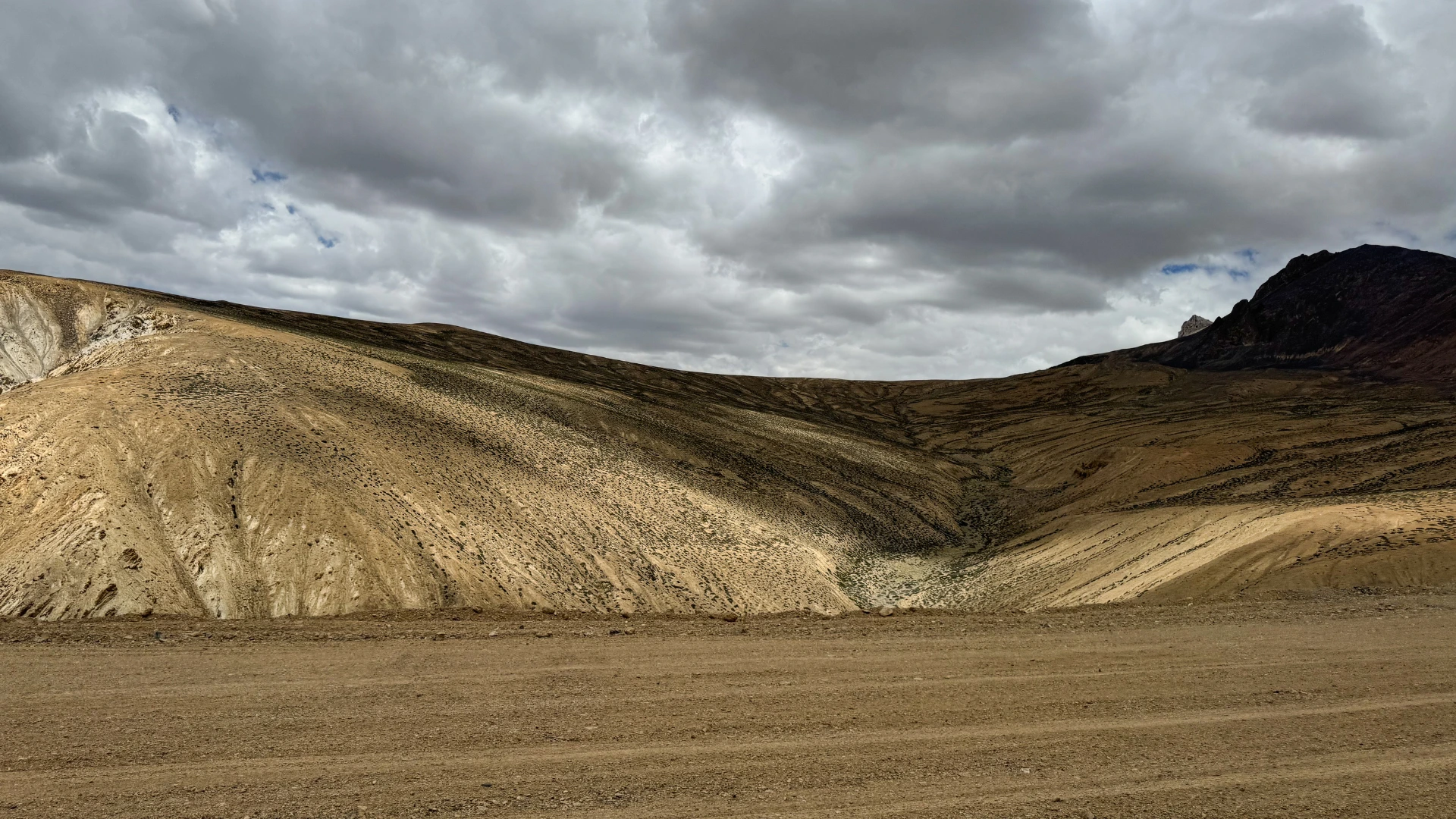
In Pang, indigenous residents of Samad-Rokchan village, around 500 families, wrote to elected representatives in December 2024 regarding the proposed 13 GW project. Their list of 21 demands included agrivoltaic systems that would allow vegetation growth beneath solar installations, revenue-sharing mechanisms for local welfare and greater participation in decisions affecting community land.
Tsewang Rigzin, a member of the Samad-Rokchan Land Committee, states that four to five major grazing areas covering roughly 85 square kilometers (sq km) will suffer the impact. “The issue is that for national importance projects, we have been asked to compromise as if we don’t have civil rights,” Rigzin told The Collective. Additional Divisional Commissioner of Leh had also written to Ladakh’s chief secretary acknowledging that villagers from Samad-Rokchan had submitted formal representations regarding this renewable project.
Following this, the UT administration and SECI proposed a pilot project to test whether grass could grow beneath raised photovoltaic panels. When the Ladakh Renewable Energy Development Agency received approval for a 500 kilowatt pilot project at Pang, the University of Ladakh began soil testing to measure moisture content beneath raised panels. The installation covers 4.37 acres with panels set at four feet. Project director Iftikhar Hussain describes the design as grazing-friendly. “The height allows sheep and goats to move beneath,” he says.
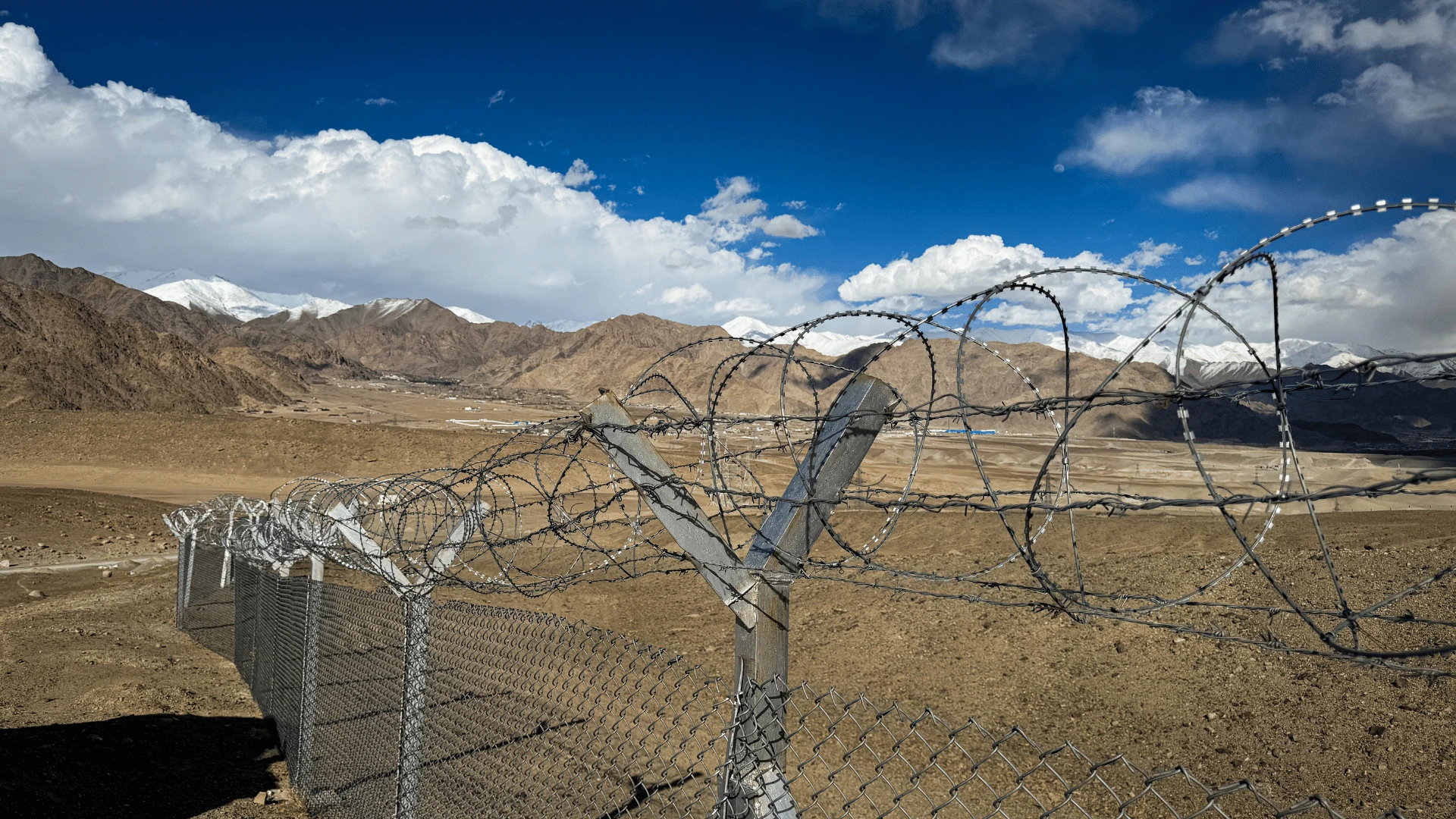
The herders, however, remain skeptical. Gyurmet Dorjee, a local nomadic leader, points out a practical flaw. “Yaks are around seven feet tall. They will damage any panel installed four-feet above the ground,” he said. Raising panel heights to accommodate grazing would triple project costs.
The pilot project also awaits funding for soil testing.
Soil scientist Kunzes Angmo confirms the delay: “We are waiting for funds.”
The Report Nobody Can Read
Environmental and Social Impact Assessments (ESIA) occupy a central place in large infrastructure projects because they identify ecological risks, social consequences and mitigation measures. Communities facing displacement or livelihood impacts frequently rely on such studies to understand how projects may affect them.
The Union Ministry of New and Renewable Energy (MNRE) told parliament in April 2026 that an ESIA had been completed and shared with the UT administration and Hill Council, but local resident Tsewang Rigzin says their demands remain unaccepted and alleges that their signatures may have been used as consent.
He further argues that the process shows procedural gaps: the pilot project advanced without soil testing studies, the main project proceeded without finalising transmission technology, and land transfers took place without clear legal authority. Herders were given verbal assurances of continued grazing access without written guarantees, while the lack of transparency around the assessment has drawn sustained criticism.
The completed assessment remains unavailable to the public. Former Leh Hill Council Chief Executive Councillor Tashi Gyalson says the council only received the environmental assessment report linked to the project. According to him, the social assessment part of the report never reached the institution during its tenure.
Power Secretary Rudhra PT provided another perspective, saying his department had not received the assessment report from the MNRE or SECI. The differing accounts have intensified calls for transparency.
Replying to The Collective’s queries regarding the ESIA report, MNRE said: “The Ladakh renewable energy project is currently being assessed for feasibility of HVDC [High-Voltage Direct Current] lines from Pang to Kaithal. In view of some technology challenges with regard to HVDC equipment, a detailed assessment is being done. In view of this, the response to your questions will be premature at this stage.”
SECI, while replying to our query under the Right to Information Act on the environmental impact assessment, said that the identified locations are in Pang-Kharnak-Debring areas, along the Leh-Manali highway in Leh district, which has been mentioned in all project related communications/documents with UT Ladakh and other stakeholders of this proposed project.
Who Owns Ladakh’s Land?
The renewable energy projects have also exposed a deeper institutional question that predates the solar push. Ladakh’s legal framework contains overlapping authorities, statutory protections and customary rights whose boundaries remain contested.
Section 42 of the Ladakh Autonomous Hill Development Council Act of 1995 states that all district land stands transferred to the council upon its constitution. The government may delegate powers for efficient land management. Nothing in the section precludes the government from acquiring or requisitioning council land for public purposes or national defence.
Gyalson says the Hill Council had sought clarification from the Union Ministry of Home Affairs on notification of land rules. The absence of such rules has contributed to competing interpretations about who possesses authority to allocate land and under what conditions.
The question became more complex after August 2019, when Ladakh was carved out as a separate UT from Jammu and Kashmir.
Prior to Ladakh’s conversion into a UT, political oversight over land ultimately rested within the legislative framework of the erstwhile state of Jammu and Kashmir.
Following the Reorganisation Act of 2019, executive authority shifted substantially toward the administrative structure of the UT which falls directly under the Home ministry. Hill Councils remained in place, but their status differs from institutions protected through constitutional arrangements elsewhere in the country.
.webp)
Ashish Kundra, chief secretary of Ladakh, acknowledges the unresolved tension and confirms that the government has formed a committee, as revealed in the document accessed by us.
“Under the LAHDC Act, the rules have never been framed,” he says. “It remains a statutory order rather than a constitutional one.” The committee is meant to clarify the roles of state and council authority. “I imagine small pockets for housing or hospitals will stay with the council,” he adds. “Large tracts will require state control. We are drafting those rules now.”
Mustafa Haji, a lawyer from Kargil, traces the conflict to deeper institutional changes. When Ladakh belonged to Jammu and Kashmir, he says, the state never interfered with council decisions. Mustafa argues that the bureaucracy of the new UT seeks to break that tradition.
“Most land laws from Jammu and Kashmir remain active in Ladakh, including the Land Grants Act, the Land Revenue Act, the Land Acquisition Act, and the Kachchari Act (grazing law). These laws protect the land,” he continues. But the UT administration now claims this is “government land rather than village commons,” a distinction Mustafa calls subjective.
Karma Namdak, former executive councilor of LAHDC, adds a political dimension. “We did not sign the Pang solar project. We did not refuse either,” he says. “In 2022, we took 64 demands to the Ministry of New and Renewable Energy. The ministry agreed to many, but it refused our request of two percent royalty for herders and five percent to the Hill Council.”
Namdak says that the current administration cannot proceed without the consent of the council. “The Grazing Act of 1954 still applies in Ladakh,” he asserts. “These stringent laws and consent requirements can only be handled through public representation.”
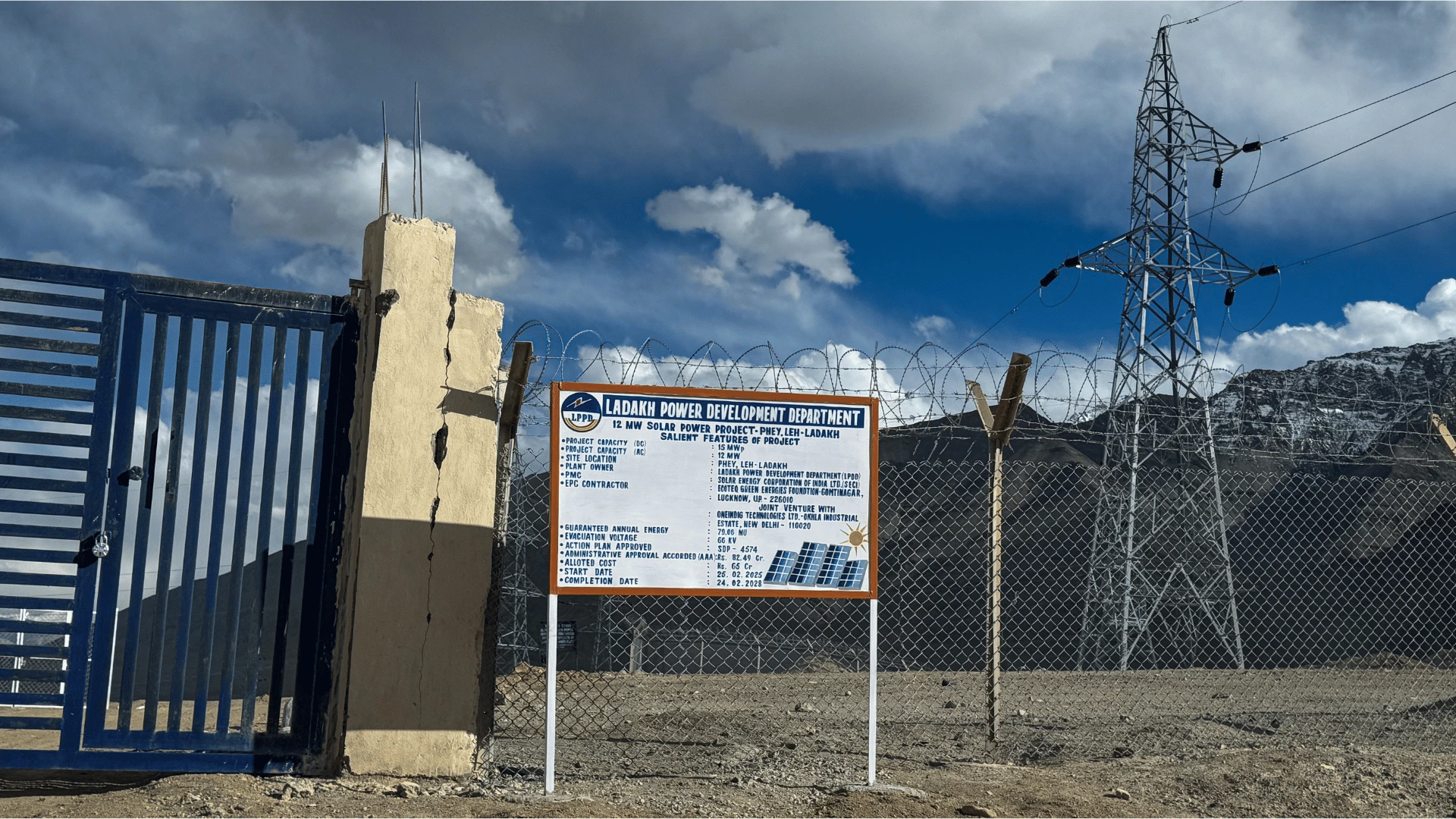
At present, four solar projects have been commissioned by the Power Development Department in Ladakh, under RESCO (Renewable Energy Service Company) mode. At Phey in Leh, a 12 MW solar project is coming up by SECI and Eqoteq Green Energies Foundation. And 25 MW project is coming up in Taru, in Leh, by SECI and Prozeal Green Energy. An official document we accessed revealed that after approval from LAHDC, Leh’s deputy commissioner has allotted 122 acres in Phey and 26.25 acres in Taru to Ladakh’s power department for setting up solar power plants for a lease period of 40 years.
The Barren Myth
The dispute also touches on a sensitive question in Ladakh: grazing land is not “empty or a wasteland” for the communities that depend on it. Government maps often classify vast tracts of land here as wasteland or barren land. Local residents, however, describe the same terrain as seasonal pasture, migration corridors and community-managed landscapes that support livestock economies built over centuries.
Ladakh, a trans-Himalayan region with an area of 59,146 sq km, the classification of Ladakhi land as wasteland or barren stretches going back to the 19th century Dogra rule. Mohammad Shafi, head of the Ladakh Bar Council, explains the historical distortion.
During Dogra land classification, he says, “waste land” referred to areas with no cultivation or grazing. He adds that the British colonial framework, carried into modern Indian bureaucracy, failed to recognise trans-human pastoralism, where land that appears unused in one season serves as a vital source of grass and nutritional fodder for livestock in another.
The Energy and Resources Institute (TERI) cited India’s Wasteland Atlas to identify five lakh hectares of barren land in Ladakh as solar-viable. Remote sensing data from 2010 tells a more nuanced story: grazing areas cover 16.75 percent of Leh district and 18.51 percent of Kargil. These percentages represent living ecosystems rather than empty space.
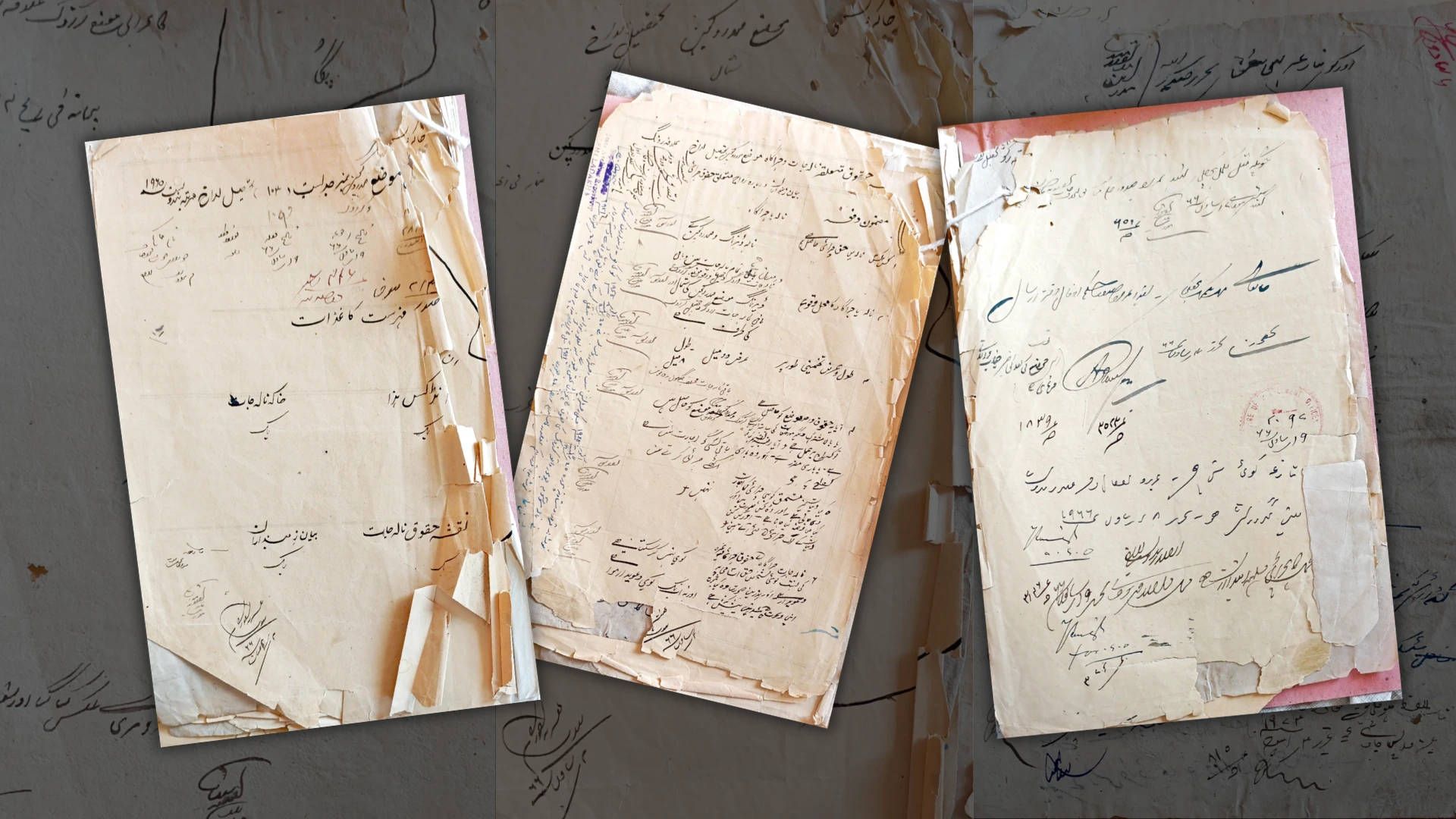
Old revenue records, many handwritten in Urdu and Persian, document grazing areas allocated to communities during the Dogra era. Herders paid taxes to monasteries before the Hill Councils were formed. Some continued paying grazing taxes to the council until 2007.
Why is Ladakh’s Case Different?
Several tribal regions enjoy additional constitutional safeguards through provisions such as the Sixth Schedule and protections under Article 371. Autonomous institutions in those areas possess clearer authority over community land and local governance.
Ladakh occupies a different position. The region functions as a UT without a legislature. Hill councils exercise important local responsibilities, though their authority derives from statute rather than constitutional protection. Lawyers, activists and political leaders argue that this arrangement creates uncertainty precisely where clarity matters most: land.
The government has exempted the solar and wind projects from Environmental Impact Assessment (EIA) study, but says the social assessment is mandatory under the Land Acquisition, Rehabilitation and Resettlement Act (LARR), 2013.
For public purposes, the state can acquire land for projects. However, according to Mehran Wani, a lawyer practicing at the Jammu and Kashmir High Court, land acquisition in Ladakh is as complex as in areas falling under the Sixth Schedule, because of the grazing laws of Jammu and Kashmir and the LAHDC Act, which require multiple legal and procedural clearances for both state and private players.
He adds that such acquisitions can be challenged in court on constitutional grounds, often bringing the “public purpose framework into conflict with fundamental law” with judicial outcomes determining which prevails in each case. Wani further highlights that grazing protections and existing land laws create binding legal obligations that shape acquisition decisions, requiring a balance between public purpose, community rights, and statutory safeguards.
Muskaan Jan, a lawyer associated with environmental advocacy at the National Green Tribunal, notes that similarly sized projects in constitutionally protected tribal regions would typically face stronger safeguards tied to land ownership and local consent.
Zanskar and the Question of Consent
In Zanskar, where steep valleys open into broad pasturelands, the debate over land acquisition is a more immediate concern for locals.
.webp)
Documents reviewed by The Collective show that officials have identified roughly 15,000 acres across the region for ultra-mega solar development. Rajesh Kumar, deputy commissioner of Kargil, confirms the identification process. “Our work was to locate land as per the SECI demands, and we did that,” he states.
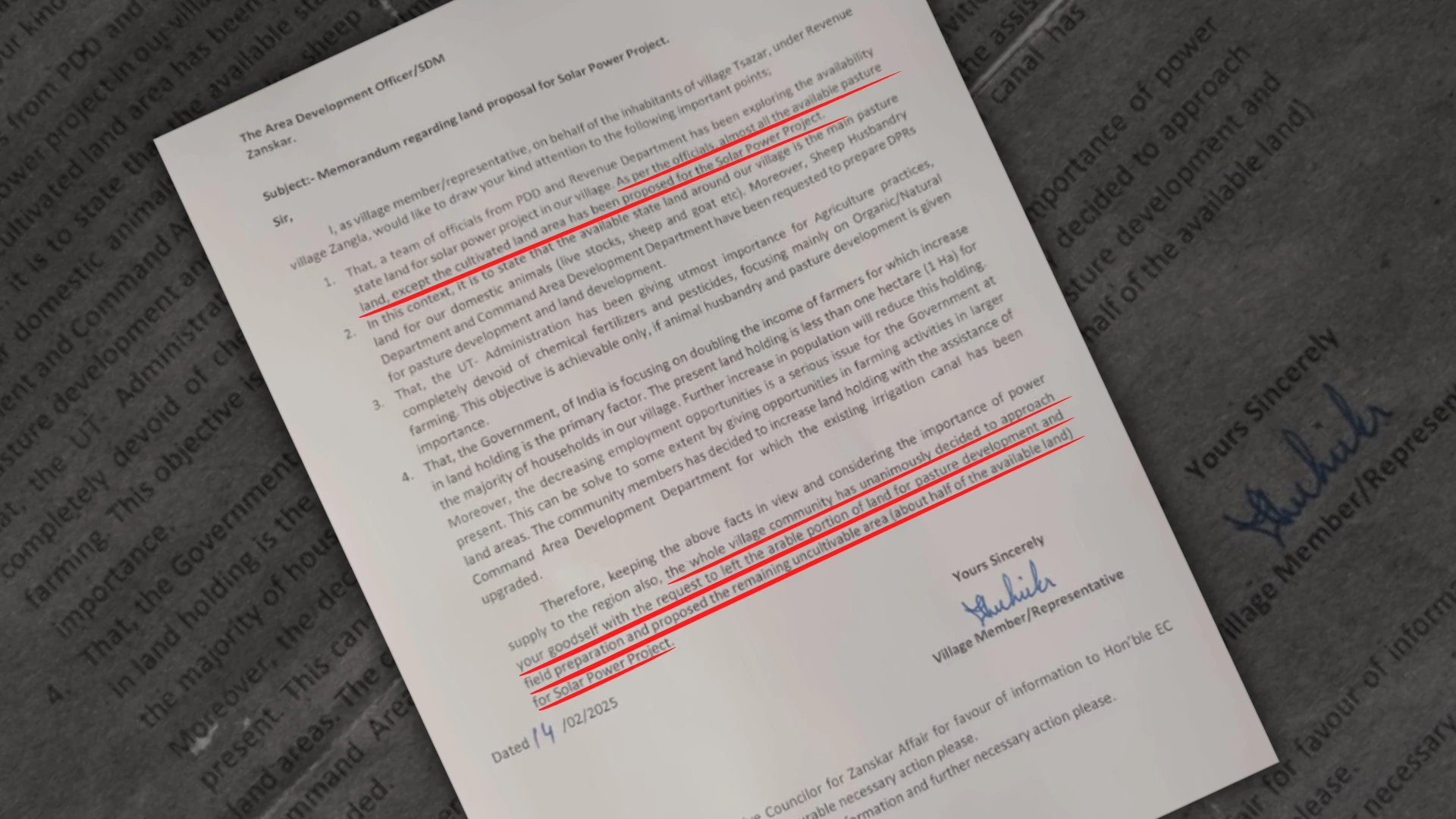
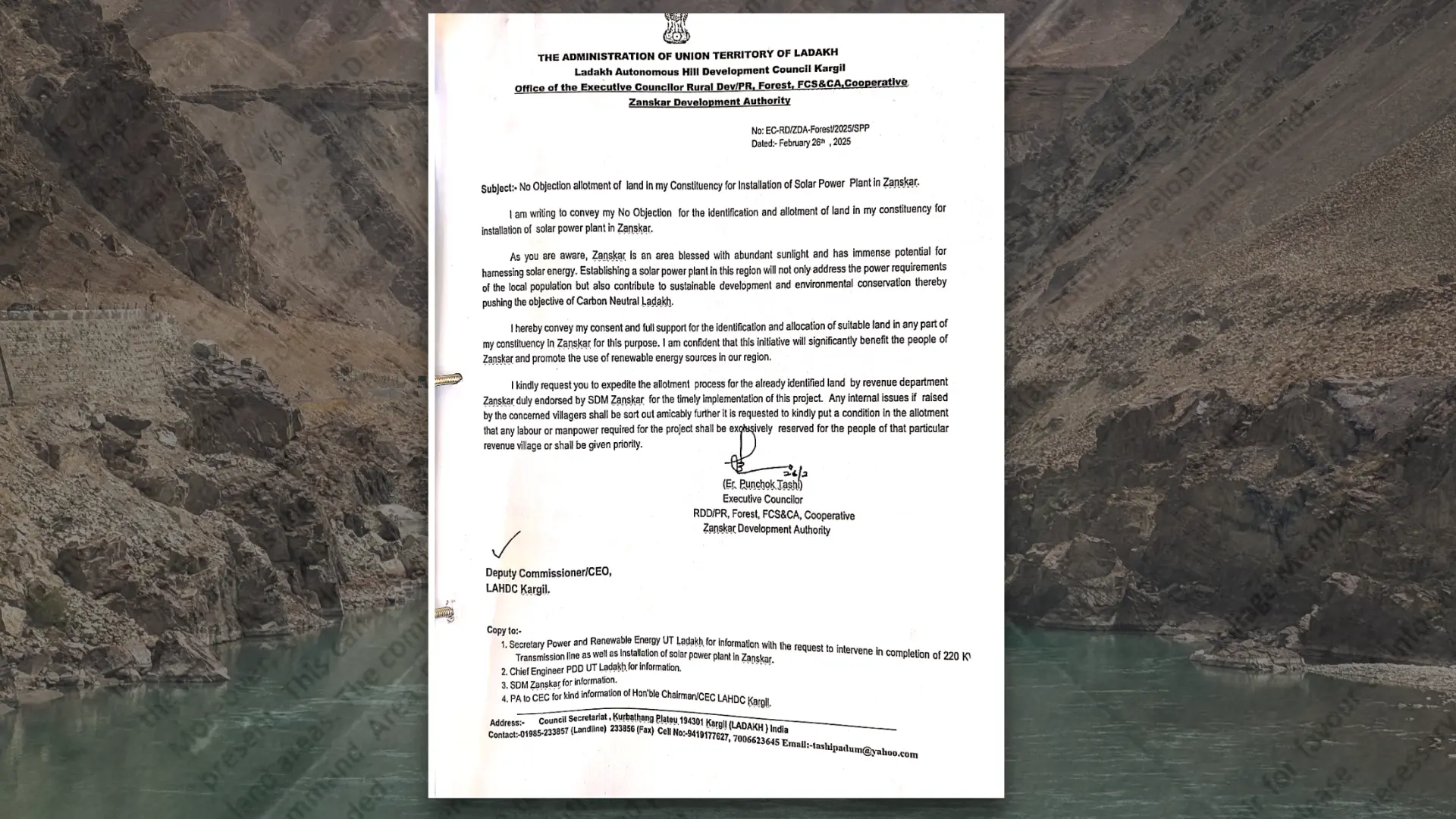
Local residents, through a memorandum in February 2025, warned that the proposed sites overlapped with key grazing areas used for livestock. They appealed for a basic adjustment: protect arable and pasture land, and divert construction toward uncultivable terrain. The villagers sent a written complaint to the sub-district magistrate expressing their concerns about the proposed solar project, but never received any response.
“All the available pasture land except cultivated land has been proposed for the solar project,” reads the letter from the villagers. Stanzin Lamath, the village head of Tsazar in Zanskar, who has spent his life on this landscape, asks, “Outsiders tell us these lands are barren, but are they?” His village depends on the surrounding pastoral land. Remove that, and the entire agricultural system collapses.
Within two weeks of the villagers’ representation, on February 28, 2025, an official No-Objection Letter appeared from the office of Puchok Tashi, an elected executive councillor representing Zanskar in the Hill Council of Kargil. The letter stated support for land allotment while adding that internal concerns would be resolved locally. “Any internal issue raised by the villagers shall be sorted out amicably,” Tashi’s letter read.
Villagers dispute that account. Several say consultations did not take place in the manner required for decisions affecting shared pastureland. The revenue department later moved forward with the demarcation process. The dispute highlights a recurring tension in Ladakh’s land governance system: authority exists in multiple layers, but accountability remains diffuse.
The Tehsildar of Zanskar, in a reply to an application under the RTI, said that six projects are being developed in Zanskar, and these include two in Zangla, two in Karsha and one each in Tungri and Techa Khasar.
The Power Structure in Ladakh
The uncertainty surrounding land authority has become more pronounced since Ladakh was carved out as a separate Union Territory in 2019.
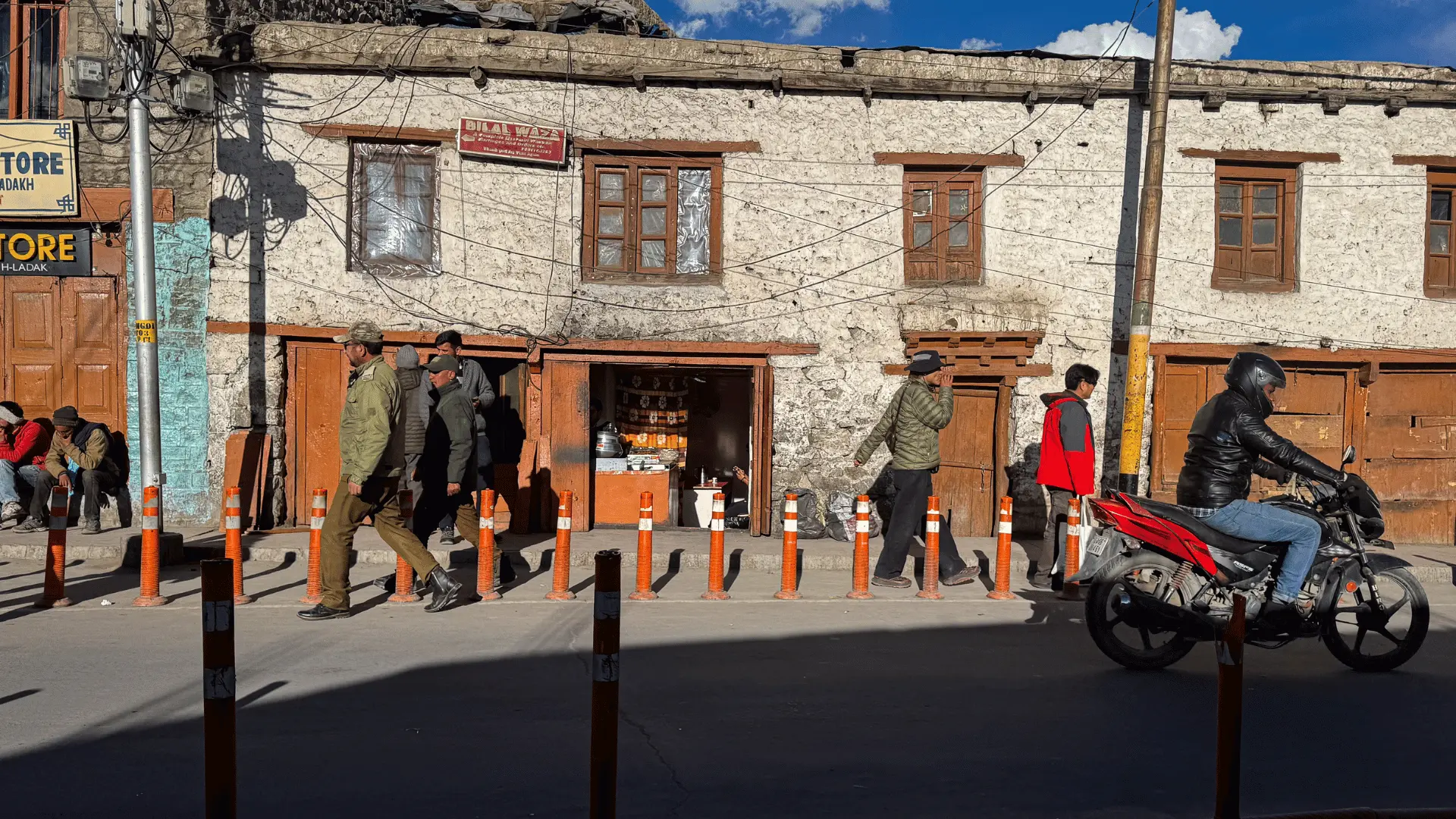
After the reorganisation, executive authority shifted to the UT administration directly under the union government through the lieutenant governor, while Hill Councils retained limited but important local functions. The absence of a legislative assembly has created a structural gap in political representation. On May 22, a sub-committee under the Home ministry held a meeting with representatives of Ladakh from the Kargil Democratic Alliance (KDA) and Apex Body Leh (ABL) to discuss the political and democratic rights of the UT.
“We have demanded statehood and Sixth Schedule status. The Home ministry argued that because of limited revenue generation, Ladakh cannot be granted full-fledged statehood. Instead, they have proposed customised safeguards under Article 371 A, F and G, along with a customised legislative body that would have legislative powers without being formally called a legislature,” says KDA co-chairman Sajjad Kargili. “They said the body would have administrative, executive, and financial powers, with the chief secretary functioning under it. Once we receive the blueprint from the Home ministry, we will consult locals, constitutional and legal experts, and other stakeholders before moving forward.”
He further said that Ladakh has become a testing ground for the Home ministry through this new idea of “a customised legislature.”
“The Indian Constitution currently has three tiers: states, Union Territories with legislatures, and Union Territories without legislatures. What is being proposed now appears to be a fourth model, that possibly would be applicable elsewhere in the future. If the Home ministry blueprint aligns with the protection of land and demography by granting legislative, executive, and financial powers, we will welcome it; otherwise, we will not accept it. At this stage, there is neither excitement nor disappointment until we see something in writing from the Home ministry,” said Kargili. However, the Union government has not issued any official statement on this so far.
After the latest sub-committee meeting in New Delhi earlier this month on September 9, the members of ABL and KDA said, in a statement, that the Home ministry has assured that further talks would be held in the first week of October during which a draft Article would be discussed.
“The ABL and KDA unanimously stated that no major irreversible restructuring should be done in governance mechanisms, land transfers, etc. before an elected body at the Union Territory level is in place. ABL and KDA have unanimously declared that in the event of any such irreversible changes being made to the administrative and political setup of Ladakh before the UT level democratic body is constituted, they would be compelled to call for a public protest against such moves,” read the statement.
ABL and KDA declared September 2026 the ‘month of sacrifice’ and led a symbolic padyatra and a prayer meet on September 23 to mark the first anniversary of the violence in which four people were killed in a protest demanding statehood and Sixth Schedule status.
On the issue of not granting statehood, Mustafa Haji, a lawyer and member of the Apex Body Leh, says, “Smaller states like Sikkim, with just a few districts, have also been granted statehood. There may be other concerns, but revenue is not one of them,” he says. “We have clearly stated in the sub-committee that land rights in Ladakh must remain with the Ladakhis… there are apprehensions about what this customised legislature will actually mean for land protection.”
Interestingly, the election for the LAHDC in Leh was scheduled for November 2025, but it has not been held till now. So Leh is without a council as of now. But the LAHDC in Kargil is functioning.
Amid the continued ambiguity over land ownership and transfer processes, the Union government recently announced the creation of five new districts in Ladakh. Officials describe the move as administrative decentralisation aimed at improving governance in remote areas.
Local political groups interpret it differently. Representatives from the Apex Body Leh and the Kargil Democratic Alliance argue that district creation does not resolve the fundamental issue of legislative authority.
Historian and academic Siddiq Wahid sees the debate as a question of institutional clarity. He argues that uncertainty in Ladakh stems from a lack of clear definition of powers. “Without clarity on what proposed arrangements would actually control land, finance and administration,” he says, “political negotiations remain open-ended.” His assessment highlights a central tension in Ladakh’s current moment: multiple frameworks are being discussed, but the final distribution of authority remains undefined.
The Shift in Discourse
Climate activist Sonam Wangchuk, whose earlier campaigns focused on ecological preservation and sustainable development, has increasingly framed Ladakh’s concerns through the language of land and political safeguards.
Wangchuk has argued that decisions involving land require transparent consultation with affected communities, particularly in regions where livelihoods depend on fragile ecosystems.
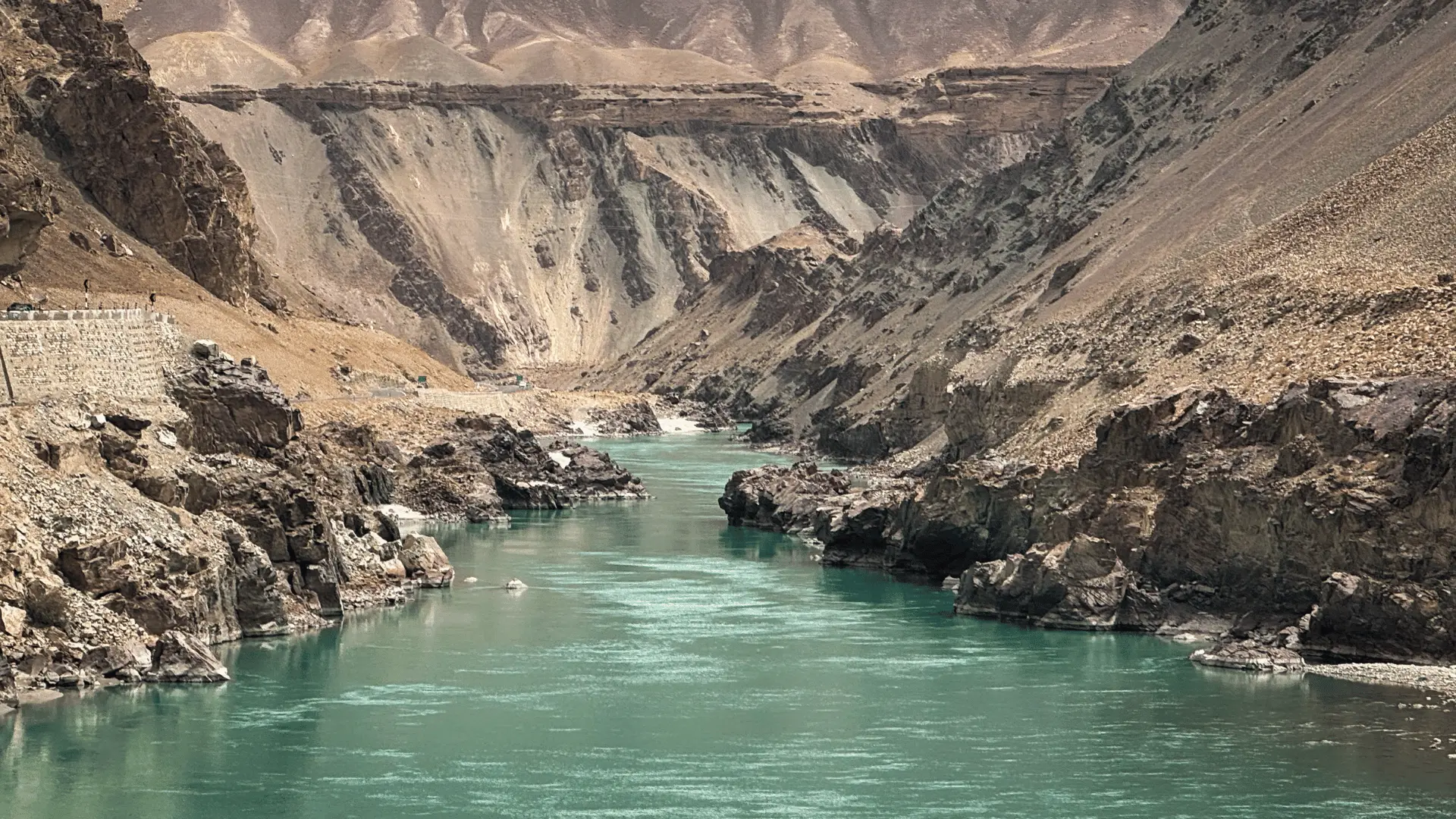
“Calling this system wasteland reveals complete ignorance of its importance,” he says. “The Third Pole serves two billion people with food and water. The little grass here feeds livestock and acts as medicine. This has continued since life began here.” Wangchuk supports renewable energy in principle. He suggests slope areas rather than plains for solar installation.
For the Pang project specifically, he says, “Ladakh will happily give energy to the nation if the approach respects both technology and local consent.” Wangchuk adds a sharper critique of the Hill Council: “Signing an MoU without public knowledge is politically incorrect. They are elected by the people.”
Safeena Wani was awarded the 3rd TRC Investigative Reporting Fellowship. She is a journalist based in Kashmir and Ladakh, and has reported on politics, conflict, gender, climate change and migration issues.