.webp)


New Delhi: When Santishree Dhulipudi Pandit took charge as Vice Chancellor of Jawaharlal Nehru University (JNU) in February 2022, she promised to focus on academic merit for over 350 appointments. Four years later, documents reviewed by The Reporters’ Collective tell a different story.
Since her appointment, JNU has recruited at least five associate professors and two professors in violation of the regulations mandated by the University Grants Commission (UGC), the apex body for higher education. The Collective’s investigation has unearthed a recruitment scam at the university, and at the heart of this is JNU’s own credential-verification body, the Internal Quality Assurance Cell, or IQAC. We found that the screening committee of subject experts for faculty appointments rejected these candidates at first. They were brought back into contention anyway by the IQAC. In at least seven cases, shortlists drawn up by subject experts were silently expanded to include favoured candidates.
The irregularities matter because JNU is not an ordinary university. Ranked second in the country, it sets quality benchmarks for higher education and has produced several prominent public figures, including current cabinet ministers. Until recently, its IQAC was the nodal body for verifying quality of research papers across north India.
Professors The Collective spoke to alleged shortlists were manipulated and that Executive Council meetings were steamrolled to push through appointments. Elected members of the same council registered their dissent and flagged violations in writing. But in each case, the candidate was appointed regardless.
This happened while 161 serving faculty at JNU have been waiting for promotions they are eligible for, according to the JNU Teachers’ Association.
The Collective analysed applications, committee remarks, minutes of meetings, and dissent notes to find out how the scam was executed. We have previously reported on how Pandit’s own record of having being found guilty of “moral turpitude” was ignored during her appointment as JNU’s vice chancellor. This, as we found, was in contravention of UGC rules.
In the past few years, JNU has gone through a recruitment spree. Of over 220 appointments made under Pandit, we could verify the details of seven, because JNU, unlike its earlier practice, has taken up a relatively opaque process, releasing only application numbers rather than the names of shortlisted candidates called for interview.
Of the various bodies involved in the recruitment process, we found at least two, the IQAC and Executive Council, functioning under direct oversight of the vice chancellor. The screening committee of subject experts, in comparison, is free from administrative interventions.
This investigation identified irregularities in promotions of the JNU faculty as well, a process that requires IQAC’s assessment. At least two serving teachers were appointed as professors through direct recruitment, bypassing the standard promotion process.
The contrast with those waiting for promotion is stark. At least one serving assistant professor with a research score nearly seven times the minimum required for professorship has been repeatedly denied the position.
Questions were sent to everyone named in the story. Only two responded: one suggested a phone call but stopped responding when asked to speak on record; the other threatened legal action over email. Their responses are reflected in the story.
{{cta-block}}
Getting Past JNU’s Own Screening Body
To be directly recruited as an associate professor, UGC’s 2018 regulations mandate basic requirements for a candidate: including a PhD in the relevant discipline; eight years of regular teaching or research experience; a salary throughout the prior service equivalent to the minimum level of assistant professor (a Level-10) pay scale; and at least seven published research papers in UGC-listed or peer-reviewed journals. Failing any one of these is grounds for rejection of a candidate.
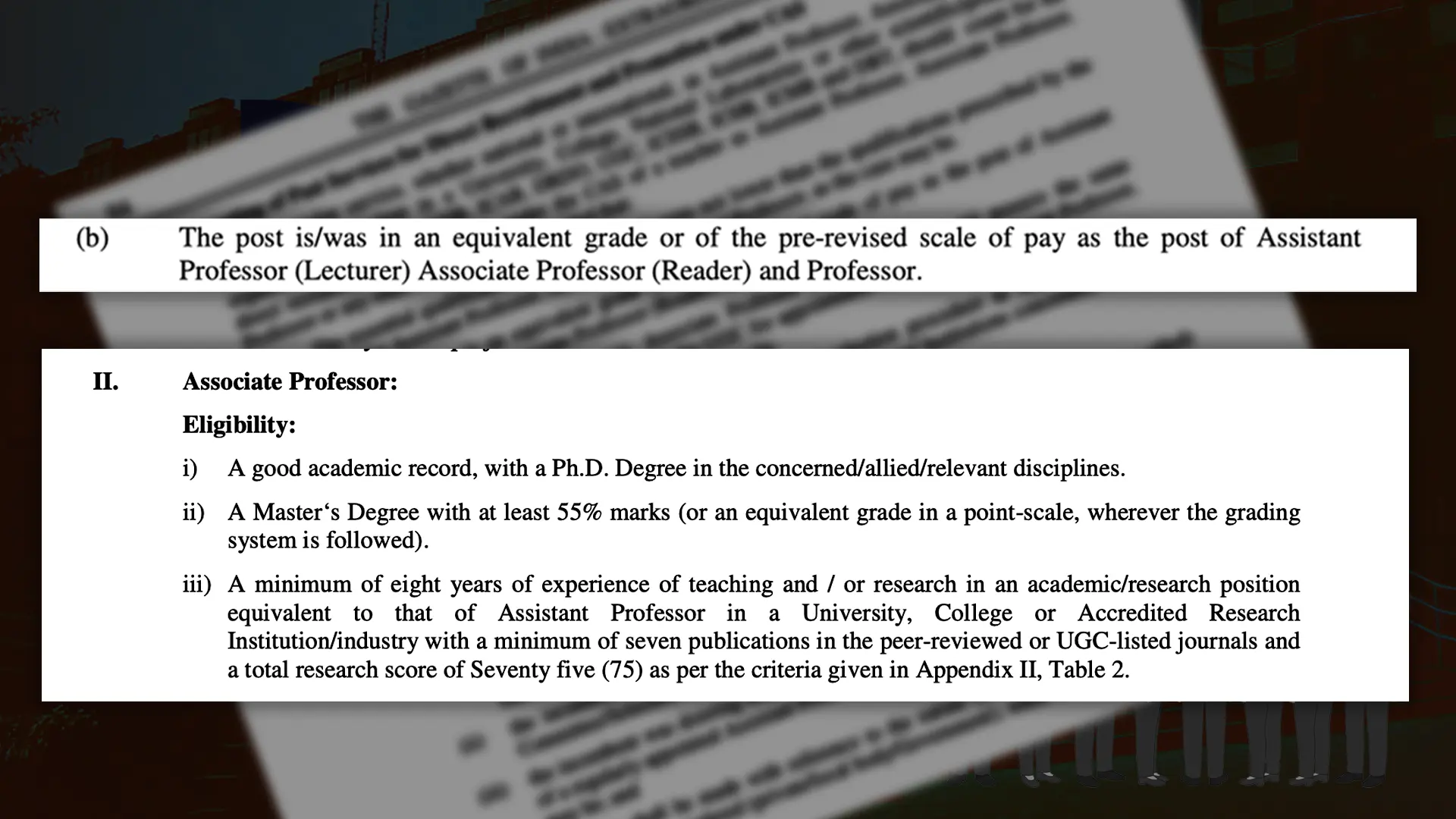
In June 2022, the UGC had directed the university in a similar case, that of associate professor Amit Singh, stressing on the rules. It had written to the JNU administration stating explicitly that clauses 4.1 (II) and 10.0 of the 2018 regulations, which govern minimum qualifications for recruitment of teachers and other academic staff, are “mandatory in nature and cannot be overlooked.” Despite this, JNU continued to violate the norms.
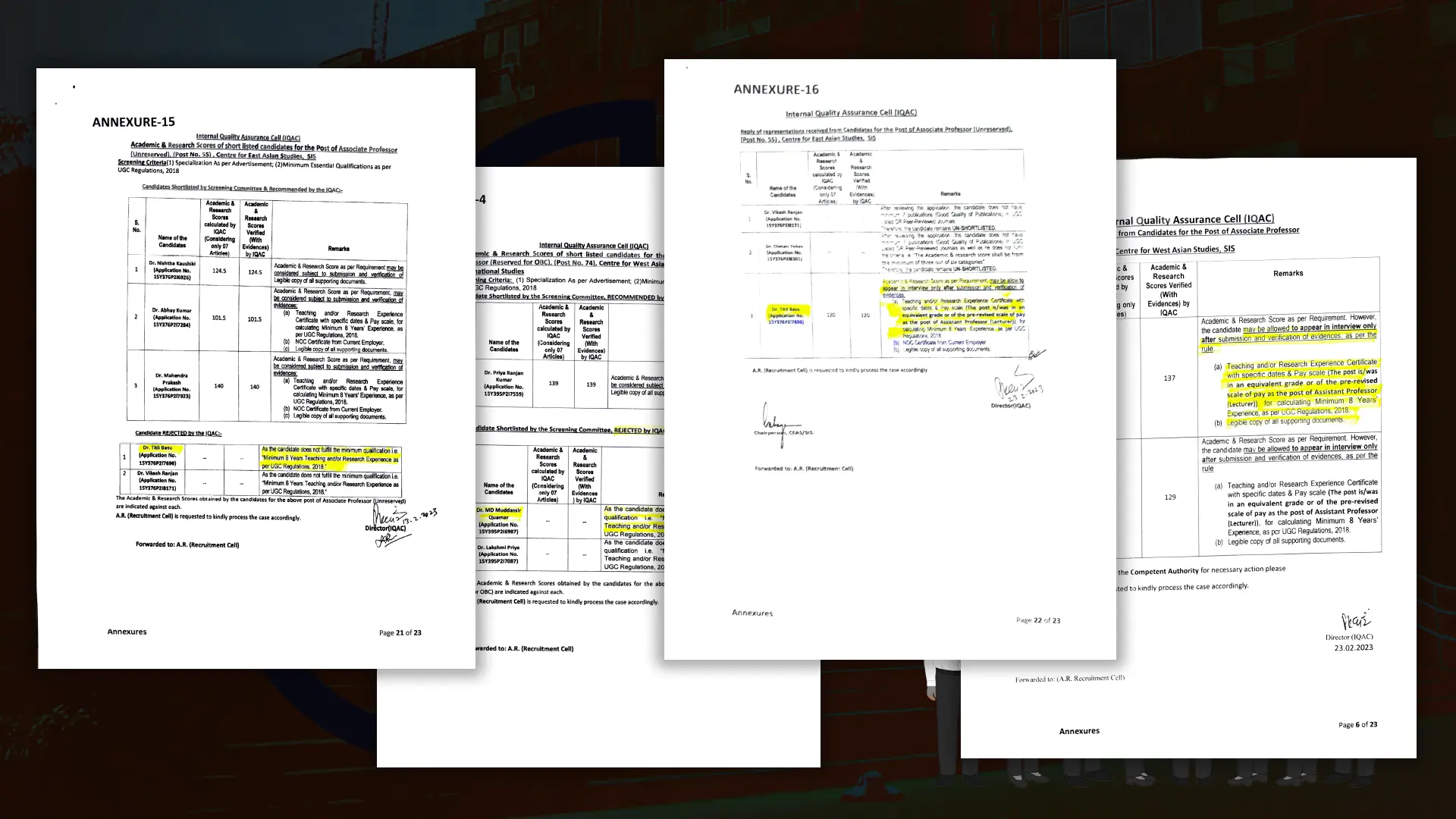
A month later, in July 2022, JNU advertised 126 associate professor posts. Among the applicants were Muddassir Quamar, for the Centre for West Asian Studies, and Titli Basu, for the Centre for East Asian Studies, both within JNU’s School of International Studies. The internal verifying body IQAC, then headed by professor Pawan Dhar, reviewed both applications and rejected them in February 2023.
Dhar recorded in writing that Quamar “does not fulfill the minimum qualification i.e. Minimum 8 Years of Teaching and/or Research Experience as per the UGC Regulations, 2018”, the same clause under which Singh’s appointment had been annulled. According to his application, The Collective has seen, Quamar had cited nearly six years as an associate fellow at the Manohar Parrikar Institute for Defence Studies and Analysis (MP-IDSA) and two years of freelance translation work between 2007 and 2009. The translation work was only a gig employment, carried no pay scale at par with an assistant professor’s salary, and did not run continuously with his MP-IDSA tenure.
Dhar rejected Basu on the same grounds. Her three years as a research assistant at MP-IDSA, as documented by IQAC, did not add up to the qualifying eight years. Her pay during that period did not meet the salary scale of an assistant professor.
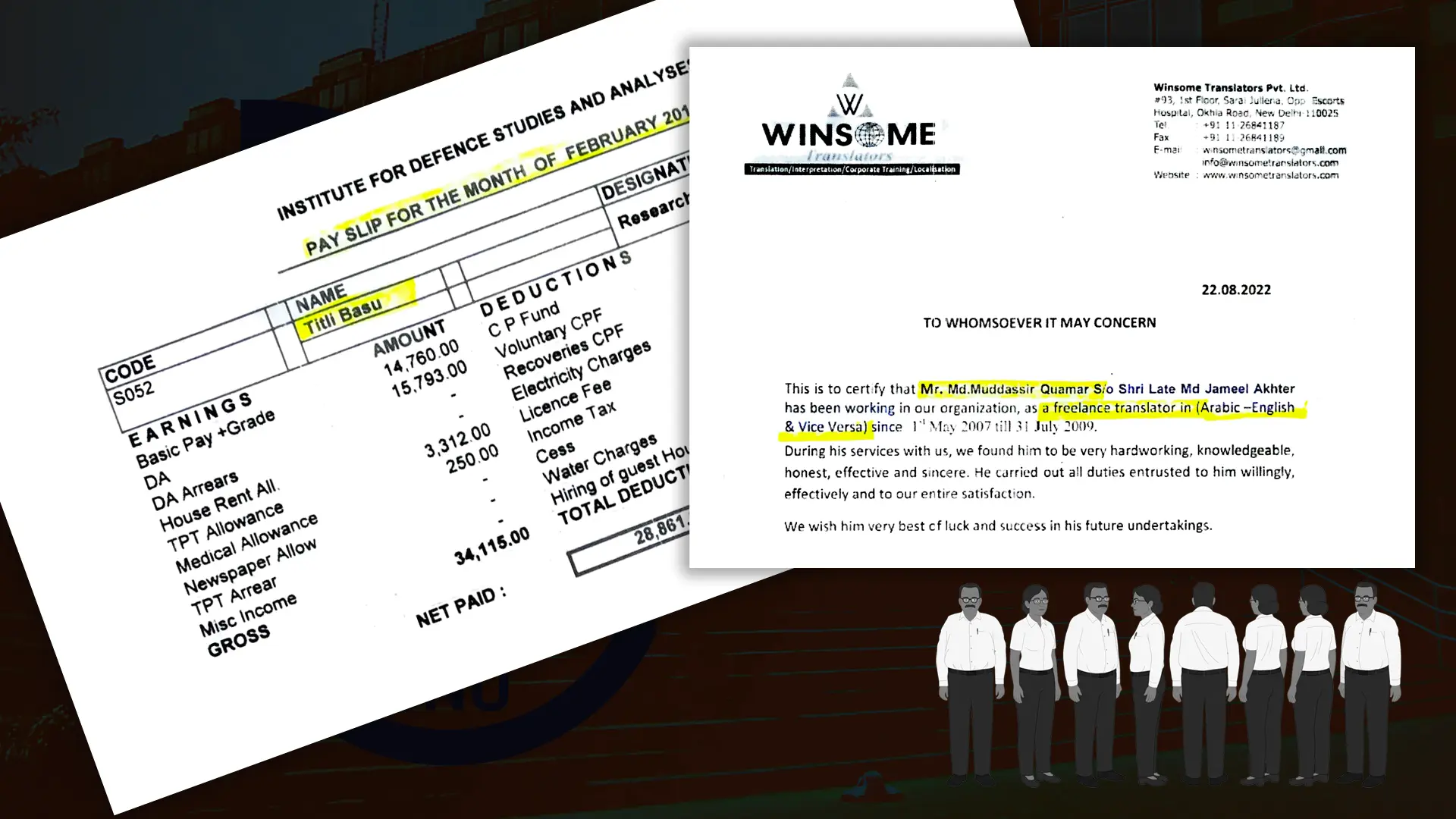
Both wrote to JNU requesting reconsideration. Quamar submitted a certificate for his translation work at the private firm; it did not mention his pay scale and read more as a character certificate. Basu argued that the advertisement had not specified the pay scale requirement, a claim we found to be incorrect. The advertisement stated clearly that “the counting of past service/pay protection shall be regulated as per rules in force.”
Around ten days later, the IQAC cleared both for interview. Their names moved from the non-shortlisted column in the provisional list to the shortlisted column in the final list. Candidates whose research scores were higher declared “not found suitable”. Quamar and Basu were appointed after the Executive Council’s approval.
Two days later, Dhar left IQAC on March 5, 2023. About a year later, he left JNU altogether. When this reporter contacted him, he declined to comment. His replacement as IQAC director was PR Kumaraswamy, Pandit’s Officer on Special Duty and Quamar’s PhD supervisor. Quamar was later appointed as the coordinator of IQAC’s Data & Statistics Cell, responsible for data collection and quality checks. From this point, professors allege, IQAC’s power expanded considerably.
IQAC, A Tool for Manipulation
In the recruitment process, the Internal Quality Assurance Cell (IQAC) takes care of verifying the credentials of shortlisted candidates. A screening committee of subject experts shortlists applicants. This shortlist, signed by the committee, is then sent to the IQAC for verification. JNU’s recruitment guidelines mandate any subsequent changes by the IQAC to the initial list to be approved by the same committee, before forwarding it to the registrar.
Once published online, this initial list serves as a provisional shortlist. Non-shortlisted applicants are allowed to contest their rejection by emailing details. According to the guidelines, these submissions must be sent back to the same committee for review.
However, teachers allege that the IQAC, under Kumaraswamy, manipulates and inflates the shortlist. We assessed at least seven cases to confirm these allegations, where the IQAC added names of candidates without informing the screening committee.
In all the cases, the candidates arbitrarily added to the final list by the IQAC were ultimately appointed to the post.
“IQAC’s role got expanded considerably. It got powers it never had earlier,” said Nivedita Menon who recently retired from JNU. “IQAC and VC worked closely after shortlisting by the screening committee and had the final word.”
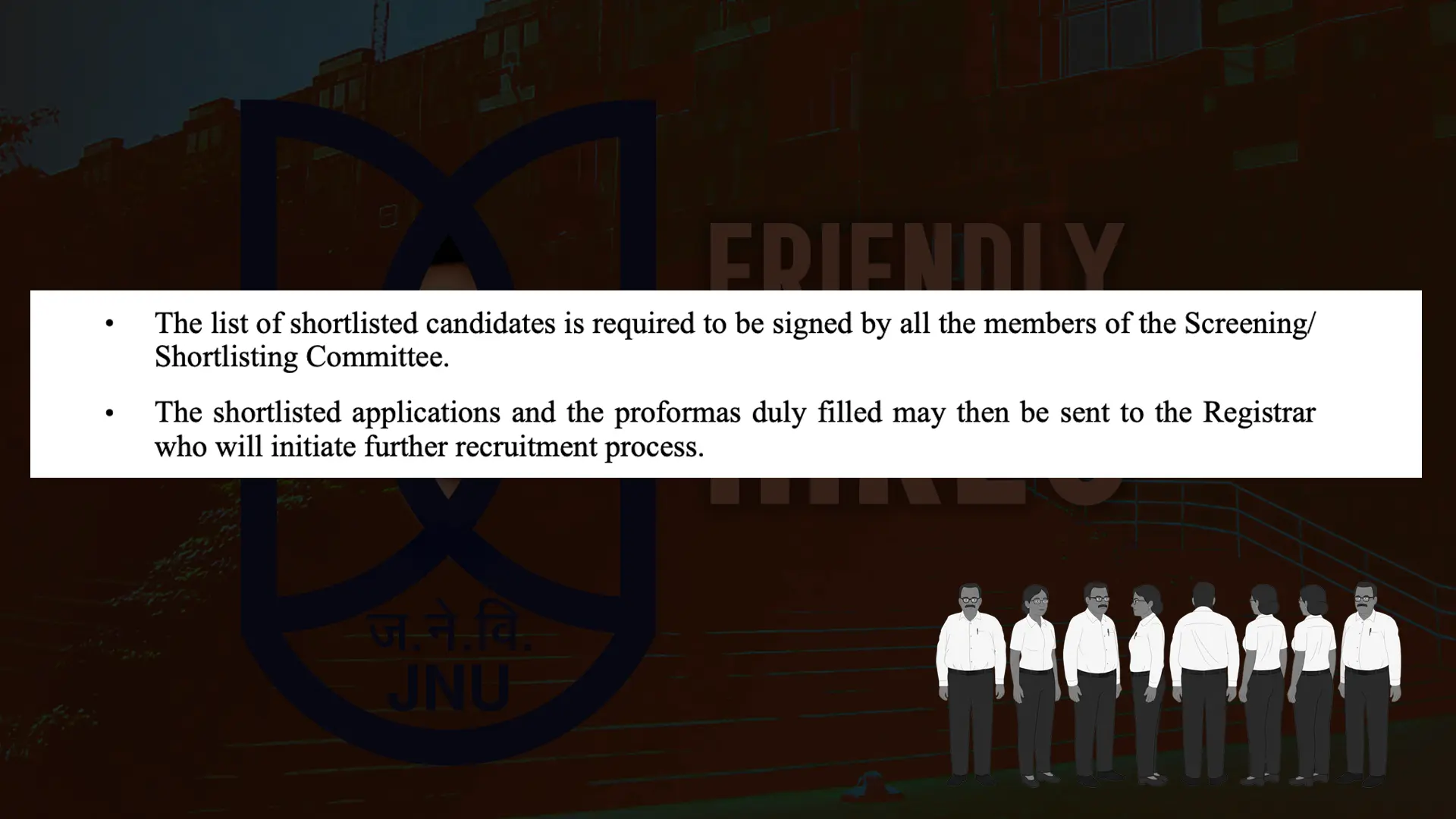
In 2019, the IQAC had issued guidelines for shortlisting of applications that stressed on following UGC regulations and which specifically mentioned that “the list of shortlisted candidates is required to be signed by all the members of the Screening/Shortlisting Committee.” This was before Pandit’s tenure.
The Shortlists That Kept Growing
Marks of similar violations are visible across several recruitments we assessed. The same sequence played out in 2025 for Lakshmi Priya, another applicant and Quamar’s wife, who was shortlisted earlier too for the same post Quamar was appointed to, and found ineligible. The IQAC, now headed by Kumaraswamy, with Quamar in charge of its data cell, verified and cleared her eligibility.
But elected members of the Executive Council flagged her past experience and eligibility records. From a response to our RTI query, we found that her service as a research analyst at MP-IDSA was at a pay scale four levels below an assistant professor’s, and her total experience fell short by nearly five years of the required eight years.
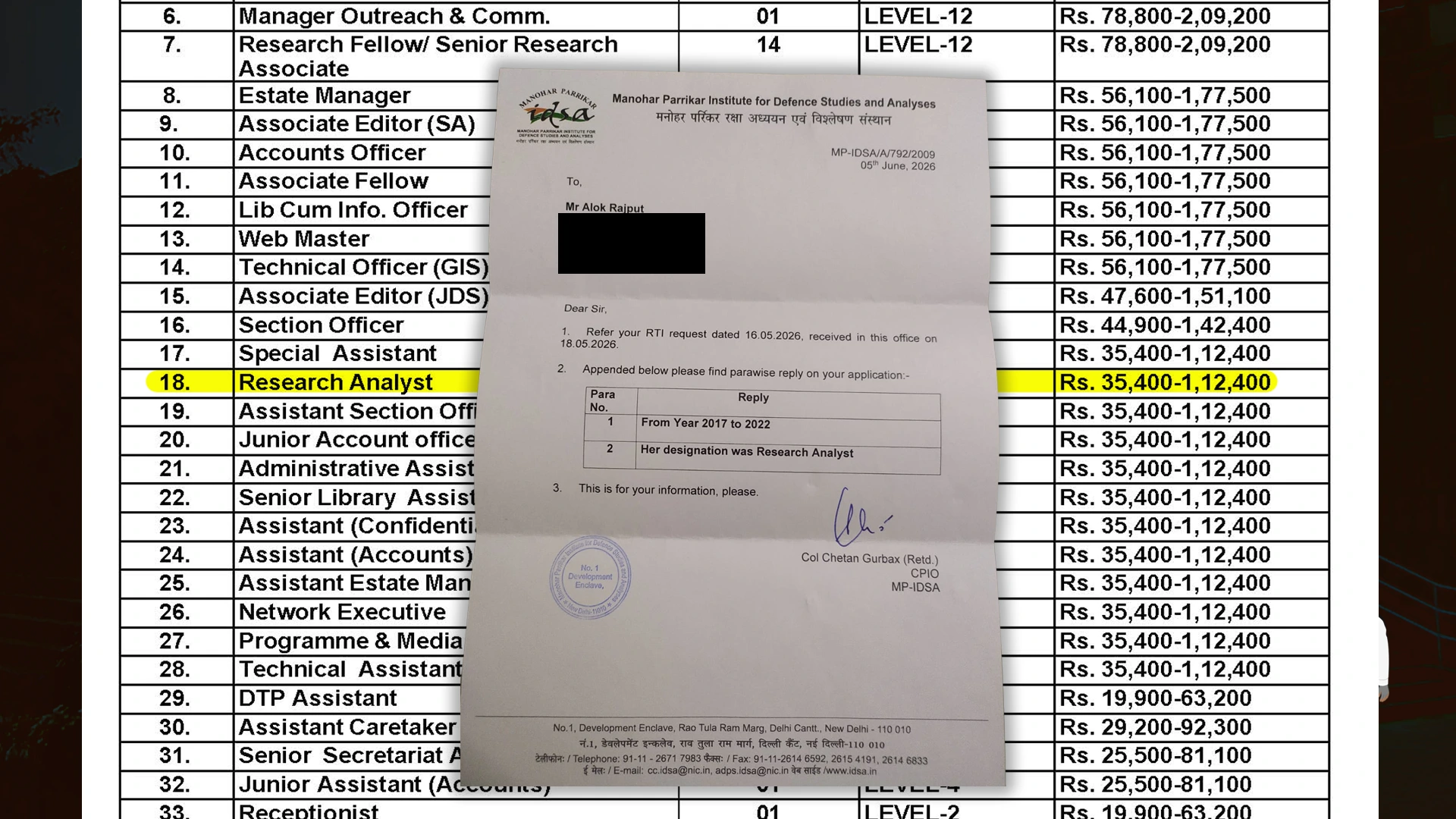
In her case, the provisional shortlist had three names; the final list had four. Priya was appointed. Her selection triggered complaints to the UGC, the Executive Council, and to the JNU VC by other shortlisted candidates. In October 2025, the UGC wrote to JNU’s registrar asking the university to resolve the matter as per applicable rules.
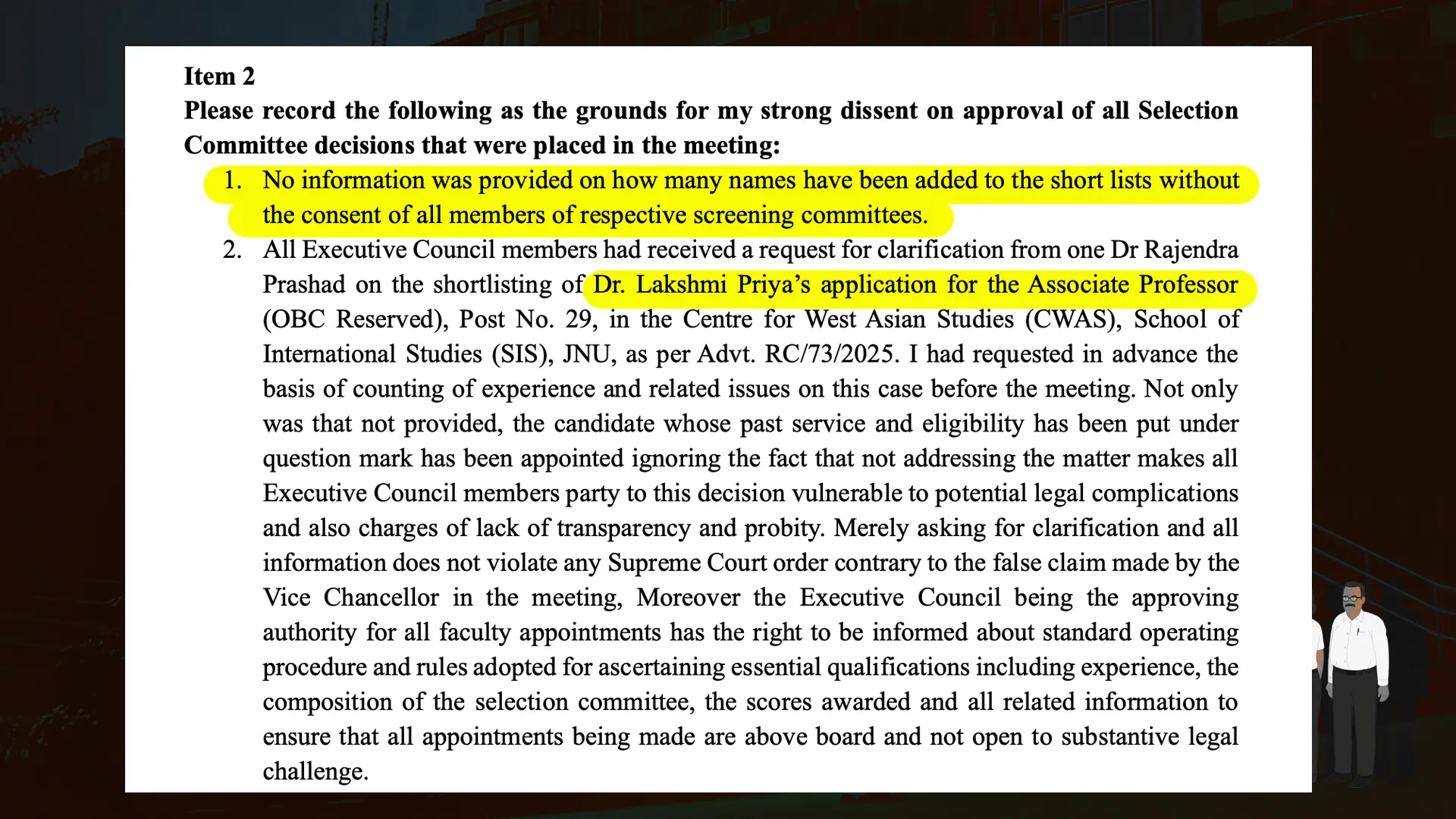
Under the 1966 JNU Act, all appointments require the Executive Council’s approval. The council is headed by the vice chancellor and has nominated members and three elected faculty members. The elected members, Chirashree Das Gupta, Santana Khanikar, and Veena Hariharan, asked for Priya’s credential documents before the approval meeting of the council. They received no response. Her appointment was approved anyway. The three subsequently wrote to the registrar, recording their dissent, describing how Priya’s recruitment, along with four others, had bypassed subject screening experts and mandated discussions.
The irregularities extend beyond the School of International Studies.
At the School of Social Sciences, one of the associate professors appointed, Probal Roy Chowdhury, came from a different specialisation than the post required. The essential qualification for the position was an MA and a PhD in History. Chowdhury held an MA in English. He was initially rejected, mentioned in the “not-shortlisted” column of the provisional list, for not having a degree in the “relevant discipline.” He was eventually appointed.
At the Centre for Law and Governance, JNU appointed Varada Avinash Sambhus as an associate professor. Sambhus was initially among the non-shortlisted candidates; she was later added to the final interview list. Her appointment was approved at an Executive Council meeting at which, according to a dissent note sent by an elected council member, none of the teachers’ representatives were permitted to speak by Pandit. The Collective found that Sambhus had fewer than seven research publications in UGC-listed or peer-reviewed journals required for associate professorship.
A member of the shortlisting committee, speaking anonymously, confirmed the irregularity. “The noting that appears in the provisional list is not that of the shortlisting committee. It’s manipulated. The committee had found that she (Sambhus) did not meet essential criteria,” the member said.
In her response, Sambhus claimed that she was appointed by competent authorities and in accordance with applicable rules. “I reject any suggestion that I did not fulfil the prescribed eligibility criteria or that my appointment involved any irregularity,” she wrote back, threatening legal action. Her response in full.
At the same centre, the same pattern repeated for a full professorship. A screening committee shortlisted three candidates. By the time the final interview list was published, 17 names had been added. One of them, Sukalpa Chakrabarti, was appointed. The elected council members wrote in their dissent notes to the registrar that they were kept in the dark about the new names added to the shortlist. They said that Chakrabarti was not among the provisionally shortlisted candidates and that no reason for her addition in the final interview list was communicated to the screening committee.
Vice Chancellor Pandit was Chakrabarti’s PhD supervisor at the University of Pune. The council members also noted that Chakrabarti’s research specialisation fell outside the subject area required for the post, a point raised by the council members in their note. The Collective confirmed the same.
A similar pattern surfaced at the Centre for Comparative Politics and Political Theory. In early 2023, senior professor Nivedita Menon discovered that candidates for an associate professor vacancy at her own centre had been shortlisted without her involvement, a violation of the rules governing screening committee composition. She went to court. JNU agreed to rescreen. At that re-screening, on 31 March 2023, it was found that one of the candidates, Vandana Mishra, had only two research publications in UGC-listed journals, against the minimum of seven required for associateship.
“We were in fact surprised that the said candidate [Mishra]… did not have the minimum seven articles in referred journals that UGC requires, and in fact had only two,” Menon wrote in her dissent note a day later.
About two months later, Mishra applied to the Centre for Political Studies for a full professorship, which requires a minimum of ten publications. She claimed ten, and was eventually appointed.
There are two ways for the serving teaching faculty to get appointed to a higher post: one under the UGC-mandated Career Advancement Scheme (CAS), and the other unconventionally by direct recruitment, a route the current JNU administration uses to circumvent the standard CAS for their favoured candidates. It can save a professor five years. Mishra, too, got the appointment through direct recruitment.
Among JNU’s roughly 700 faculty members, Mishra is the only one to have gone from assistant professor to professor in just five years through this route.
How JNU Stalled the Promotions
As Pandit’s administration was finding ways to appoint what teachers call favoured candidates, records show that it was finding ways to stall the promotions of those it did not favour.
In April 2025, professor Moushumi Basu filed an RTI application seeking data on all promotions under the Career Advancement Scheme since Pandit’s arrival. JNU refused, terming the information sought to be fiduciary and personal in nature. Basu appealed to the Central Information Commission, which in turn ordered JNU to let her inspect the records. JNU did not comply. Basu’s non-compliance complaint is pending. Meanwhile, JNU went around claiming that several teachers had been promoted under the current vice chancellor’s administration.
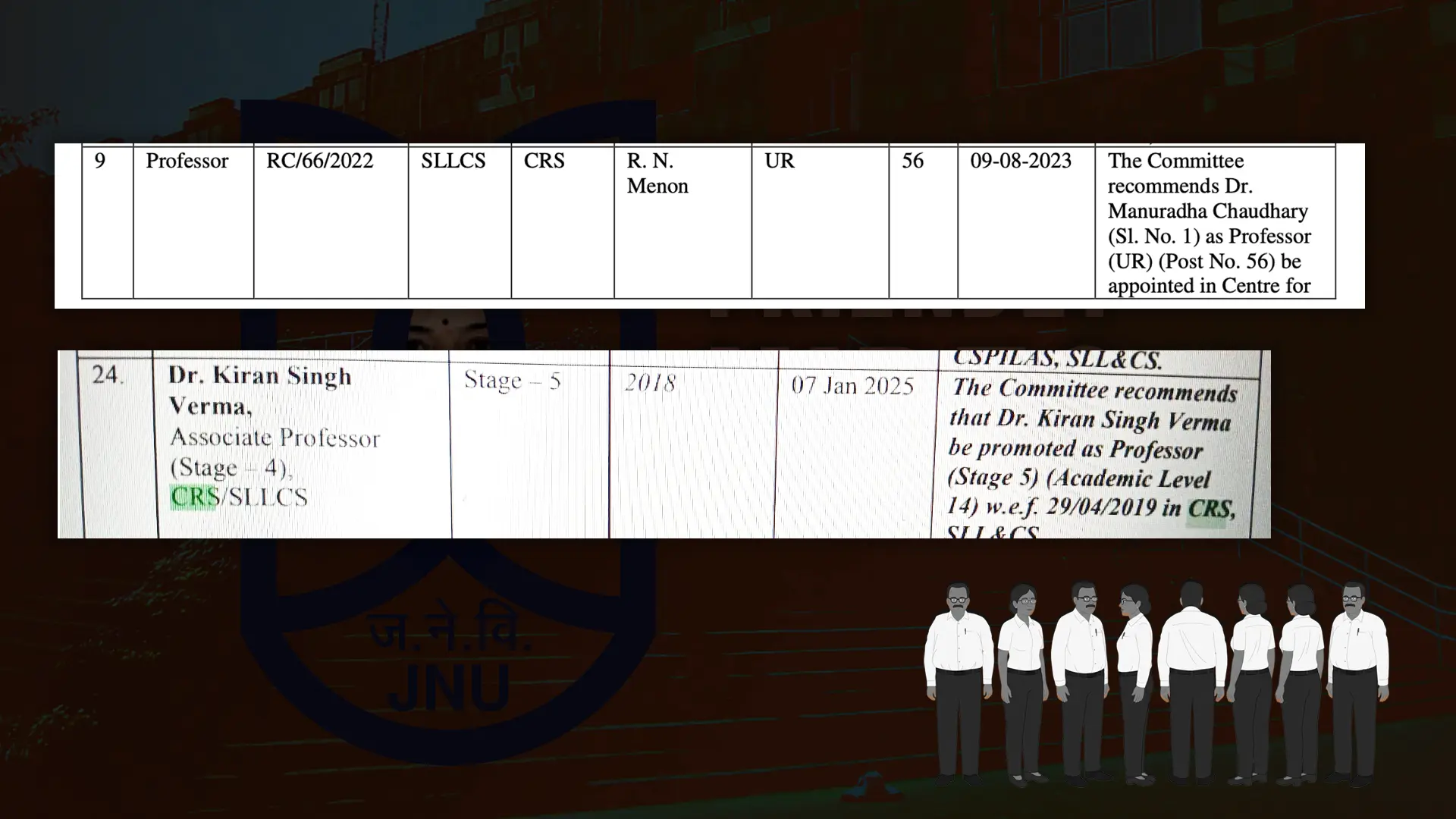
The promotion data JNU has made public tells its own story. It reveals a pattern of favouritism. Manuradha Chaudhary, one of the JNU faculty, joined in 2012 as one of 22 assistant professors recruited that year. She is the only candidate from that cohort on an unreserved seat to have reached full professorship, promoted twice under Pandit’s tenure, first through CAS and the second time through direct recruitment. Even her own PhD supervisor was promoted to the same rank over a year after her.
Pandit then appointed Chaudhary as Dean of Students, an important campus position, and amended the rules to make that post eligible for the best of residential accommodations on campus. Elected Council members filed a dissent note against this amendment, which allowed Chaudhary to get an out-of-turn accommodation. Chaudhary suggested talking over a phone call in response to our questions, but stopped responding when it was cleared that the conversation would be on record.
The contrast the JNU Teachers’ Association (JNUTA) points to is stark. A former JNU professor, Lata Singh, served 26 years as an associate professor, eleven of them at JNU, before retiring without promotion. The association says 161 serving teachers are currently waiting for promotions they are eligible for.
Stalled promotions mean stalled research capacity. UGC rules cap doctoral supervision at four, six, and eight students for assistant, associate, and full professors respectively. The association says clearing the promotion backlog would open approximately 500 additional PhD supervision slots, a figure The Collective could not independently verify.
The clearest individual case of those fallen victim to this favouritism that JNU teachers point to is that of Vikas Bajpai, an assistant professor at the Centre for Social Medicine and Community Health.
As per the UGC rules, professorship requires a minimum research score of 120. Bajpai’s score is 816. Yet, JNU has repeatedly denied him the position through direct recruitment. He secured an interview only after a court order.
We sent detailed questions to the university authorities, including the vice chancellor, registrar, the IQAC and the concerned professors posted in JNU. This report will be updated once we receive a response.
[All the documents The Collective used for this story are available here.]