Peace, at Gunpoint
.webp)
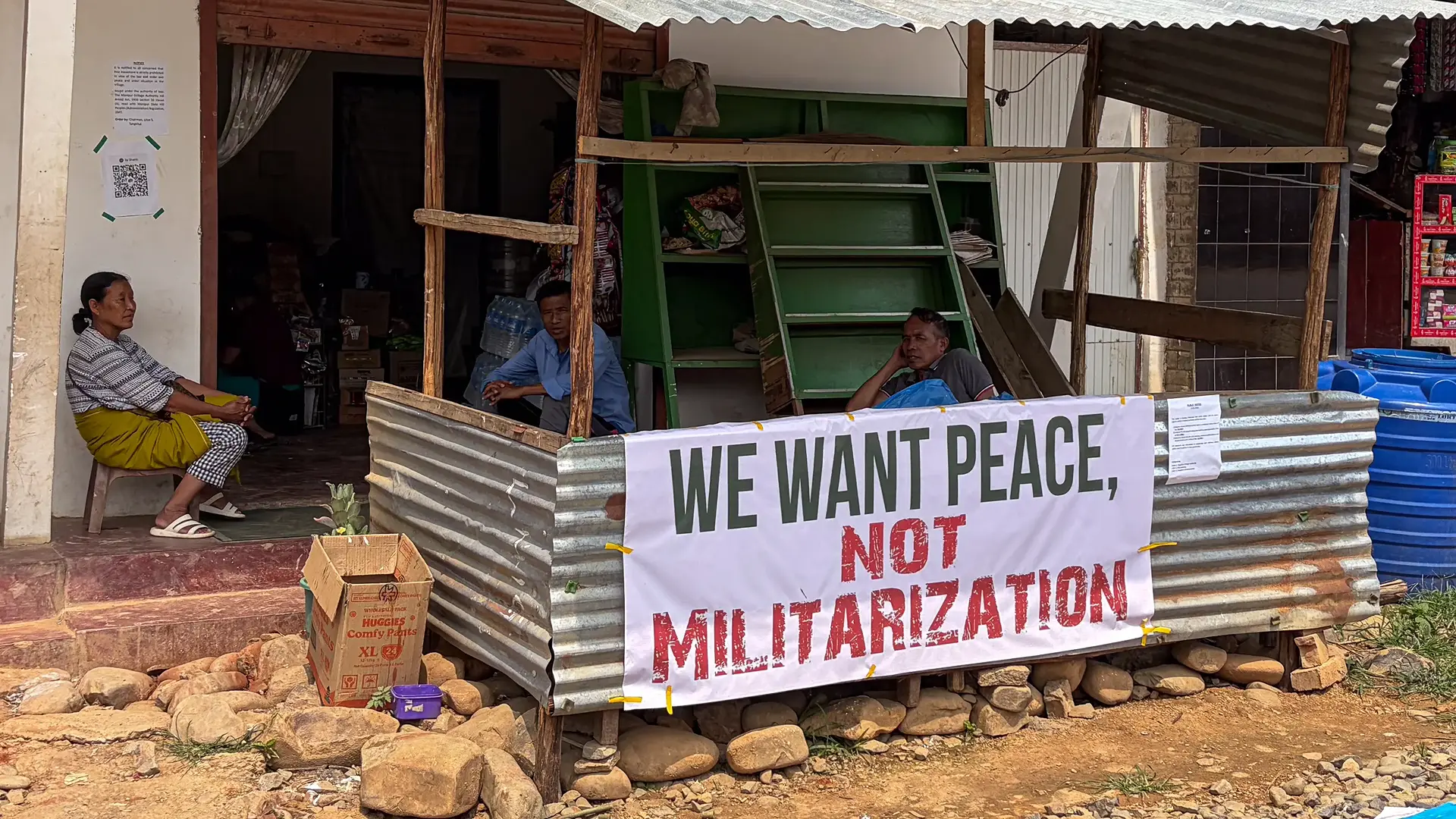


Manipur, Nagaland, Assam and Delhi: In February 2026, Bharatiya Janata Party stitched together another political arrangement between its 28 Meitei, six Kuki-Zo and two Naga MLAs to regain power in Manipur after a brief period of President’s rule.
A chief minister from the Meitei community, Yumnam Khemchand Singh, replaced the defiant N Biren Singh.
Nemcha Kipgen, a second-time BJP MLA and wife of the leader of a Kuki armed group, the Kuki National Front-President (KNF-P), was made a deputy chief minister; Losii Dikho from the Naga People’s Front, a BJP ally, was the other.
By then, the conflict between the Kuki-Zo and Meitei armed groups, which began in May 2023, had ravaged Manipur’s social life and economy for more than three years despite one of the largest presences of state armed forces and intelligence anywhere in the country.
BJP’s new political arrangement with its MLAs in the hills and the Meitei MLAs in the valley, with renewed support from parties like the National People’s Party and the Naga People’s Front, brought it back to power. But peace remained elusive.
Tensions were rising again, this time between the armed groups of Kuki-Zo and Naga hill communities. Some of the Kuki-Zo hamlets fall in areas dominated by the Naga community, and vice versa.
“We witnessed feverish and intrusive movements of Assam Rifles in our villages and areas from 2024,” a senior Naga leader told The Collective. “The people in many villages have been on alert since then and the community and leaders often had conversations wondering what was brewing.” We could not independently verify this claim, but sent questions to the Ministry of Home Affairs and Assam Rifles about these alleged “movements”. The copy will be updated with their responses.
The increased movement of the Assam Rifles revived memories of the conflict the Kuki and Naga communities witnessed in the 1990s, the Naga leader said.
The latest political arrangement to get back in power had been preceded by quiet negotiations between the Union government and powerful groups – armed and otherwise – who wield deep influence on the state’s polity.
During one such negotiation, on November 6, 2025, two of the most influential Kuki-Zo armed groups, United People’s Front (UPF) and Kuki National Organisation (KNO), handed over a 17-page document to the Union Ministry of Home Affairs.
The document contained a proposal to carve out part of Manipur into a Union territory governed by the Kuki-Zo community.
The demand was not new in principle. Rumours that the Union government was entertaining the Kuki-Zo demands, while keeping the other two communities’ leaderships in the dark, had floated for a while, causing anger among others. Its studied silence on the talks had stoked anxieties.
But the concrete details of the proposal remained unknown.
Multiple sources in the government told us the Union government had neither rejected nor accepted the Kuki-Zo armed groups’ proposal presented to it in November 2025. In public, both the BJP leadership and the Union government have remained silent, while reinstalling a government with a deputy chief minister from both hill communities.
The Reporters’ Collective sent questions about the proposal to the Ministry of Home Affairs. The copy will be updated with their response.
Chapter 1
The Puducherry Solution
The Kuki-Zo armed groups in talks with the central government propose carving out a Union Territory that covers their community’s areas and inhabitations across all of Manipur.
The Reporters’ Collective reviewed the proposal.
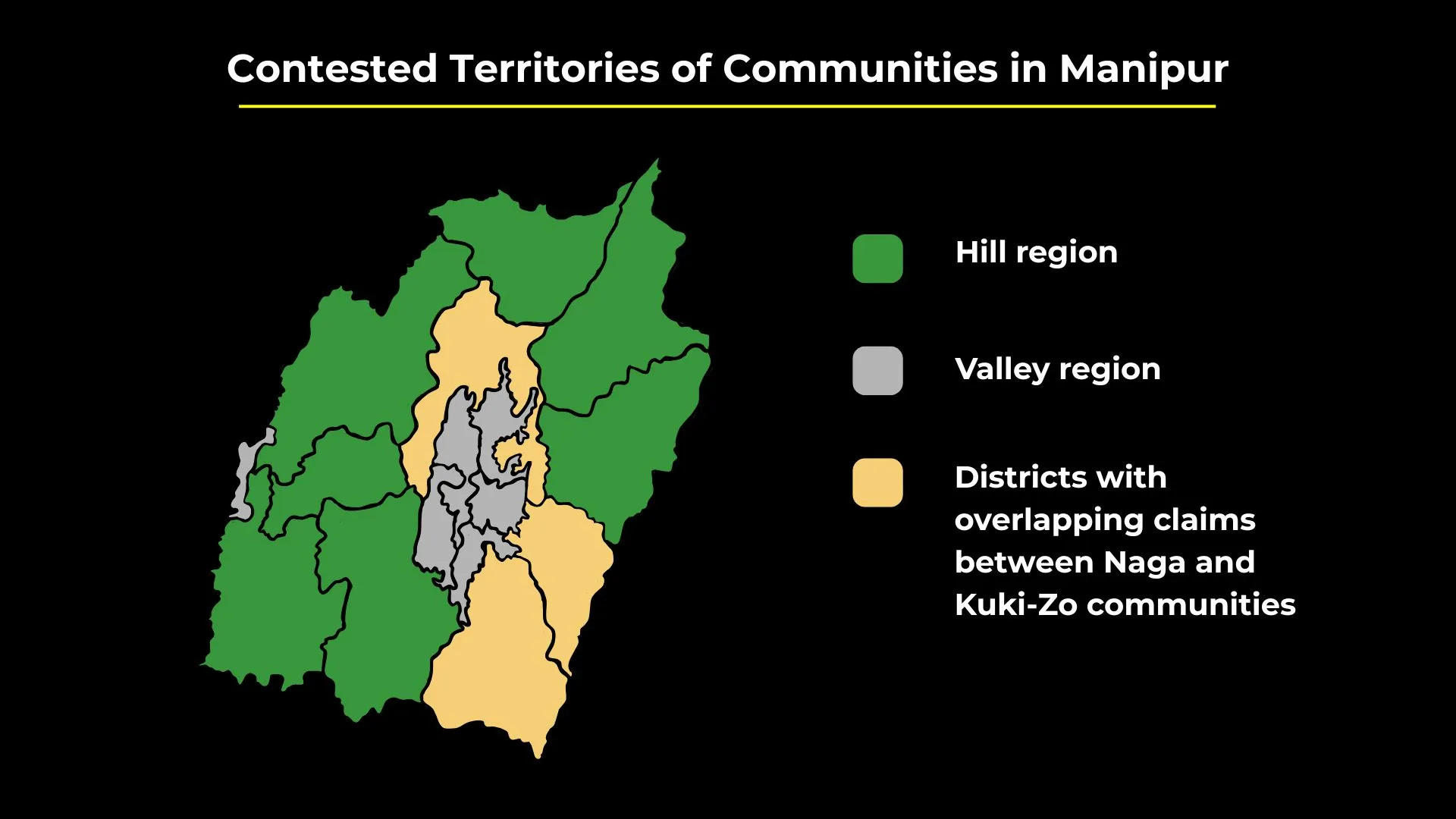
The Kuki-Zo armed groups have demanded a Puducherry-like solution: a Union Territory with its own legislature and command over all the areas and isolated pockets across Manipur where Kuki-Zo people live, even where they are a minority in hills dominated by, or considered the traditional homelands of, other communities such as the Nagas.
The areas and pockets they have asked for explicitly are spread across the existing districts of Chandel, Churachandpur, Kangpokpi, Tengnoupal, Pherzawl, and “all villages and habitations of the Zo ethnic tribes in other Districts contiguous, including Kuki-Zo inhabited areas of Jiribam".
The proposal says similar pockets in all other districts of Manipur, even if disconnected physically, should be under the new Kuki-Zo Union Territory. While the proposal doesn’t explicitly list them, Kuki-Zo settlements exist in Kamjong and Ukhrul, where Naga people are in majority.
The proposal from the Kuki-Zo armed groups to the Centre adds, “The above five districts and also areas outside these districts inhabited by the Kuki Zo people in other districts of Manipur, shall be separated from the State of Manipur by way of appropriate amendment under Article 3 of the Constitution accompanied by a legislation providing for the reorganisation of Manipur State. A Union Territory will be created from the said areas of the five districts.”
Some of these areas are dominated by Kuki-Zo people, such as Churachandpur and Pherzawl.
Others are not, and many are contested as traditional homelands by other communities, for example, Chandel and Tengnoupal, where the Naga population is much bigger.
Jiribam, a valley district where Meitei and Bengali communities are in large numbers, has pockets of Kuki-Zo settlements.
The proposal further added that the legislature of the new UT would have veto powers over parliamentary laws governing forests, land use, minerals, ownership and transfer of land, and ‘citizenship’.
Constitutional provisions for parts of northeastern India do give states and areas greater control over land and customary practices. But the Constitution does not let any state, UT or autonomous area decide citizenship. The Puducherry model that the Kuki-Zo groups want to follow, does not either.
The proposal also asks that only Scheduled Tribe communities live in the territories that make up the new UT. This would leave out the Meitei community, which falls in the general category and lives largely in the valley. Many were forcibly displaced from Kuki-Zo-dominated hill areas during the conflict, just as Kuki-Zo people were forced out of the valley.
Seilen Haokip, the KNO spokesperson, and Aaron Kipgen of the UPF had signed the proposal, handed to the Union government’s former interlocutor A K Mishra. “Our lands are contiguous in the past but not contiguous by the National Highways... We have placed our demand modelled on Article 239A, which is the Puducherry model. Puducherry comprises four districts. Two of them are surrounded by Tamil Nadu, one by Andhra and one by Kerala. They are not contiguous areas,” Haokip told The Collective.
He said the November 6, 2025 proposal to the Union government was a reiteration of the “original submission for UT” from 2023. We could not independently confirm that.
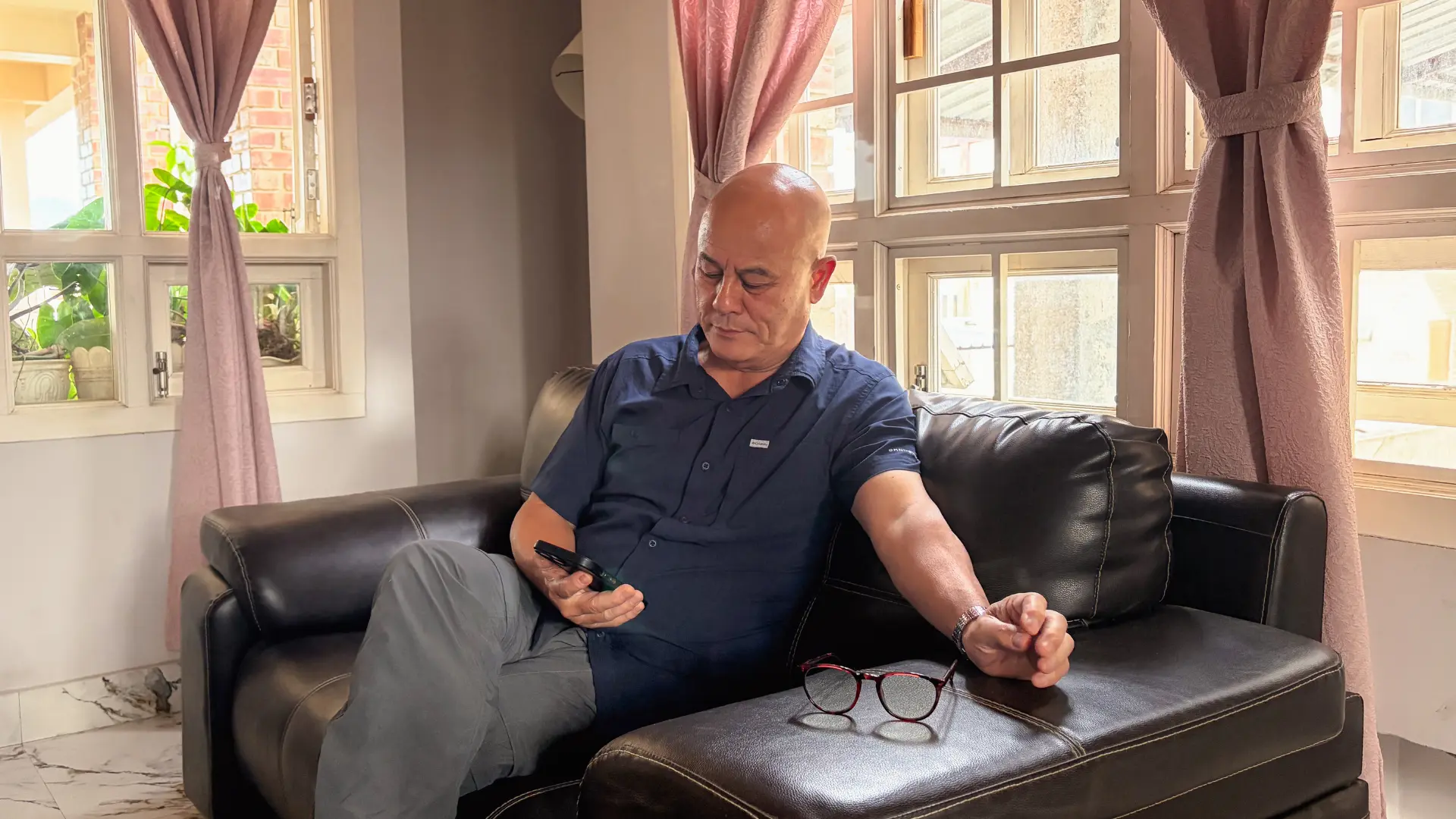
The mass forced displacement of Kuki-Zo people from the valley during the violence in 2023-26 had sharpened the call for a separate administrative area, on the argument that the people could no longer live in peace with the Meitei community.
What the Kuki-Zo leadership often left unsaid was that their territorial demand also cut into Naga inhabited hill areas and some of the valley areas where the Meitei are in greater numbers, seeking to bring them under Kuki-Zo administrative control.
The BJP-led Union and state governments had responded to the 2023 Kuki-Zo and Meitei conflict by cleaving the state into communally-controlled, impenetrable territories, with state security forces manning the ‘borders’ between Kuki-Zo and Meitei communities. These forces were tasked largely with keeping the two communities’ armed groups apart.
These unprecedented, community-based territorial boundaries raised suspicions about BJP and Union government’s intentions for Manipur. The Naga leadership stayed quiet at the time, since their people were not involved, but knew it would eventually affect their own demands for a Naga territory.
“We, of course, watched closely what the Union government and the state forces were doing,” the Naga leader told us. The Reporters’ Collective couldn’t independently verify this claim, but sent questions to the MHA about these claims. The copy will be updated with their response.
The old faultlines in Manipur were being ripped open yet again under the BJP’s watch and its government’s tactical silence.
In the 1990s, in a conflict between the Kuki and Naga communities that lasted several years, nearly 1,500 people were killed, by some estimates. The conflict redrew the map of community domination of the hills. The Naga armed groups’ presence considerably diminished in Moreh, the border town that is a recognised legal trade point with Myanmar and the route for much of the illicit trade, including narcotics. And many Kuki and Naga people were pushed out from areas where they were not in majority.
Nagas claimed, and several experts noted subsequently, that the Indian government helped flush the Naga armed group out of the lucrative legal and illegal trade zone, which the Kuki armed groups had then come to dominate. Meanwhile, the Kukis alleged that the Tangkhul Naga-led National Socialist Council of Nagalim(Isak-Muivah) or NSCN(IM) had killed over 1,000 people of their community and uprooted hundreds of their villages from the Naga dominated areas.
The Kuki-Zo and Naga communities had historically sought areas with varying degrees of autonomous control since independence. Kuki-Zo is an umbrella term for the Kuki and Zomi tribal communities, which have their own internal political differences.The imagined homelands and territories of the Kuki-Zo and Naga groups overlapped and cut across Indian state borders.
Over time, the differences over territorial control had fused with the respective armed groups’ attempt to control the illicit cross-border trade in drugs, timber and their bases in Myanmar.
The Meitei community, which also saw the formation of its armed groups, had initially sought an independent Manipur as it existed prior to India’s independence. Their idea of Manipur’s territory contradicted the Kuki-Zo and Naga demands and asked for Manipur to stay intact.
The conflict between Kuki-Zo and Meitei had lit the fires of these contradictions in 2023 between the hills and the valley.
In 2026, just as the BJP was hoisting itself back to power, the other faultline turned violent, between the Kuki-Zo and Naga armed groups.
Starting February, reports of villages being burnt, citizens being killed and kidnapped and the youth getting armed up to ‘defend’ themselves began to emerge.
Like it had happened between the Kuki-Zo and Meitei communities earlier, hate and accusations began to be hurled at each other. Insults such as ‘terrorists’, ‘illegal immigrants’ and ‘anti-national’ were largely traded on social media, as physical frontlines were cleaved up between these communities. The irony of two small communities, which aspire for autonomy from mainland India’s cultural, economic and political hegemony and sit on India’s blind spot, questioning each other’s allegiance and citizenship to India, had been sidestepped.
Along that vein, Seilen Haokip, speaking on the Kuki-Zo proposal, told us, “What is the NSCN(IM) fighting for, what are the valley groups fighting for, both are secessionists…We are the only ones asking for a constitutional settlement for our political requirements.”
“For instance, if Churachandpur is one component. In this district, there will be Nagas also, and they can choose to be a part of this territorial council or whatever status Nagas of Manipur eventually go for. They don’t have to be a part of our Union Territory,” he said.
He had directed his anger at the ‘enemy at the gate’, but he, not so subtly, pointed to the role of the one actor that gets the least attention during conflicts in Manipur and has the largest role to play, the Union government.
He alleged that the government has been hinting to the Kuki-Zo leadership to settle for a “middle path” solution instead, a territorial council within Manipur, rather than a Union territory carved out of the state.
“This is what they’re trying to do today in our talks, they’re trying to say if you want your political issues to be resolved, there has to be a middle path.”
“Today, the government of India wants us to return to the status quo, even after what happened on May 3rd (the Kuki-Zo and Meitei conflict). If you were in our position, would you go back to the lion’s den?”
The Reporters’ Collective asked the MHA about this “middle path” solution. The copy will be updated with the response if we receive one.
At the heart of this conflict, which is escalating even as we publish this story, are three underlying factors, we found:
- Fear that the Kuki-Zo push for an autonomous area is sidelining other communities’ aspirations and the Union government is neither being honest nor upfront about its intentions.
- The control over trade routes from Myanmar that are used to bring in thousands of crores worth of illicit trade including narcotics and accusations that the government and its agencies play a role in this.
- And, how the BJP’s political interests and the government’s security strategy intersect in Manipur, a state bordering the civil-war hit Myanmar, which the United Nations recognises as one of world’s biggest hubs of illicit drug trade, and where China and the US have geopolitical and business interests.
The following part of the investigation attempts to explain how these three factors are playing out and the escalating violent consequences.
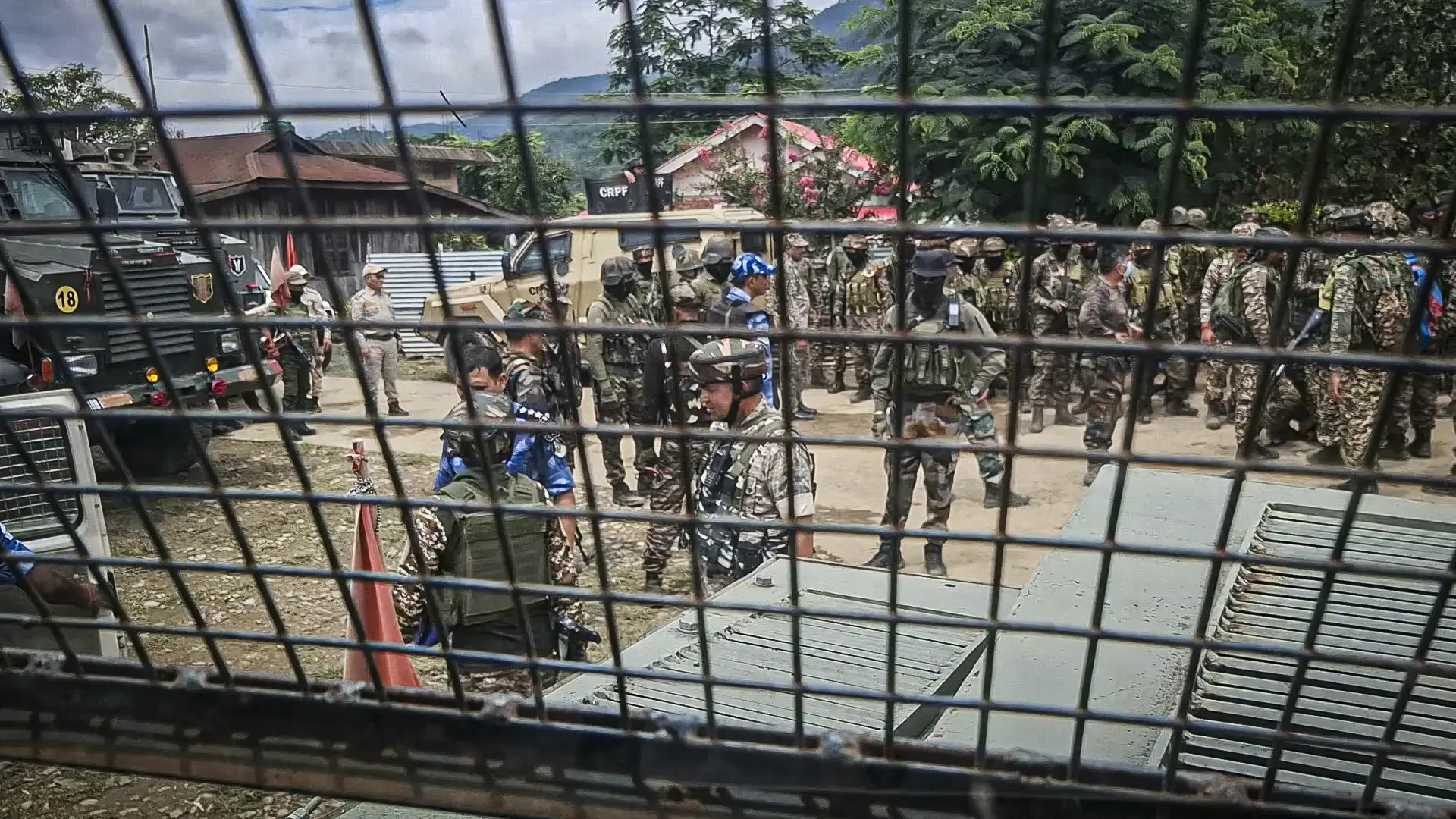
Over a month, The Collective’s journalists reported from Ukhrul, Churachandpur and Kamjong hill districts of Manipur, and from Nagaland, Assam and Delhi, speaking to government officials, armed forces officers, leaders of the armed groups and civil society, and ordinary citizens caught in the violence. Most did not want to be named.
We have cited claims repeated by three or more people in leadership positions in either community, and said so where these could not be verified independently. Claims accusing specific armed groups of crimes are reported at times without naming the group, giving only affiliation when relevant. Off-the-record claims by state security officials are cited only when two or more senior officers, speaking independently, made them. To protect sources, the male voice is used throughout.
Chapter 2
The Political Economy of Conflict
An old playbook of ceasefires never turning into peace, parallel establishments run by armed groups, and the state pitting one against the other.
On June 26, The Week published an interview with the founder of the Naga armed group NSCN(IM), Thuingaleng Muivah. In the interview, he said, “Indians are using the Kukis to kill the Nagas and they’ve been killing my people…it hurts us beyond words. We are ready to understand you, but the problem is Indians are using the Kukis to finish us”.
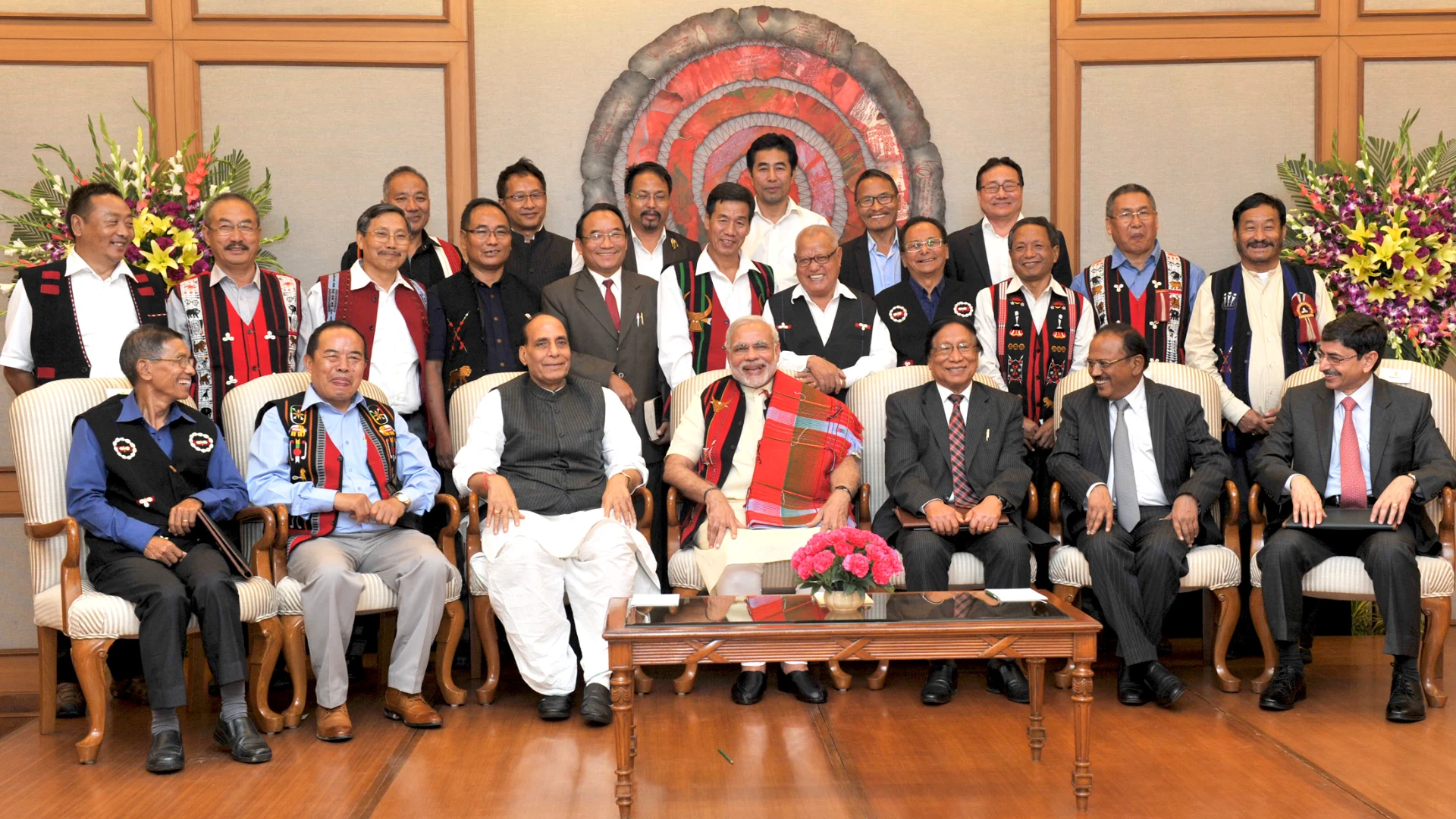
This was a tectonic shift for the man who, in 2015, had signed a framework agreement for peace with the Indian government at a highly publicised event in the presence of Prime Minister Narendra Modi.
Modi had then called the agreement, ‘historic’, and thanked Muivah and other leaders of NSCN(IM) for their ‘wisdom’, ‘courage’ and ‘efforts for cooperation’.
A little more than a decade later, in 2026, Muivah was now accusing Narendra Modi’s government of using the Kuki armed groups to kill the Naga people.
Why?
Manipur was made part of the Indian Union in 1949, two years after Independence — the Kuki-Zo, Naga and Meitei people each carrying their own visions of political autonomy, within India or beyond it.
Each aspiration birthed armed groups that communities saw as their own ‘movements’. Foreign involvement in arming them, and security concerns along the Myanmar and Bangladesh borders, meant the Indian government saw them first as insurgencies to be put down. Citizens’ democratic rights took a back seat.
Successive governments used a heavy hand. They imposed draconian laws such as the Armed Forces Special Powers Act (AFSPA), and attempted to chip away at the armed groups before bringing their weakened leaderships to the table. Excesses by forces operating with such legalised impunity are well recorded.
Governments also pitted one group against the other, and fostered fractures within existing ones. An old statecraft that India has used to quell ‘insurgencies’ in Kashmir, Assam and Punjab as well.
In 1997, the most powerful Naga insurgent group, the National Socialist Council of Nagalim (Isak-Muivah) or NSCN(IM), signed a ceasefire agreement with the Indian government.
Much later, in 2008, more than 20 armed groups of the Kuki-Zo community signed up to a Suspension of Operations agreement as well under two umbrella formations, Kuki National Organisation (KNO) and United People’s Front (UPF).
The pacts were meant to be temporary halts on the road to permanent political peace settlements. The settlements never came; instead, the armed groups became like parallel establishments in their regions of dominance. And the government’s method became one of managing the pacts, enforcing them when convenient and tolerating the breach when necessary.
Illicit businesses always flourish in prolonged conflicts, even as ordinary citizens build their lives amidst turbulence. They did so in Manipur too, with narcotics, illegal timber and arms trade flourishing.
Chapter 3
BJP Comes to the Northeast
As the party clawed its way back to power in Manipur, the conflict that consumed it found new faultlines. Peace, yet again, remained elusive.
By 2014, Prime Minister Narendra Modi had been sworn in at the Centre. In 2015, his government seemed to make progress, signing a Framework Agreement for peace with the Naga-led NSCN(IM).
States in India’s northeast rely on central funds. Consequently, its political economy too bends in favour of the party in power in Delhi. Going with that trend, N Biren Singh jumped from Congress to BJP and came to power in Manipur as chief minister in 2017.
He did so by stitching together Kuki-Zo armed and civil society groups, an assortment of party allies and a clean Meitei majority in the valley. His first government comprised 21 Meitei, five Kuki-Zo and six Naga MLAs.
But, in 2023, in his second term, Singh’s alliance with the Kuki-Zo leaderships began to fall apart. As the conflict took off between the Kuki-Zo and Meitei armed groups, he targeted the Kuki-Zo community as ‘narco-terrorists’ and ‘illegal immigrants’.
Officials say the Union government had by then come closer to offering Kuki-Zo people a form of autonomous territorial council, which would accord these areas more autonomy than the existing autonomous district councils.
Several security officials and multiple Kuki-Zo leaders told us this was true, though we could not verify it independently.
Singh postured to stand up for the Meitei community, which seeks a unified Manipur. By then, the vigilante group Arambai Tenggol had emerged, claiming to protect Meitei nationalism, even looting arms from state armouries under Singh’s watch.
In the rest of India, BJP’s image as a party that suppresses religious minorities led many to assume the conflict in Manipur, too, ran along religious lines. The Kuki-Zo people are Christian, while the Meitei predominantly follow a syncretic mix of indigenous Sanamahism and Vaishnavite Hinduism, with small sections also practising Christianity and Islam. But for most Meiteis, ethnic identity – linked to the land, as with the Kuki-Zos and Nagas – is primal.
Mainland India, reading Manipur through a polarised mediascape, imagined the Meitei community had taken to BJP’s Hindutva agenda and turned against the Christian minority Kuki-Zo people in the hills. The BJP and the Rashtriya Swayamsevak Sangh (RSS) had tried to expand their Hindutva project in the valley, but for the communities at conflict, ethnic affiliations overrode other currents. While differences of faith did influence some incidents of violence, ethnic identities played a much larger role in the hostilities.
Back in 2024, The Collective had reported on a presentation by Assam Rifles officials alleging that Biren Singh’s “political authoritarianism and ambition” was partly responsible for the conflict – an indictment by a central force of a chief minister from its own ruling party, the BJP.
N Biren Singh had crafted his position differently than BJP’s central leadership. Fissures erupted between them. Anger grew against Singh and the BJP among Meitei people too – over the unending conflict, the new wave of vigilantism and the division of the state along ethnic lines.
This was reflected in the 2024 general elections, when Congress candidates won both parliamentary seats, covering the hills and the valley.
In February 2025, Singh finally resigned. President’s rule was imposed, and the Centre’s role in managing security directly from Delhi came out from behind the curtains.
By February 2026, the BJP had engineered its way back to power in Manipur. But the hope of a durable peace in near future for all communities had been largely extinguished. A fractured Manipur needed the BJP government, at the Centre and in the state, to do more than get back to power: it needed to urgently work on the peace processes with each group.
The peace process with the Nagas had been stalled for years, with differences erupting into the open in 2020, when the government’s interlocutor R N Ravi, a former Intelligence Bureau officer and then Nagaland governor, said there was no mention of “shared sovereignty” in the Framework Agreement. The NSCN(IM) then alleged that Ravi was trying to divide the Naga people and had “misled” the central government and a parliamentary standing committee on the framework agreement signed on August 3, 2015. The demands for a separate flag and constitution for the Nagas also remain sticking points in the negotiations.
Nearly a year into President’s Rule, the swearing in of BJP’s new government in February 2026, with yet another alliance including the Kuki-Zo groups, would now tip the anxieties into violence.
As a result of the violence, in June 2026, the Naga armed group NSCN(IM)’ s leader Muivah came to allege that Narendra Modi’s BJP government was using Kuki armed groups to kill Naga people.
Chapter 4
Then, Litan
Where the boiling disagreement and stress over territorial control finds a reason to turn violent.
What preceded Muivah’s allegations against PM Narendra Modi’s government? A worrisome escalation in violence and militarisation which began in February 2026.
Three days after the new BJP government was sworn in, on February 7, 2026, Litan village in Manipur’s Naga-dominated Ukhrul district erupted into violence. It was just an excuse for simmering discontent that was set to boil over.
Litan is a mixed settlement of Tangkhul Nagas and Kuki communities straddling the pivotal National Highway 202, which links Imphal to the hilly Ukhrul district. Before February 7, it was a natural stopping point, where travellers caught a meal at Litan bazaar at the halfway point between the valley and the hills.
On February 7, a brawl broke out between “two Kuki boys” and “two Tangkhul boys” who were “under the influence of alcohol”, according to the suo motu First Information Report filed in Litan Police Station. The brawl triggered an incident in which “some unidentified Kuki youths numbering about five person” assaulted “one Tangkhul guy”.
Litan turned into a battleground. The Collective parsed over 30 FIRs filed between February 7 and June 1, detailing arson attacks on both Tangkhul Naga and Kuki-owned homes, gunfights, a highway ambush that claimed a retired Army personnel and a civilian from the Tangkhul Naga community, attacks on government officials travelling through the area, and wrongful confinement and kidnapping of people from either communities.
These incidents took place despite the presence of 10 companies of Central Armed Police Forces (CAPF) and 10 columns of the army in and around Litan since February 8, a senior police official of Ukhrul district told us. All this for a population of 16,000 in a state where the ratio of security personnel to citizens is 1:41.
The Reporters’ Collective sent queries to the MHA and Ministry of Defence about why the security forces have been unable to prevent the violence. The copy will be updated with their response.
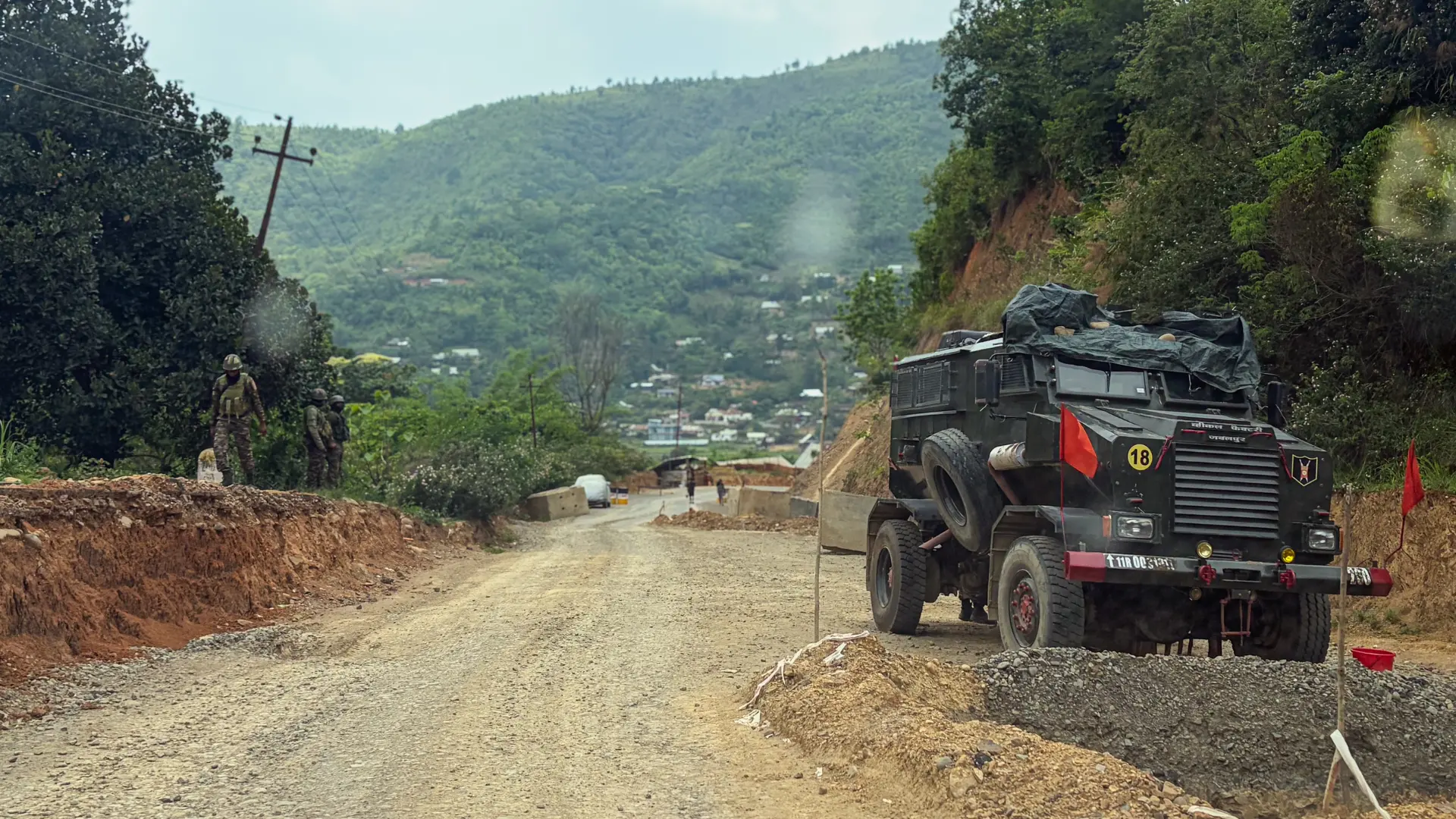
Kuki groups blame NSCN(IM) for the violence. The NSCN(IM) claims the “scorched-earth tactics of Kuki militants and Indian Security Forces” were to blame. Neither claim can be verified post facto. We sent queries to the MHA. The copy will be updated if we receive a response.
Now civilians avoid the road, and the Tangkhul Naga and Kuki communities keep to their own settlements, with security forces patrolling the areas in between, reminiscent of the earlier Kuki-Zo-Meitei conflict. From a state already split in two along ethnic lines, Manipur was splitting into three.
On May 19, travelling from Ukhrul to Litan, we spotted at least two armoured fighting vehicles and dozens of CAPF and army personnel at intermittent points along the National Highway.
The Litan Police Station now resembles a military base. Inside its compound, a police official who didn’t wish to be named said that although the violence was triggered by a drunken brawl, “the undercurrent was already there” – a land dispute between Naga and Kuki villagers over who owned the land of Litan Sareikhong, a Kuki village.
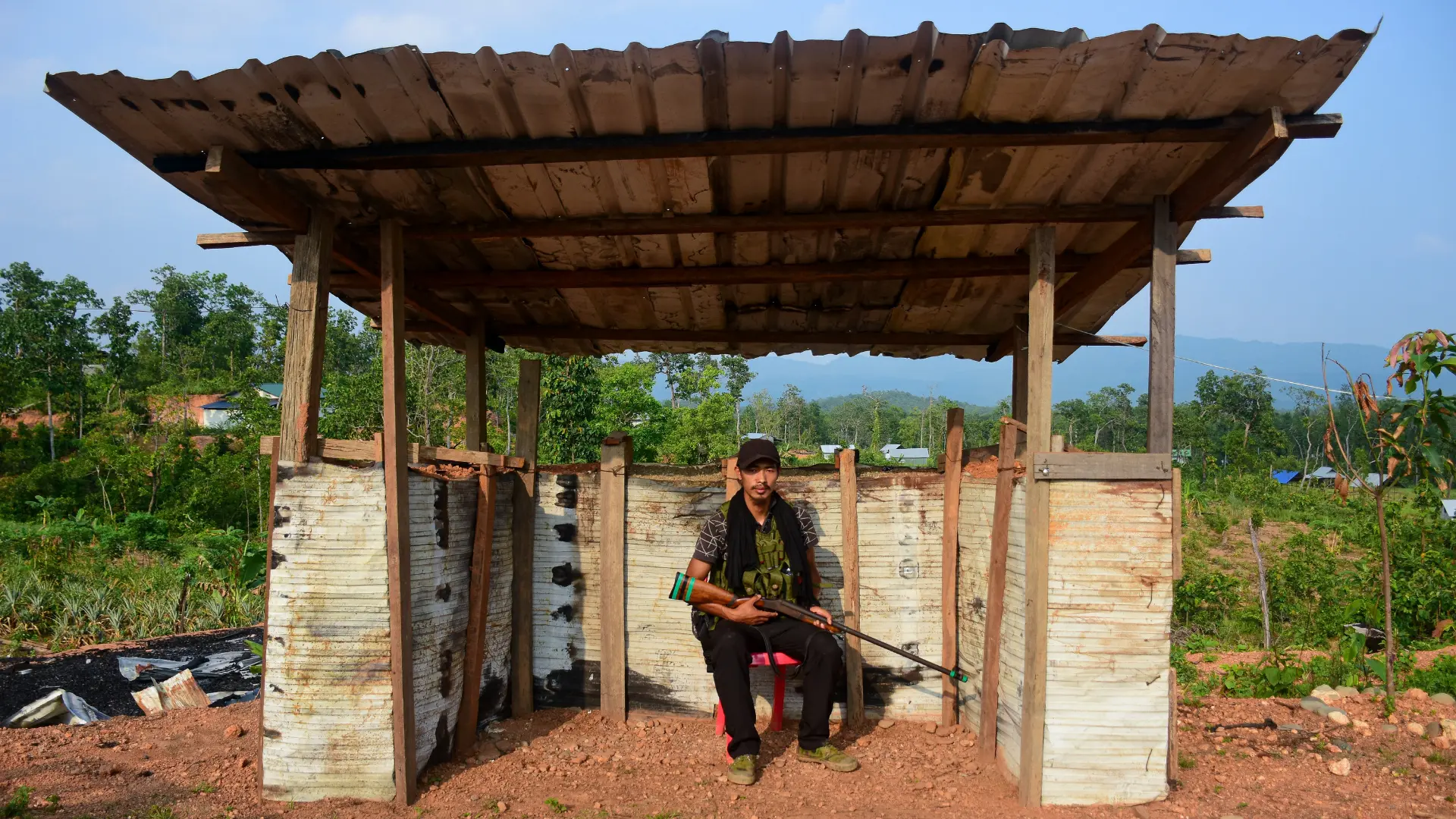
With the battlelines now drawn, “armed volunteers” of both communities, bunkers dug in, stand on guard in the hills around Litan, straining their ears for the sound of gunfire.
In the nearby Sikibung village, for the last three months, Tangkhul village guards, 37-year-old Ningsem Thongkei and 67-year-old Danny Shimray had barely slept for three hours.
Every morning, the two farmers slung their single-barrelled guns on their shoulder and trudged to a bunker on one side of a hill. Dug out and lined with gunny bags, it overlooks the nearby Thawai Kuki village.
Unlike Danny Shimray, Ningsem Thongkei had come from Ukhrul’s Marem village, about a 100 kilometres away from Sikibung.
According to Sword Vashum, president of the Tangkhul Naga Long (TNL), the apex body of the Tangkhul Naga community, thousands of volunteers from villages have been drafted to protect the “red zones” contested between the two communities, increasingly with violence and face-offs.
“I want to defend the land. That’s why I’m here,” Danny Shimray said from inside the bunker.
In the Kuki village of Mongkot Chepu, close to the Litan Police Station, 10-15 village volunteers also stand guard day and night, on alert for any firing from the Sikibung side.
“This is a case of land conflict and they have turned it into an ethnic conflict…we should’ve negotiated this at a local level and resolved it. Now it’s become Tangkhul versus Kuki,” said Khailal Haokip, a member of the village authority, over the phone on June 22. “The main issue now is to get food supplies through,” he added. “We had to build a route to Kangpokpi, but it’s a very difficult situation.”
FIRs filed in the police station confirm the use of sophisticated weapons by Naga and Kuki groups, indicating that those involved in the violence are not civilian volunteers alone.
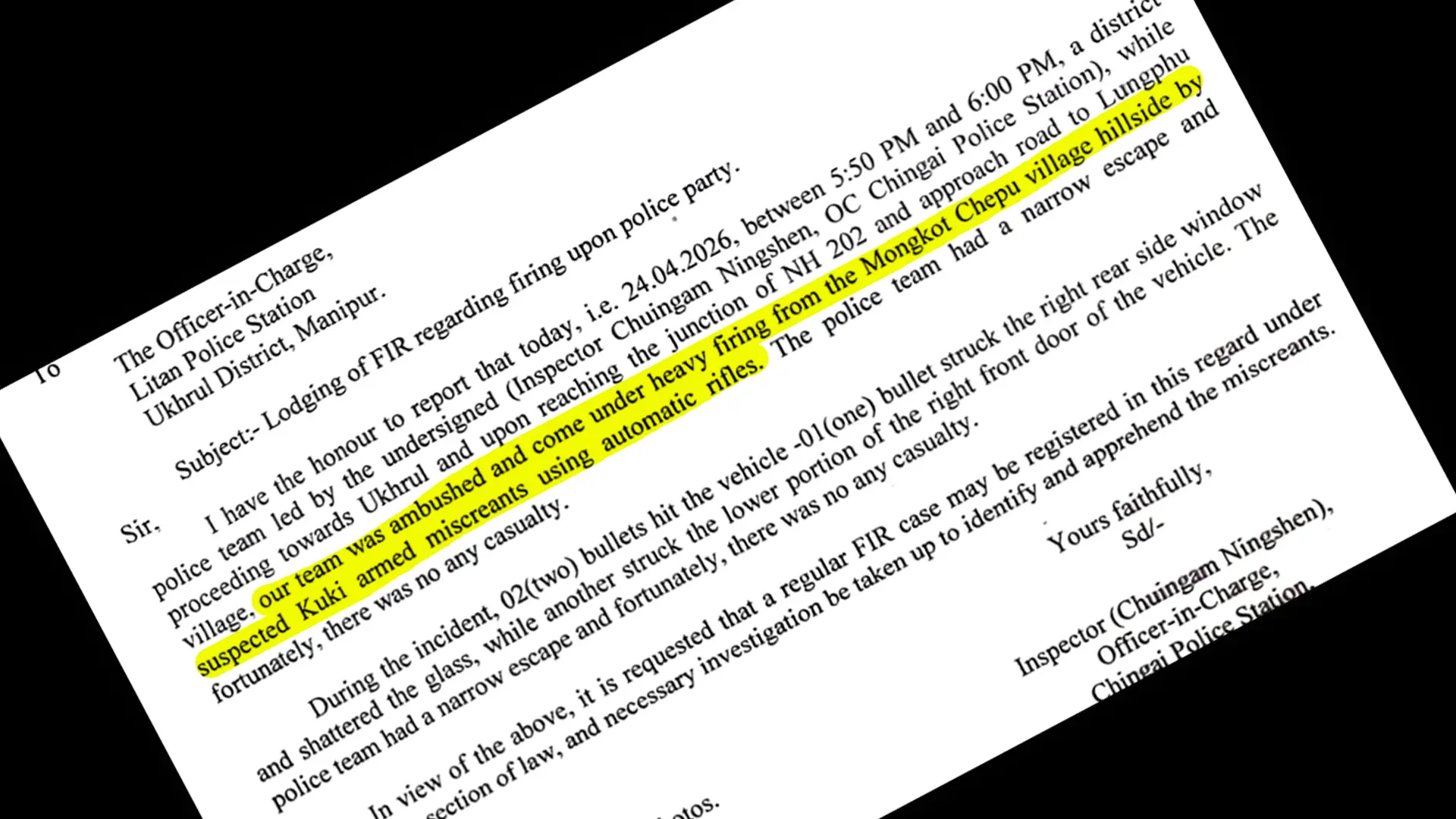
Armed groups had been involved in the conflict between the Meitei and the Kuki-Zo communities as well in the earlier phase of the conflict, The Collective had reported.
If the government ever formally acknowledges that a group with a cessation-of-violence pact has used violence, it would have to declare it a breach of the agreement, handing security forces a free rein to treat that group as an enemy of the state. We sent questions to the Kuki National Organisation and the NSCN(IM) about their involvement in the violence. The copy will be updated with their response.
For armed groups on either side, the same trap applies. So each side, regardless of the truth, calls its armed people volunteers with unsophisticated, licensed arms.
Several Naga leaders assert that the Kuki armed groups have operated deep into areas they dominate with the support of state forces. The Kuki-Zo leadership denies this, and in turn claims the Kuki-Zo are being demonised again and have a right to security that can only come from an autonomous area they govern – the Puducherry model.
On social media, campaigns began to run again. Hate words such as “Tangkhul separatists”, “Tangkhul terrorists”, “Kuki narco terrorists” and “Kuki illegal immigrants” are used against each other.
The Union government’s response: political silence, condemnation of violence in public and more armed forces on the ground.
Within days of the reports that CRPF’s Commando Battalion for Resolute Action (CoBRA) units were being sent to Manipur, after a violent period in Chhattisgarh to wipe out Naxalites, the force’s Director General’s video-recorded statement to a battalion headquartered in Manipur came out in public. “If you don’t shoot miscreants, then why has the government given us so much ammunition,” he was heard saying in the video, shared by News24 on X.
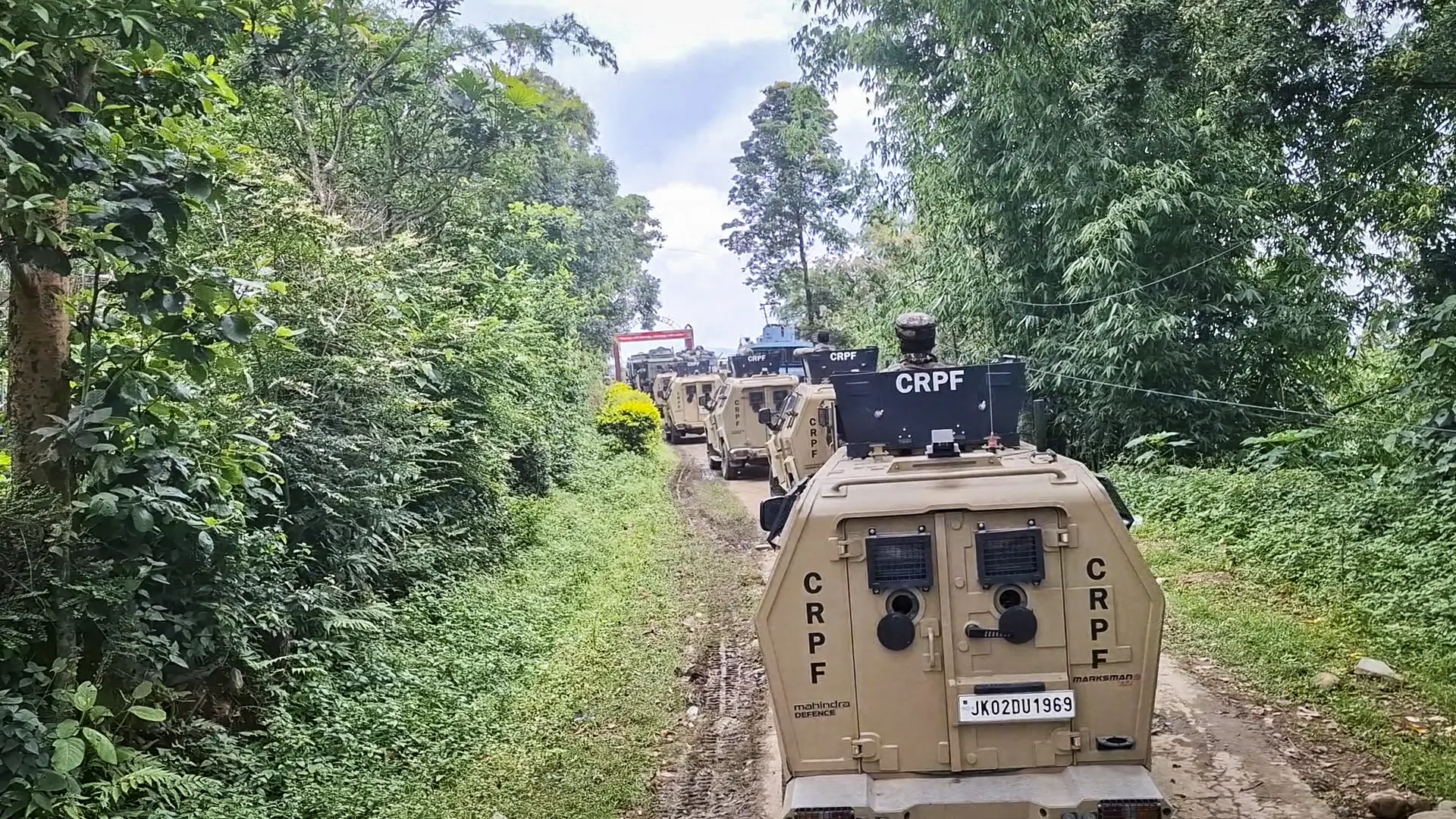
They would be protected for bona fide action, he said. But citizens of Manipur, remembering past excesses and extra-judicial killings, interpreted it with dread to mean a return to the dark times.
On June 10, six mutilated bodies of Naga civilians were found by the state forces, their heads and limbs chopped off.
They had been missing for over a month. In a tit-for-tat, 28 Kuki and 20 Naga civilians had been kidnapped by the other side, triggered by the killings of three church leaders from the Thadou Baptist Association, which Kuki-Zo groups blamed on Naga armed groups.
On May 15, both sides released 14 hostages. Nearly a month later, on June 9 the Naga released 14 more Kuki captives.
Weeks before the bodies were found, several Naga leaders in Manipur had told The Collective they feared their six people were already dead, and warned that the ‘discovery’ of the bodies would lead to greater unrest. A senior security officer in the state had confirmed the killings days ahead of the recovery of the bodies.
But, officially, the government made it sound as if a herculean effort had been made to ‘locate’ the killed. The Director General of Manipur Police claimed the bodies had been located after “hectic efforts” by around 15 teams of Manipur Police, Assam Rifles and the CRPF.
So, how had the state really ‘found’ the bodies of the six kidnapped Naga civilians timed within hours of the release of the Kuki people?
News reports suggest the Union home ministry had been involved in the negotiations, though this cannot be independently confirmed. We sent questions to the MHA. The copy will be updated with their response.
Weeks later, the Kuki-Zo Council, an influential civil society organisation, claimed that the killing of the Naga hostages was a “grave mistake” and “tragic, unacceptable and was neither authorised nor approved by any Kuki-Zo political or community leadership”.
The fearful anticipation that the ‘discovery’ of the bodies would cause more anger and lead to escalation in violence came true. Within 24 hours, two Kuki men were reported dead and houses were set ablaze in Kamjong district. While the perpetrators behind the renewed violence in Kamjong remained unknown, protests erupted outside the Jawaharlal Nehru Institute of Medical Sciences (JNIMS) in Imphal, where the remains of the six hostages were brought.
According to a leader of a Kuki civil society organisation, the battle to control supply routes of illicit trade by armed groups with different ethnic and political affiliations was one reason for the violence escalating. He said the violence in Kamjong district had the underpinnings of this battle, and escalated even as the Indian government further militarised the area.
Chapter 5
What Are the Hills Worth?
Behind the escalating ethnic violence in Kamjong lies an older fight over the trade routes to move narcotics and timber across borders.
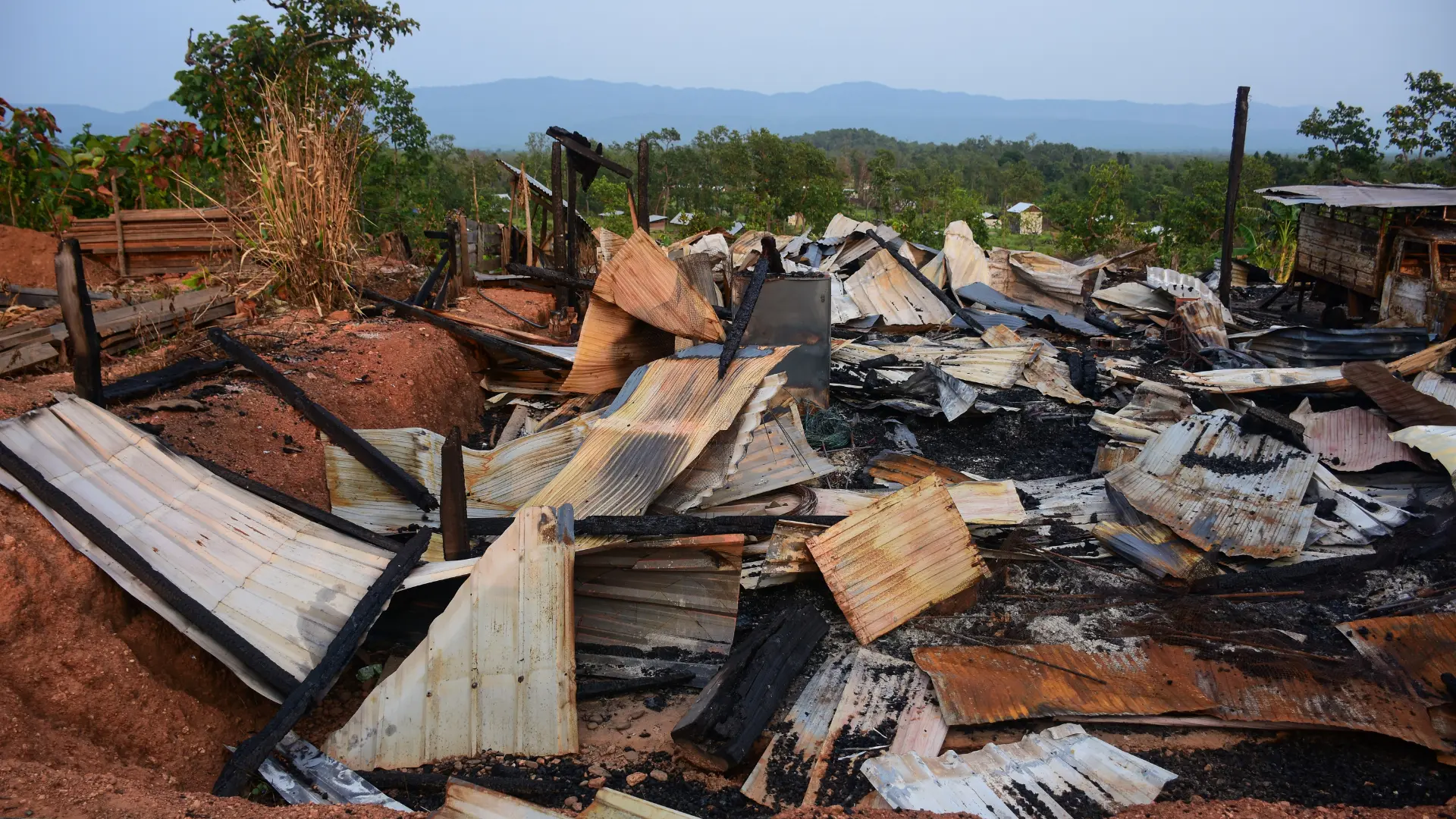
Kamjong district, dominated by Tangkhul Nagas, saw armed men allegedly cross the Indo-Myanmar border in the early hours of May 7 and open fire on the villages of Namlee, Wanglee and Choro.
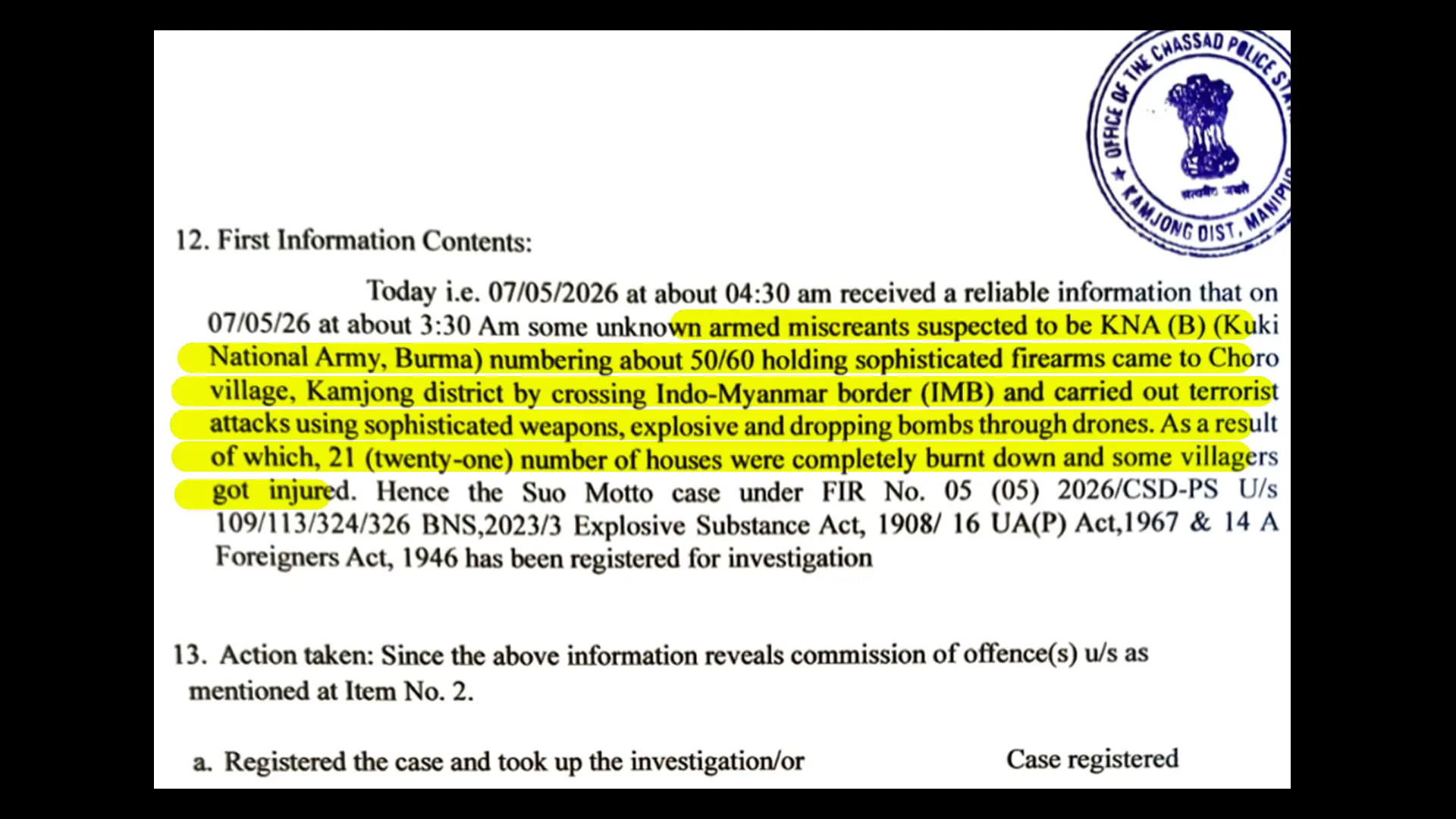
According to the suo motu FIR, “50/60 (suspected terrorists of Kuki National Army - Burma) holding sophisticated firearms came to Choro village, Kamjong district by crossing Indo-Myanmar border (IMB) and carried out terrorist attacks using sophisticated weapons, explosive and dropping bombs through drones.”
Residents of Choro village also claimed it was an attack by the Kuki National Army-Burma. The group denied their involvement, credited it to a Kuki volunteer group’s “military operation” as a “consequence of the ethnically motivated activities of the NSCN(IM) Tangkhul Naga armed group operating in the Kamjong and Ukhrul districts.”
Five days before, Kuki groups had alleged that “Tangkhul-led militants” had attacked a Kuki settlement in Kamjong. Police claimed in the FIR, that deserted houses of the village had been gutted in a fire.
This reporter couldn’t verify the perpetrators behind these acts of violence and arson.
We could ascertain that the violence in Kamjong, which borders Myanmar, has much to do with territorial control over the illegal trade that runs through the belt.
Drugs, timber and more. Officials, armed forces personnel, the armed groups and civilians all acknowledge this off the record. On the record, the state insists it is doing its best to stem the tide. But each year, the officially captured haul of drugs and timber keeps increasing. So does the actual trade.
Manipur's narcotics trade has increased over the last 15 years — surging sharply in the 2020s, right around the time BJP came to power in the state and civil war engulfed neighbouring Myanmar.
The UN Office of Drugs and Crime describes the Golden Triangle, which includes war-torn Myanmar, as “one of the biggest drug trafficking corridors in the world” from where heroin, opium and synthetic drugs like methamphetamine are “feeding the whole of Asia Pacific”.
Previously, The Collective, along with Al Jazeera, had reported how this corridor has now extended west into Manipur, with the drug economy becoming one of the underlying triggers of the 2023 conflict.
“The drug trade is so lucrative that it has eaten into all societies. Armed groups are involved, and political patronage is written all over it. Routes, and parts of these routes, are controlled by groups affiliated to different communities. Groups hold sway in areas where their communities dominate or live. The control over these routes in Myanmar has always been a bone of contention between armed groups with, at best, ineffective state forces present all over purportedly to end the trade,” said a senior state official who has been involved in controlling the narcotics trade.
N Biren Singh himself was once accused of protecting a Kuki-Zo politician arrested for drug trade, but never investigated. The police officer, who accused leaders across communities for their involvement, resigned.
According to a presentation by the former DG of Assam Rifles, Lt General P C Nair, at a seminar in Guwahati made on June 17, the Assam Rifles alone seized “contraband” (90-92% being illicit drugs) worth Rs. 7,525 crore in the years from 2022-2026 in six of the eight northeastern states barring Meghalaya and Sikkim. Of this, contraband worth over Rs. 2,200 crore was seized in Manipur alone.
Other security forces and Manipur police also seized narcotics during the period as well.
Multiple state security officials speaking independently peg the narcotics economy in Manipur at Rs. 60,000-70,000 crore annually. That is more than the state’s annual income. These figures could not be independently verified.
Off the record, one of these senior security officers told The Collective that what is caught is only a drop in the ocean. “The trade is so big it overshadows the state’s economy. Of course, it cannot happen without patronage of all kinds,” the official said.
A 2025 study on drug trafficking in Manipur also backs this claim. It notes that considering the involvement of “high-profile politicians, top-rank army and insurgent groups” in the narcotics trade, the seized drugs are a mere tip of the iceberg.
Asked about accusations that the trade has flourished despite heavy state-force presence, and that armed forces officials are themselves involved, he said, “You are dealing with cross-border cartels, armed groups and powerful vested interests. There is large amounts of cash involved with drugs being produced and carted.” He preferred to skirt the accusations.
One of the big centres of the cross-border drug trade in Manipur is the border transit town of Moreh in Chandel district. In 1992, Moreh was the trigger site of the Naga-Kuki conflict, which claimed over 1,000 lives and flushed the Naga armed groups out of the lucrative trade belt.
A leader of a Kuki civil society organisation said the May 2023 violence had disrupted a deeply entrenched supply chain of illicit trade involving all communities.
Now, the routes going through Kamjong have become the new zones being fought over for territorial control, several leaders across the communities independent of each other acknowledged.
Then there is the timber trade. A 2025 paper in the International Forestry Review put its annual value in 2022 at about Rs. 312.2 crore, of which Rs. 217.2 crore moves through the Kamjong route. “Various [Naga and Kuki-Zo] hill insurgent groups collect informal tax from the trucks carrying timber passing their areas and jurisdiction,” it noted.
Residents of border villages in Kamjong confirmed the same. During this reporter’s visit on June 5, however, the trade continued. Around 10–15 trucks loaded with timber were seen heading towards Imphal from the border route, suggesting the trade continues, albeit at a reduced scale.
Residents of the villages and an NSCN(IM) senior functionary said the stakes have only grown, with plans for an official trade centre and customs office. The functionary described Kamjong as part of the “most-vied corridor”, with everyone, “the Meiteis and Kukis” included, wanting to get ahead of these activities.
Chapter 6
Why Silence Suits Delhi
The Union government has stayed quiet through every escalation, every allegation. But, when it comes to Manipur, silence is always easier.
“For us, the real issue is how this escalation of violence will impact the peace process (between the Union government and the Naga leadership),” said a Naga civilian leader. “That is the lens from which we view the violence,” he added.
A senior functionary of the NSCN(IM) claimed that in a round of talks held in 2025 with the previous Union government interlocutor, A K Mishra, the government seemed to have changed its policy. “We have understood from India that they are no longer for the Framework Agreement.”
The functionary speaking from Dimapur alleged, “In reality, the Government of India is sponsoring the Kukis.” The government, he argued, hopes if the Kuki-Zos are favoured, it would weaken the Naga people’s demand for being free, outside the Indian Union”. “So, the situation [in Manipur] is being created by the government. Not the Nagas or the Kukis.”
The Collective sent questions to the MHA about these claims. The copy will be updated with their response.
Calvin H, secretary of the Kuki National Organisation’s Ministry of External Affairs , in turn, blamed the NSCN(IM): “They are aware that the Greater Nagalim… isn’t happening.” Hatlang added, “They don’t want the existence of some areas where there are settlements of Kukis in districts like Ukhrul (where Naga populations dominate)...But we need our political settlement, because there’s no going back for us.”
People’s aspirations have been dialled back to territory-based identities.
After the mutilation and killing of six Naga people, the BJP government’s Naga deputy minister, Losii Dikho, blamed KNF-P for the killings.
The apex Naga civil society organisation in Manipur, the United Naga Council demanded the removal of the BJP deputy chief minister from the Kuki-Zo community, Nemcha Kigpen, KNF-P President Semtinthang Kipgen or ST Thangboi Kipgen’s wife, saying that “her continuation in office would amount to a wilful compromise of the integrity of internal security concerns”.
The BJP and the Union government stayed quiet. In Manipur, silence is always easier. It lets the average Indian citizen continue to imagine the conflict is only between communities at loggerheads.
But there are already complaints emerging from Manipur of militarisation and how it impacts civilians. On June 16, a man was killed during a joint operation of the Army and Assam Rifles in Songkong village in Churachandpur district. While a BJP MLA from Manipur and village authorities alleged he was an innocent civilian,the Union Ministry of Defence in a statement said that they were acting on “intelligence regarding the movement of United Kuki National Army cadres” and had neutralised “one insurgent” after a “firefight ensured”.
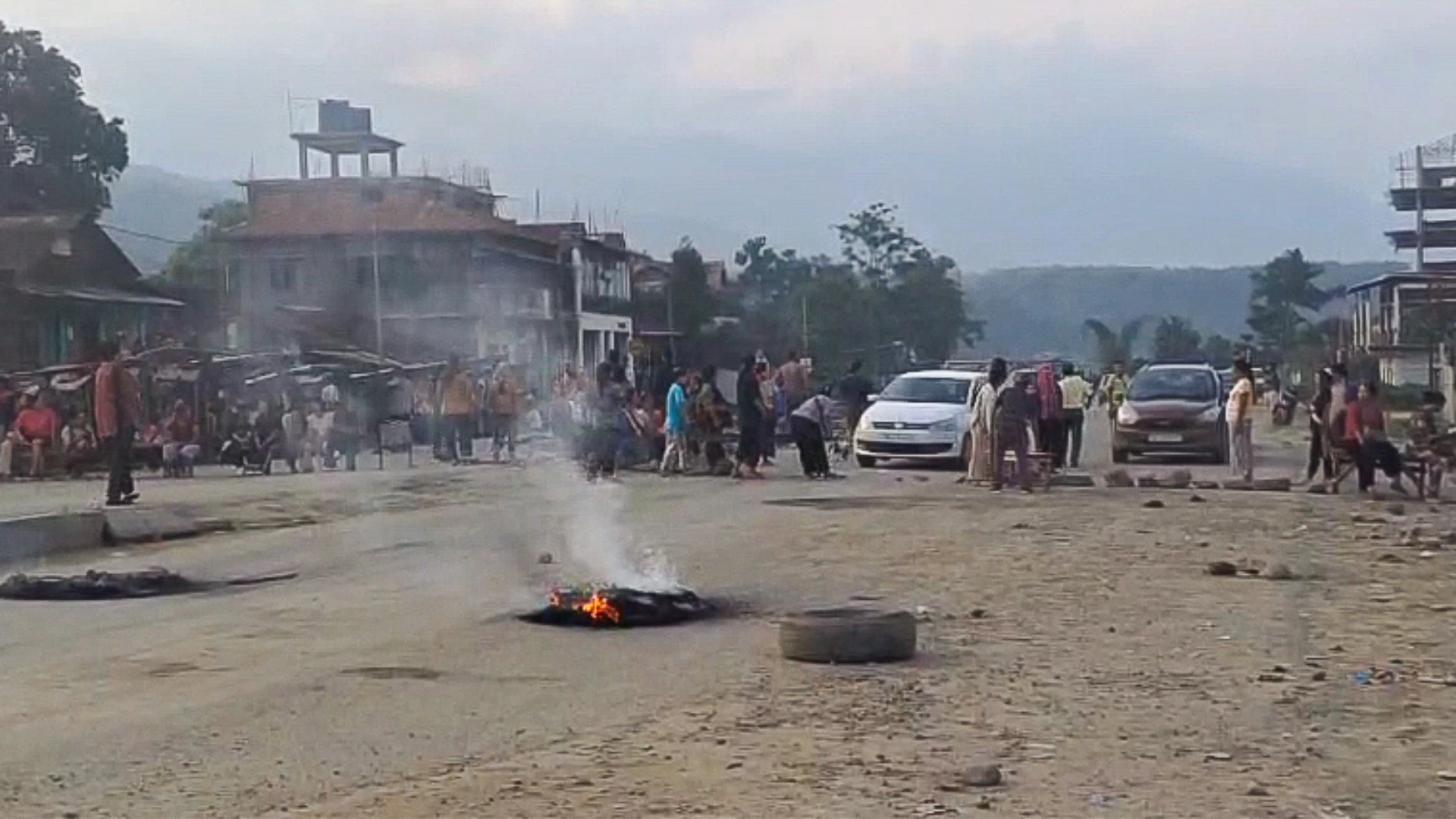
But a conflict, seen from a distance as one between two Christian minorities in a state with only three MPs, does not yet serve mainland politics, for either the opposition or the acolytes of BJP’s Hindutva, the way the Meitei-Kuki-Zo conflict could when twisted out of context.
“All this could have been stopped in days. Ask the executive in power why it has decided not to for three years. It is only getting more complicated here. This will not go well for anyone, my men or the people of Manipur,” said a senior armed forces officer posted in Manipur.
As we publish this investigation, violence, anger and fear in Manipur hills intensifies. The Union government’s answer remains: silence and militarisation.
The government has trifurcated the citizens of Manipur and stoked them all into conflict.
The report was updated with facts on Manipur’s religious composition, the political differences within tribal groups, details of the proposal by Kuki-Zo groups and trends in the illicit narcotics trade on July 1, 2026 and July 7,2026.
THE FOLKS
BEHIND THE Story
Reporter


Reporter

Founder

Design Editor

Managing Editor

Reporter
.avif)
Reporter
Support independent Journalism
The Reporters’ Collective collaboratively produces investigative journalism. In many languages and mediums. We report truthfully and bring out facts that the powerful prefer to keep hidden from citizens.
Besides courage and integrity, such reporting requires resources. We need your support. We need citizens to donate to keep us going and keep our work free to read for those who can’t afford to pay. Your donations will help us remain independent and work without fear.
You can change how much you give or cancel your contributions at any time.
By proceeding, you are agreeing to our Terms and Conditions. To find out what personal data we collect and how we use it, please visit our Privacy Policy.