


Guwahati, Assam and Ghaziabad, Uttar Pradesh: On October 18, 2024, a group of protesting students assembled at a newly established private university in a village approximately 153 kilometres from Agartala, the capital of Tripura.
The university's name, Aryavart International University, struck a jarring note, clashing sharply with the location and the condition of its campus.
The university sits in a corner of the Tilthai village in the North Tripura district. A dusty, unpaved road leads from the village to a recently cleared patch of more than 18,000 square meters amidst groves.
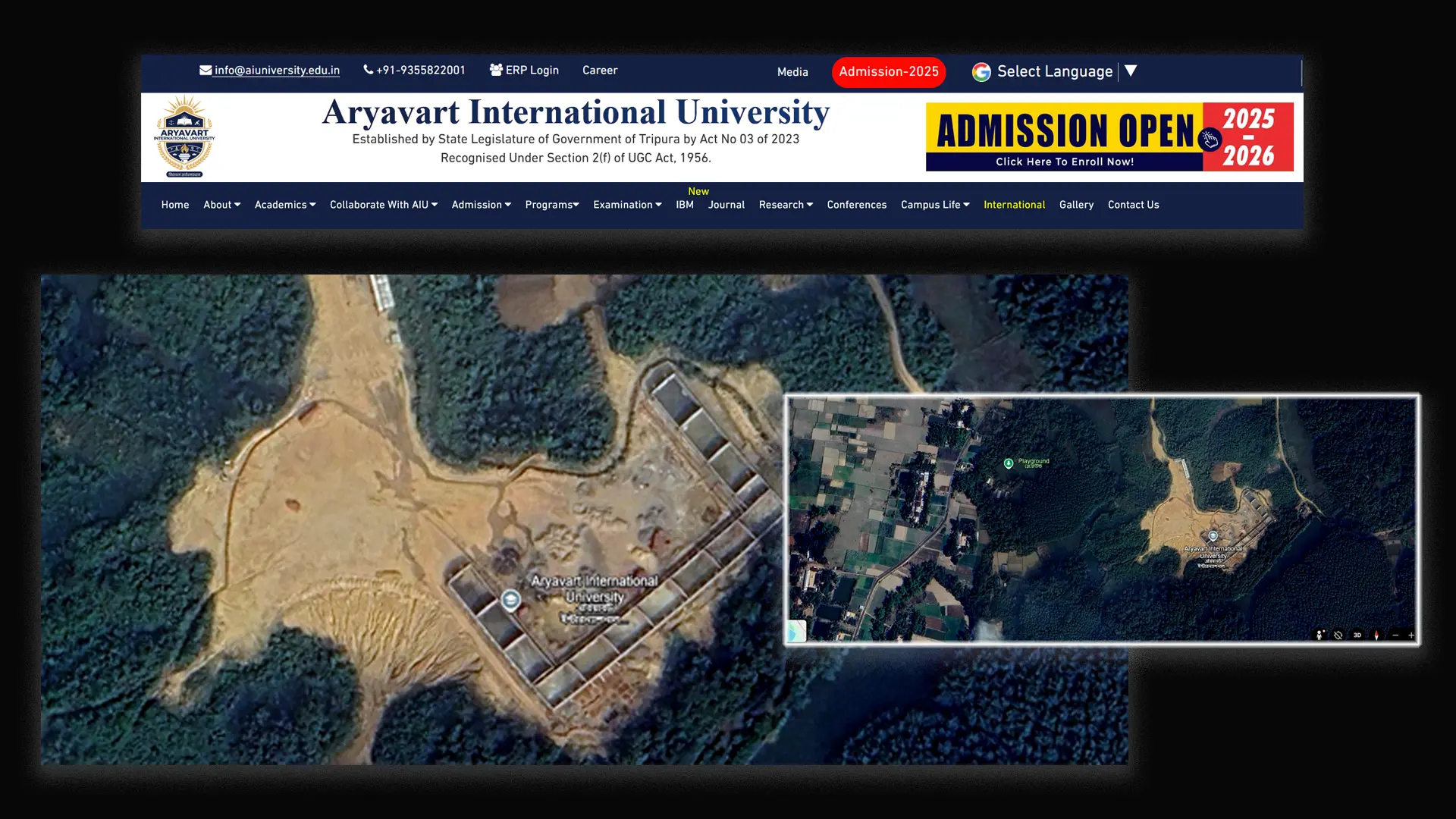
The sparse campus scarcely evokes "international" grandeur, and imagining Tripura as the mythic Aryan heartland strains credulity.
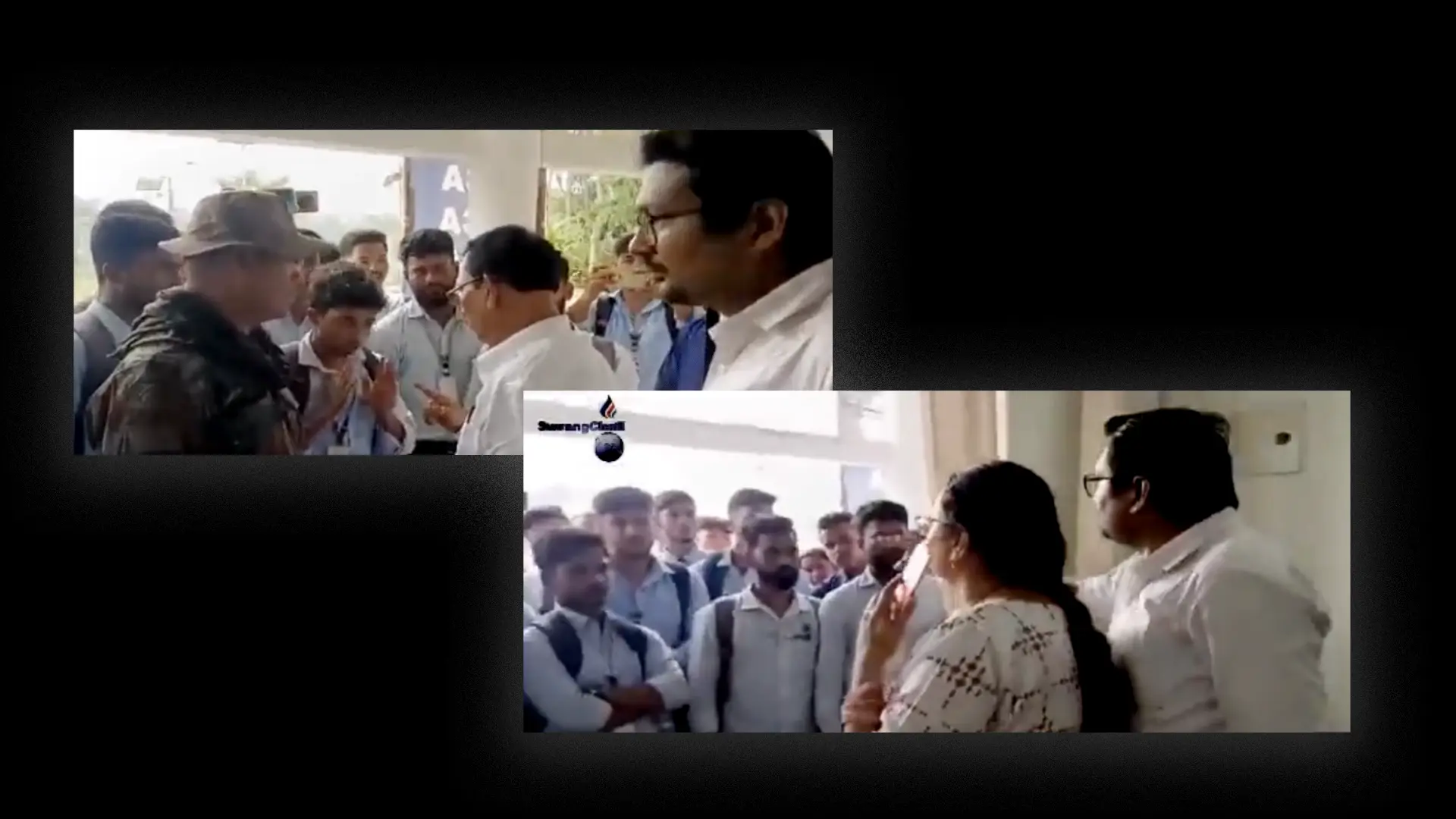
“Will you be able to show us the University’s approval letter?” the gathered students asked Gunjan Bansal, the Chancellor and Deepak Bansal, the Pro-Chancellor of the University. The protesters demanded to know whether the university, which had opened its doors in 2023, had secured the mandatory approval from the University Grants Commission. They also alleged that the University’s authorities had mistreated them.
The situation turned heated as Deepak Bansal objected to some of the students recording the interaction on their phones. Approaching a personnel of the Tripura State Rifles, who had been deployed at the university, he attempted to cite an order by the district’s Superintendent of Police, which he claimed prohibited any “press conferences”. Students demanded he speak in Bangla since he was in Tripura. An agitated Bansal retorted that “Tripura is in India.”
Bansal is not from Tripura. But, he did hold some influence in the state.
State-level private universities can only be established by the state passing a special law enabling their creation. In practice, that requires the state government and the party in power to back the promoters.
The promoters of Aryavart International University had secured the chief minister Manik Saha-led BJP state government’s blessing to pass the law in the assembly in 2023. The university had made a point to parade its state-stamped legitimacy in all its promotional material.
The Reporters’ Collective uncovered something the university had kept hidden from its students and out of its promotional materials.
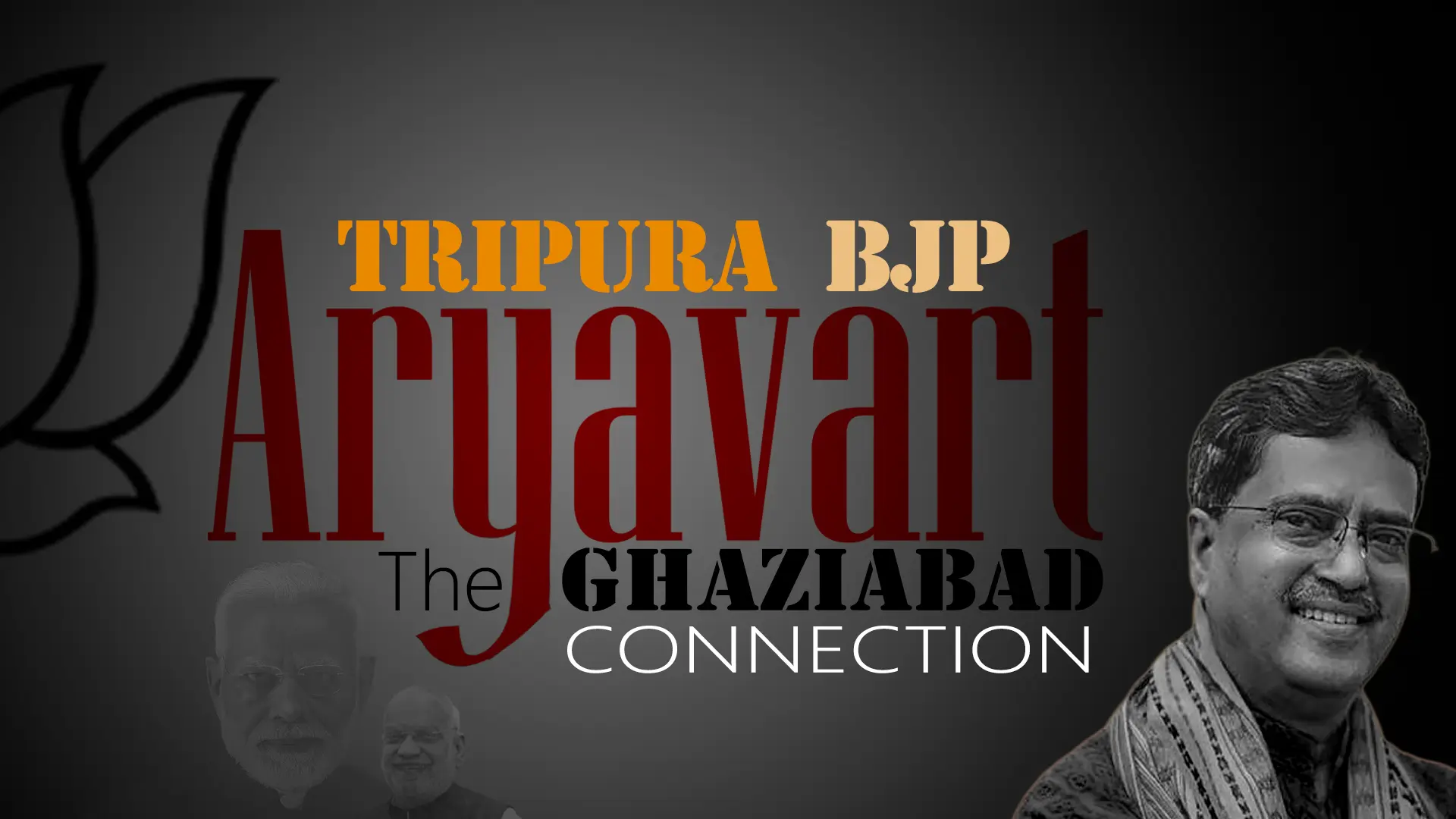
The promoters donated Rs 50 lakhs to the BJP around the year that the state government passed the law in the assembly to establish the Aryavart International University.
We found the University’s sponsoring body, Ira Social Charitable Trust, donated Rs 30 lakhs to the BJP. Raman Kumar Roshan, the founder and chairman of the university and Gunjan Bansal, the Chancellor, donated Rs 10 lakhs each to the BJP in FY2023-24.
The university does not disclose this financial relationship on its website. It’s not required to. But it does make a point of flaunting its proximity to the state BJP leadership.
Among high-ranking leaders who have visited the university are the Minister of Road Transport and Highways of India Nitin Gadkari, Tripura Chief Minister Manik Saha, BJP’s national spokesperson Sambit Patra and several state cabinet ministers, including Bikash Debbarma, Pranajit Singha Roy, Ratan Lal Nath, Sudhanghshu Das, Sukla Charan Noatia, Tinku Roy and state assembly speaker Biswa Bandhu Sen.
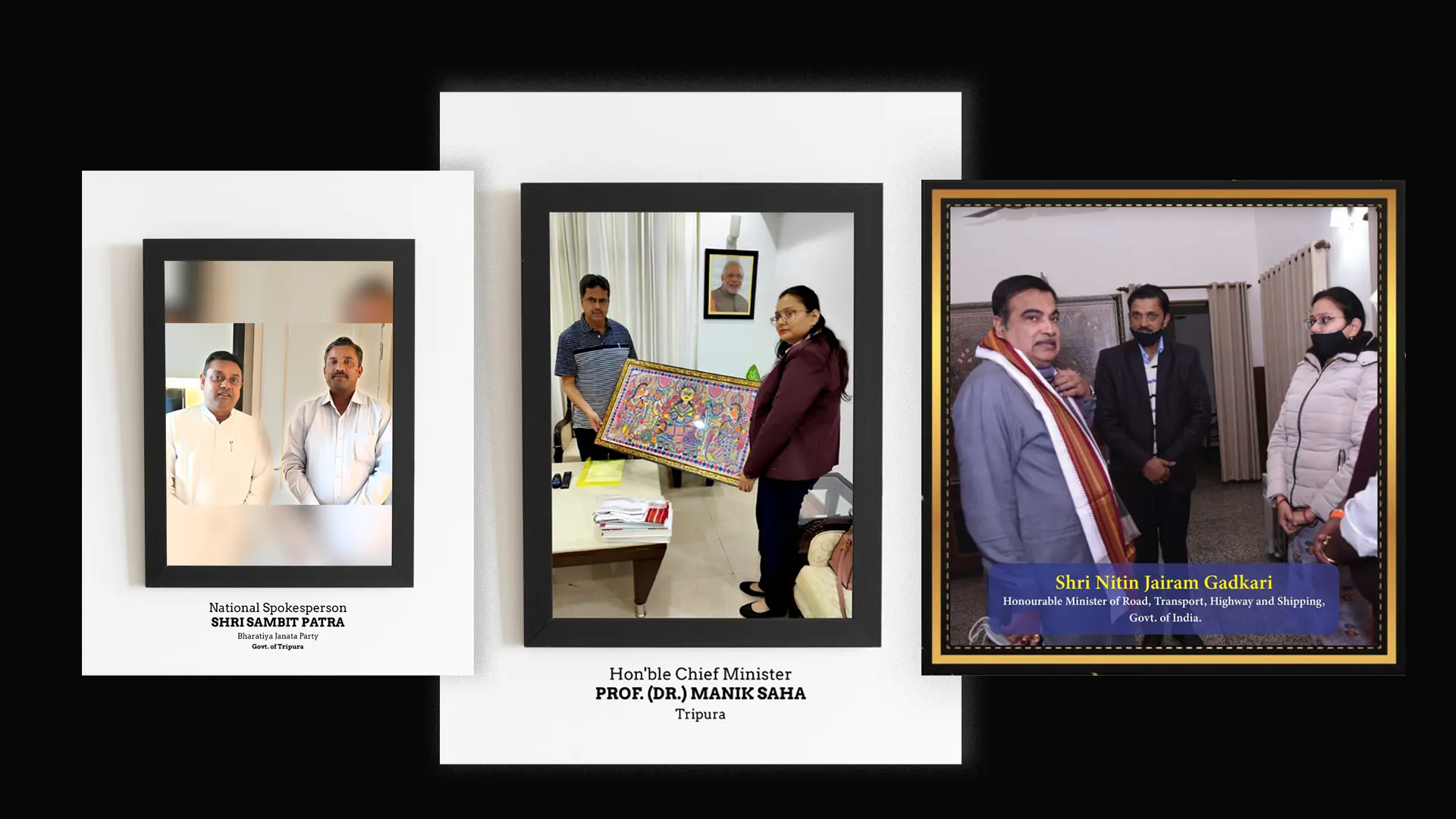
Images speak volumes, but they can also veil dark truths. So, we dug deeper and uncovered the university's roots in Ghaziabad, Uttar Pradesh, about 2,000 km from Tripura.
{{cta-block}}
In Ghaziabad, Uttar Pradesh
That is where Ira Social Charitable Trust, the promoting agency of the international university in Tripura, is located.
Its address: B-3/66, Second Floor, Bihari Nagar, Navyug Market, Ghaziabad
We went investigating.
The two streets that make up Bihari Nagar in Uttar Pradesh’s Ghaziabad are largely residential, broken up by a smattering of tailors and small provision stores.
The Trust’s registered address is a two-bedroom flat inside an unremarkable apartment block in a locality otherwise comprising largely independent homes.
A large engraved sign outside the flat announces the trust. Inside the house lives a family of six.
They are tenants who have lived in the apartment for the last three years. We spoke to them. They were dismissive of the sign outside the flat.
“We don’t know about Ira Social Charitable Trust, and have never met the landlords,” said the tenant (We are not disclosing his name to protect his privacy). “We only recently came to know that they’re in the business of running a university.”

They know the name of their landlord only from the rent agreement: Gunjan Bansal, the chancellor of Aryavart International University.
To find out more about the mysterious trust and its trustees, we dug out the records of Ira Social Charitable Trust from the Ghaziabad Registrar’s Office.
The trust was registered on July 30, 2015, with Gunjan Bansal and Raman Kumar Roshan, the Aryavart International University’s founder and chairman, as trustees. At the time, Roshan was 32 years old.
The purpose of the trust, going by the written record: Every good deed you can imagine. The trustees put down that they could set up orphanages, establish rehabilitation centres for sex workers, run gym studios and conduct yoga. They could, alongside, fight against child marriage, child labour, and the dowry system.
One of the missions the two trustees set down for the trust was “to encourage the people to follow the ideology of Great Men and National Leaders who sacrifice their lives for the nation.”
There was also a clause in their trust deed that allowed them to set up educational institutes.
We found that the enterprising duo established two more trusts in 2016: Ira Religious Charitable Trust and Maa Sita Devi Charitable Trust. The objectives of both trusts are almost identical to Ira Social Charitable Trust — the registration documents for all three trusts list exactly the same meandering laundry list of causes.
“Three different trusts with the same aim?” asked an officer at the registrar’s office who handles documents for the Navyug Market zone. “Why would they need three trusts?”
The Reporters’ Collective reached the University via email and phone. Speaking over a phone call, Rohit Gupta, who identified himself as the University’s Public Information Officer, said, “The University has nothing to do with how the trust uses its money. The university is a child of trust.” According to Gupta, over 200 students are currently enrolled at the University.
This contradicts the fact that the same people preside over the trust and the university.
When asked what may have motivated those linked to the Ghaziabad trust to set up a University in Tripura, Gupta said it was “in the service of promoting higher education and development in the state”.
How did this enterprising team of Aryavart University, which began as a trust from a two-bedroom flat in a narrow street of Ghaziabad in 2015, befriend the BJP’s entire leadership in Tripura by 2023?
We sent detailed written questions to the Tripura government and the University.
We asked the University if it maintains that the Tripura government’s engagement, recognition, or support has been independent of the contribution to the BJP party?
We asked the state government how it views the relationship, if any, between the Trust’s political contribution and the government’s engagement with the University?
Neither of them replied. Answers to these questions are, therefore, not available.
Surprisingly, the Tripura government forwarded our questions to the Tripura office of the Election Commission of India (Chief Electoral Officer), which is an independent constitutional authority and not answerable for acts of a government or a political party.
Expectedly, the Election Commission official sent this response: “There is no such information to the office of CEO, Tripura on this matter. Because, Election Department is not looking after the contribution of national political parties. Hence you may approach to the appropriate authority.”
The Aryavart University case could be explained away as a one-off coincidental correlation. But is this a pattern repeating across all the states in India’s northeast where the BJP is in power?
To know more, read Part 2 of this series.



.avif)