.avif)
.webp)


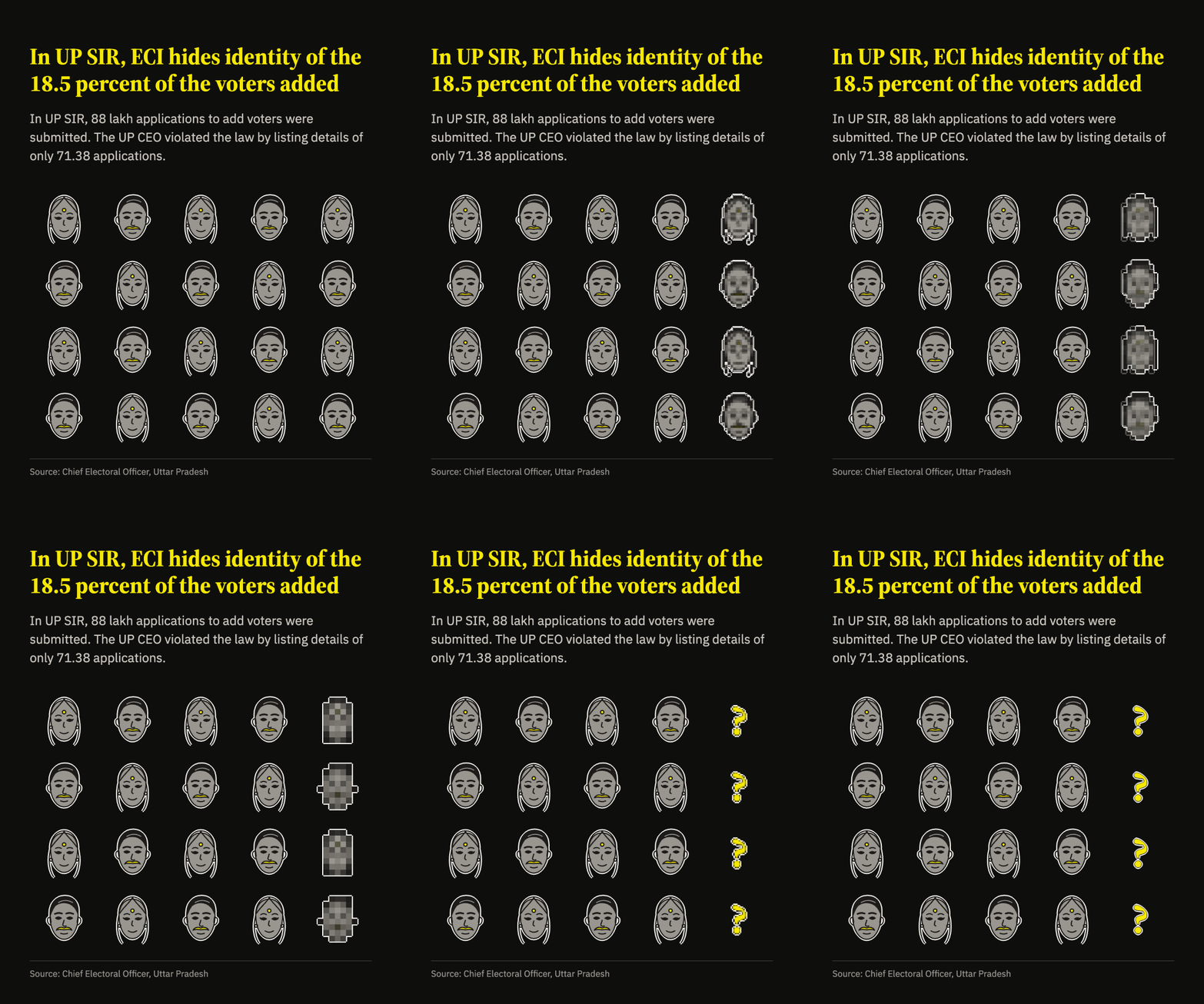
New Delhi: Breaching the law, the Election Commission of India (ECI) has hidden the identity of 16.18 lakh voters that it claims to have added to Uttar Pradesh’s voter rolls in the early stages of Special Intensive Revision (SIR).
The law requires the ECI to put out polling state-wise list of claims and objections “with drill down to individual application form without photograph” on the website of the Chief Electoral Officer (CEO) of the state.
But, the list and details of these 16.18 lakh voters’ applications for inclusion is missing from the Uttar Pradesh CEO’s website.
The CEO is ECI’s top official in-charge of all electoral work in a state and reports directly to the Commission in Delhi.
The Reporters’ Collective discovered this breach of law while analysing the voter roll revision in India’s most populous state where assembly elections are imminent.
We reviewed how many people had applied to be added back to the voter roll because either they had been removed from the draft electoral roll prepared by ECI during SIR or they had just turned of voting age.
Against these applications, we compared how many people had actually been added to the final voter roll. We found an inexplicable result.
With help of independent tech experts we downloaded, collated and analysed all Form 6 applications made public by Uttar Pradesh CEO in a disaggregated form. We found, ECI had displayed details of 71.38 lakh applications from people for inclusion in the voter list. Most of these are people who had been deleted by ECI from the draft list.
Against this, the ECI had added 84.3 lakh voters into the final list. An extra 12.92 lakh voters had been added than those who applied and whose details ECI put out.
This is legally impossible. ECI can only add voters to the roll if they apply through Form 6. The number of people added to the voter list cannot exceed those who applied to be included.
Considering few lakh applications to delete voters from the draft list were also made to the ECI, it makes this excess voter listing incredulous.
To reconcile this legal impossibility, we scanned ECI’s Uttar Pradesh CEO website for all SIR-related data releases and all its press releases.
We found that ECI had once in passing in a press release on March 7 mentioned that 16.18 lakh voters had applied to be put on a list even before the draft list was drawn up.
It's only once the draft list is drawn up under the SIR that people come to know if they have been deleted, declared missing, dead, shifted or duplicate. But, the ECI said 16.18 lakh voters had applied through Form 6 before this draft was made public.
The only people who would apply at this stage are citizens who have turned of voting age.
Under the law, the names and details of those applying for addition or deletion is to be made public so others can review to check if it is legitimate and how it’s been dealt with.
Because UP election authorities failed to provide this data, it is no longer possible to determine who these voters are, which assembly constituencies or polling booths they were added to, or whether the state actually verified their eligibility.
We spoke to the UP CEO, Navdeep Rinwa to solve the mystery of the 16.18 lakh added voters. He got inflamed. He said, “We don’t offer consultancy services to resolve your doubts or queries”. He cut the call, skirting our direct questions.
We also checked the web archive of the UP CEO website, but none exists on the wayback machine.
We subsequently sent detailed questions to him and the ECI at Delhi, but neither of them had responded by the time of publication.
{{cta-block}}
UP’s Incredible SIR
If one presumes the ECI’s mysterious 16.18 lakh pre-draft voters as legitimate and that it is just an administrative lapse on UP CEO’s part, the assumption throws up another anomalous statistic.
The only way the numbers add up from each stage of SIR in Uttar Pradesh to the final voter list is when one assumes 96.27% of people who were deleted and applied to be put back on the final list, and those who turned of voting ages and applied, were legitimate voters, and the SIR had wrongly removed them in the first place.
This high percentage does not sit well with the trends in other states where the additions through Form 6s have hovered around the 60-70 per cent mark, according to a top ECI official The Collective spoke to. In contrast, West Bengal, where SIR was conducted in tandem with Uttar Pradesh, the approval rate for Form 6 applications for addition stood at approximately 18.5 percent during the same revision period.
.gif)
The Maths and Timeline of UP SIR
Before the SIR began, Uttar Pradesh had 15.44 crore registered voters.
The SIR in UP began in October 2025 after much delay, and on January 6 2026, the Chief Electoral Office published the draft list, purging 2.89 crore voters as absent, shifted, dead or duplicate.
The purge of nearly 18.7 percent of the electorate from the draft roll triggered widespread panic even amongst the state’s BJP leadership, news reports show.
Hours after the draft electoral roll was to be published on January 6, senior party leaders including the BJP state president Pankaj Chaudhary and Chief Minister Yogi Adityanath convened an all state meeting asking booth level BJP workers to add at least 200 voters on every booth before the state published its final roll.
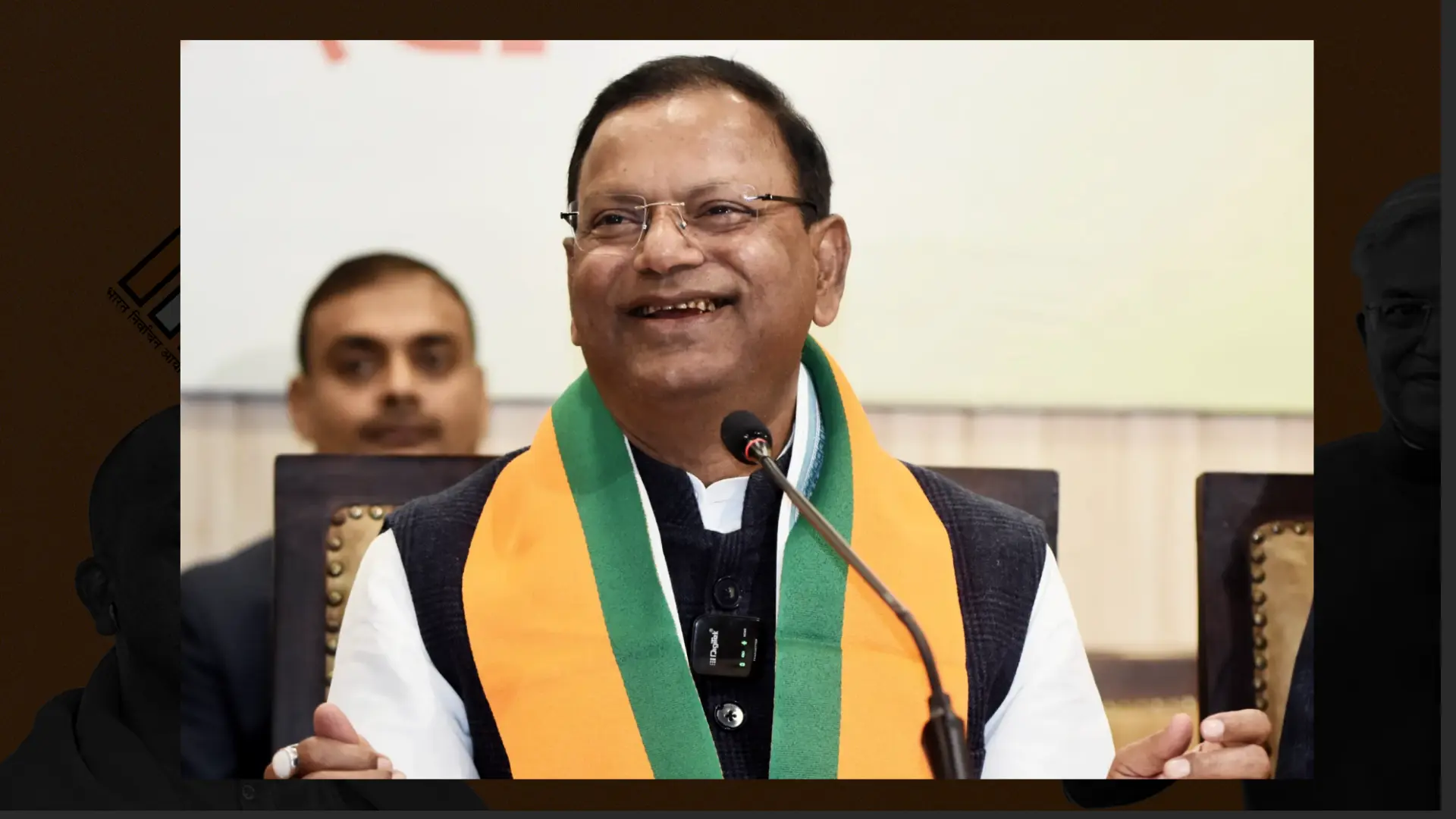
Coming from the chief minister himself, the order was not only crude but also incongruous. The BJP at the headquarters has steadfastly justified the SIR. Its state chief minister was indirectly stating to the contrary and goading his cadre to get a fixed number of voters back on to the voter roll.
UP CEO Navdeep Rinwa also acknowledged that a major portion of the Form 6 requests that they were receiving were from voters wrongfully purged from the voter rolls. “Those who have been removed from the draft rolls are the ones filling Form 6,” Rinwa said in a press conference in February, a day after UP recorded its highest number of Form 6 requests filed in a single day.
When a Form 6 application is filed, it is to be stored with the constituency’s Electoral Registration Officer (ERO) for four years. Each and every request for inclusion is to be verified first by a field inspection by the booth level officer and then approved by the ERO.
Because several requests of inclusion are also filed by party workers of that constituency to pack voter rolls in their favour, and contain doubtful or non-existent voters, the approval rate for these applications usually sits at 60-70 percent.
With the help of analysts who wish to remain anonymous, we scraped all the 71.38 lakh applications for inclusion that the CEO of Uttar Pradesh has made public for the 403 assemblies. Across all assembly constituencies, Form 6 requests filed before January 6, 2026 were missing.
We only got to know about the existence of the 16 lakh applications filed during the enumeration phase of the SIR by going through the UP CEO’s X Account (formerly Twitter). But, their spread across constituencies and their details remain a mystery.
And how the ECI removed nearly a crore voters out of the list during the draft phase and then brought most of them back in, remains unknown.
The 16 lakh voters against even Uttar Pradesh’s shrunk post-SIR 13.39 crore electorate makes the omission deceptively small. But depending on how these numbers are spread across constituencies, they can have a significant effect in assembly constituencies or at specific polling booths.
When we asked the Uttar Pradesh CEO about the mysterious added 16.18 lakh voters, he insisted that he had shared the figures about the number of voters deleted in the press conference, and when we asked him that it is not clear, he said, “There is no mismatch in our data. The mismatch is in your interpretation.”
We listened to several press conferences that the CEO had referred to. In neither of these conferences, nor his X Account (formerly Twitter) nor his website the 16.18 lakh added voters figure in any detail, as required by law.