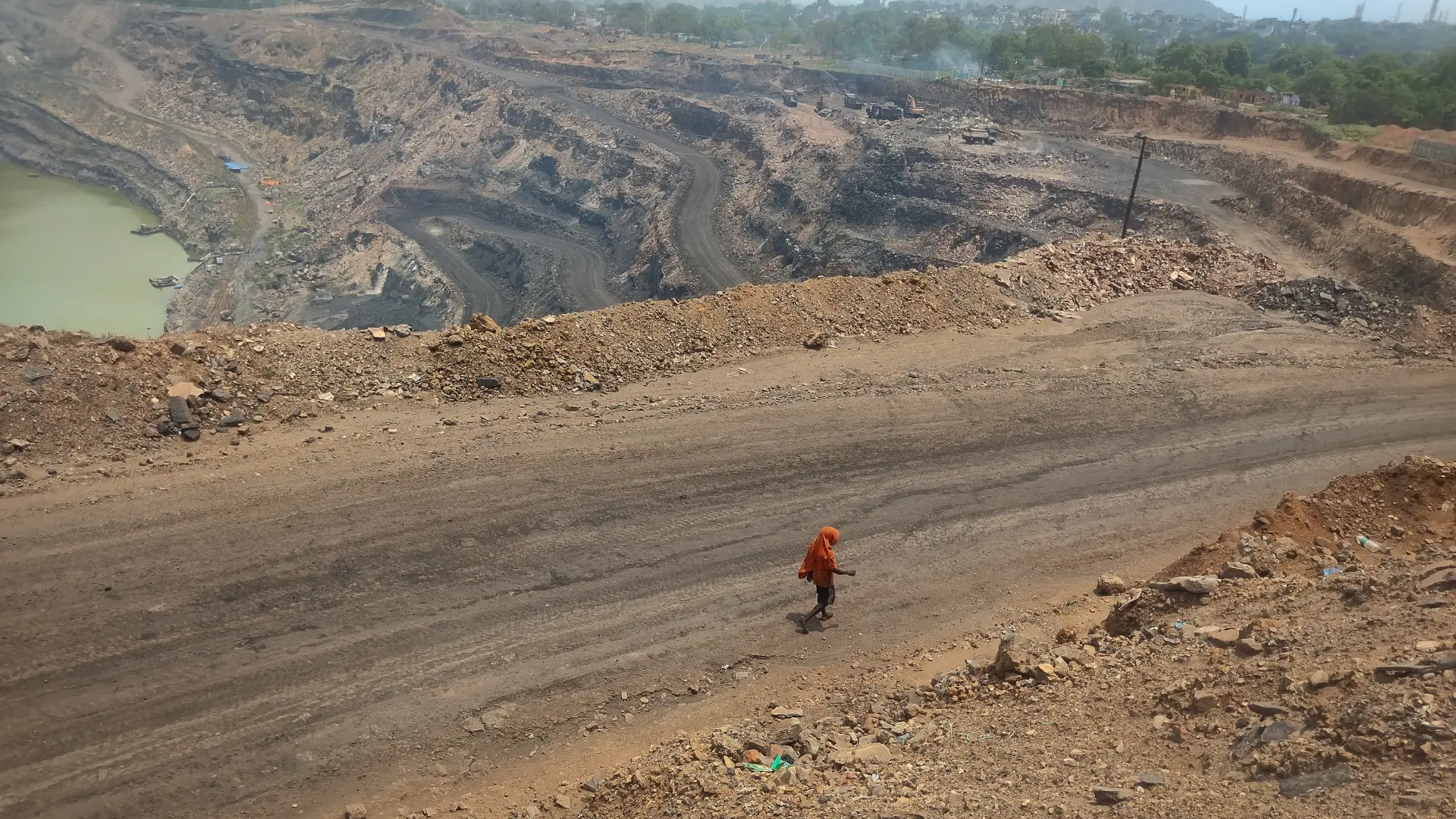


Dhanbad: India was gearing up to welcome 2026. But Surendra Singh never saw the new year. The coal mine worker in Dhanbad lived near an abandoned underground coal mine, and on the cold night of December 29, carbon monoxide from the mine seeped into his home. He never saw the next day.
A month earlier, his neighbour, Priyanka Devi, 28, had died the same way.
Dhanbad, considered India’s coal capital, is home to Jharia’s abandoned underground coal mines, where a fire has burned for more than a century, causing the ground to cave in and release toxic gases. Jharkhand holds the largest coal reserves in the country. In the past year alone, at least seven incidents of gas leaks and land subsidence in its defunct mines have killed 20 people, according to multiple news reports.
The Union government says it cannot “conclusively” ascertain whether carbon monoxide poisoning caused Singh and Devi’s deaths. But for people who live near abandoned coalfields, the danger does not end after mining operations stop. It can last for years, even decades.
The government promises scientific closure of such mines. But nearly all continue to exist, posing danger to people. In Dhanbad, one can see the gap between promises on paper and the reality on ground.
To address this, the government has a plan on paper which includes scientific closure, reclamation and repurposing of defunct mines. In January 2025, the mine closure guidelines asked mining companies, for the first time, to engage mining-dependent communities to “envision and co-create sustainable ideas and solutions” as mines are closed.
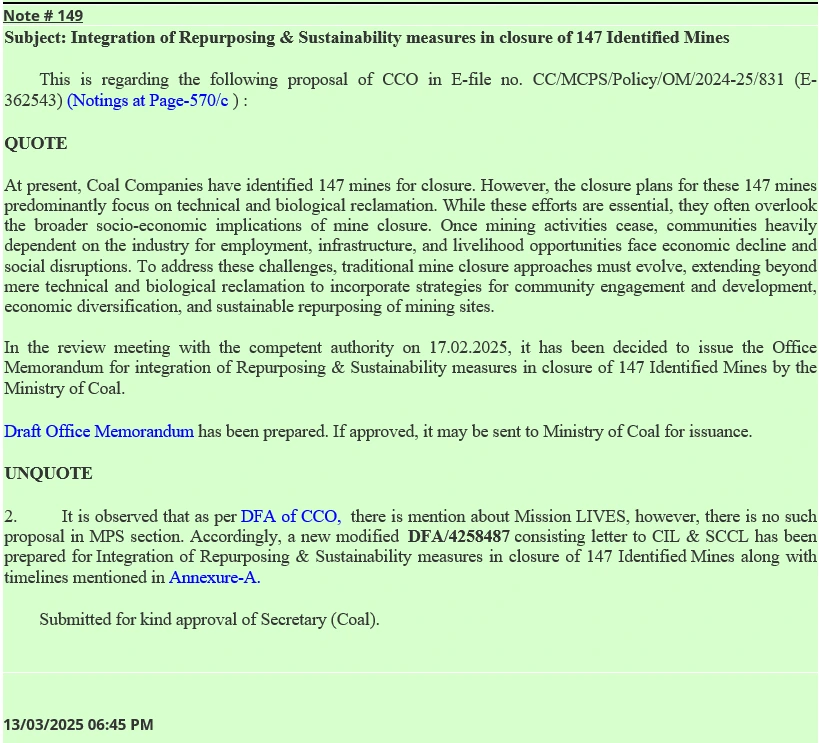
An internal Ministry of Coal assessment from March 2025 revealed that closure plans submitted by coal companies for the 147 mines – to be scientifically closed by 2028 – “overlook the broader socio-economic implications of mine closure.” The Reporters’ Collective visited five of them in Dhanbad, and found that communities were never consulted or compensated, and that the mines that killed people like Singh and Devi still have not been sealed.
{{cta-block}}
Closing Abandoned Coal Mines
Coal is central to India’s energy security. It supplies over 74 percent of India's power. The country has mined nearly a billion tonnes of coal a year for the last two years, but apathy and failure of authorities in protecting people and biodiversity have left a deadly trail. That failure has a price and people are paying it, sometimes with their lives.
Mining leaves the land heavily degraded and polluted. Opencast mines look like huge craters. The unstable overburden (dug up earth) dumped outside can slide, burying workers. Fertile topsoil is stripped for mining, and doing so renders the land unfit for agriculture.
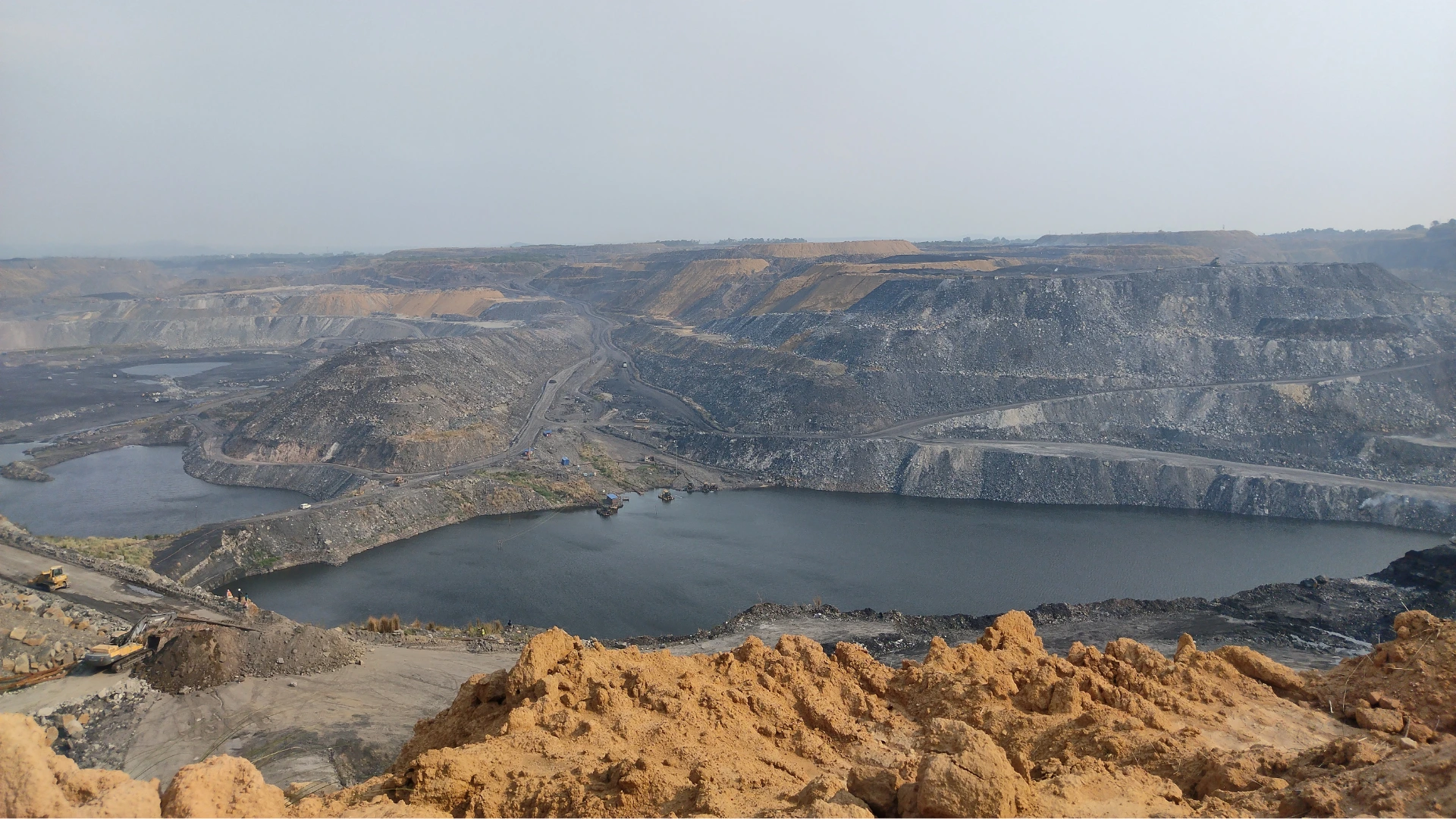
Underground mines are different. Tunnels are dug under the surface to extract coal. Once the mining operation is over and the hollowed-out mines are not filled, the ground above can cave in and swallow structures on top.
To minimise damage, coal companies are required to close the mines once coal extraction in a patch is over.
Mining companies must submit closure plans, along with mining plans, to get mining clearance. But for decades, mines have simply been abandoned. No restoration of landscapes. This leads to land subsidence, fires, and gas leaks, resulting in deaths, injuries and property loss.
The rules meant to prevent this have changed over time. The 2009 guidelines mandated mining companies to physically and biologically restore mined land, make water and air quality management plans, and compensate workers.
Closure cost was fixed at Rs 600,000 per hectare for opencast mines, and Rs 100,000 for underground mines. These applied to mines shut after 2009.
The guidelines were revised in 2013 and 2020. The 2022 guidelines went further and included mines abandoned before 2009 too. They categorised mines into three types: discontinued, abandoned and closed ones.
Discontinued mines are those where work has been halted, but can be restarted. Mines with no plans to reopen are clubbed under abandoned. Closed mines are those who get a mine closure certificate from the Coal Controller Organisation.
Union Minister of Coal and Mines, G Kishan Reddy, said in March 2025 that 341 coal mines stand abandoned or discontinued across the country – 179 of them before 2009, and the rest after.
Of the 147 mines set for closure, eight belong to Bharat Coking Coal Limited (BCCL) in Dhanbad, and feature on the coal ministry’s list for closure by 2026-27. The Collective visited five of them – Bhatdee, Murlidih, Muchraidih, Hantuduh and Bhurungia underground mines – along with the closed Jarangdih mine in Bokaro and the repurposed Piparwar opencast mine in Chatra district.
All the Dhanbad mines due for closure were abandoned before 2009, except the opencast mine of Murlidih colliery. Coal ministry records show these mines were considered for methane extraction in 2024 – but ruled out. Bhatdee and Bhurungia mines were the only exceptions; rest were either waterlogged, had a risk of catching fire if reopened, or had reserves too exhausted or difficult to extract.

The Collective interviewed current and retired BCCL officials, along with local residents and experts. Their observations were consistent, suggesting the government’s timeline and promises are optimistic to the point of being almost impossible.
“Only the mouth of the mines has been closed. There has been no proper backfilling. Many underground mines are filled with water, which loosens the soil and causes the land to cave in,” said PN Tiwari, foreman in-charge (electrical) at BCCL’s Murlidih section, and secretary of the West Jharia Bihar Colliery Kamgar Union.
In 2023, temporary closure plans were prepared for these mines, which included safety measures, backfilling with overburden, and securing topsoil, as needed. This way abandoned mines are closed in a manner that allows reopening of mines in the future.
The plans the Coal ministry shared with us require BCCL to dismantle infrastructure, train affected people with new skills, manage air and water quality, and organise medical camps.
A project manager at an operational mine in Dhanbad, who requested anonymity, pointed to profit as the reason companies don’t backfill abandoned and discontinued mines. If a mine still has reserves, and the company that wants to extract them in future, it would not be cost effective to fill up the mine and then dig it out again, he said.
This explains why, even after years of being defunct and unsafe, mines in Dhanbad are not being fully closed.
In June 2024, Coal India Limited awarded 23 abandoned coal mines to private players willing to share revenue with the state-run company.
Communities living around these said they were left out of the decision-making process by the coal company, including the choice to relocate them to far-off rehabilitation settlements with poor living standards and few work prospects.
Jitendra Pandit, who runs a small fabrication workshop at Indra Chowk in Jharia, is a case in point. His shop stands at the edge of a pit caused by land subsidence. In 2017, a shopkeeper and his son were buried alive in a sinkhole formed by the fire burning underground.
Fires have raged in Jharia coalfields since 1916. The Jharia Master Plan, framed by the Union government in 2009, was meant to curb the fires, address land subsidence, and rehabilitate residents. Things did not go according to the plan.
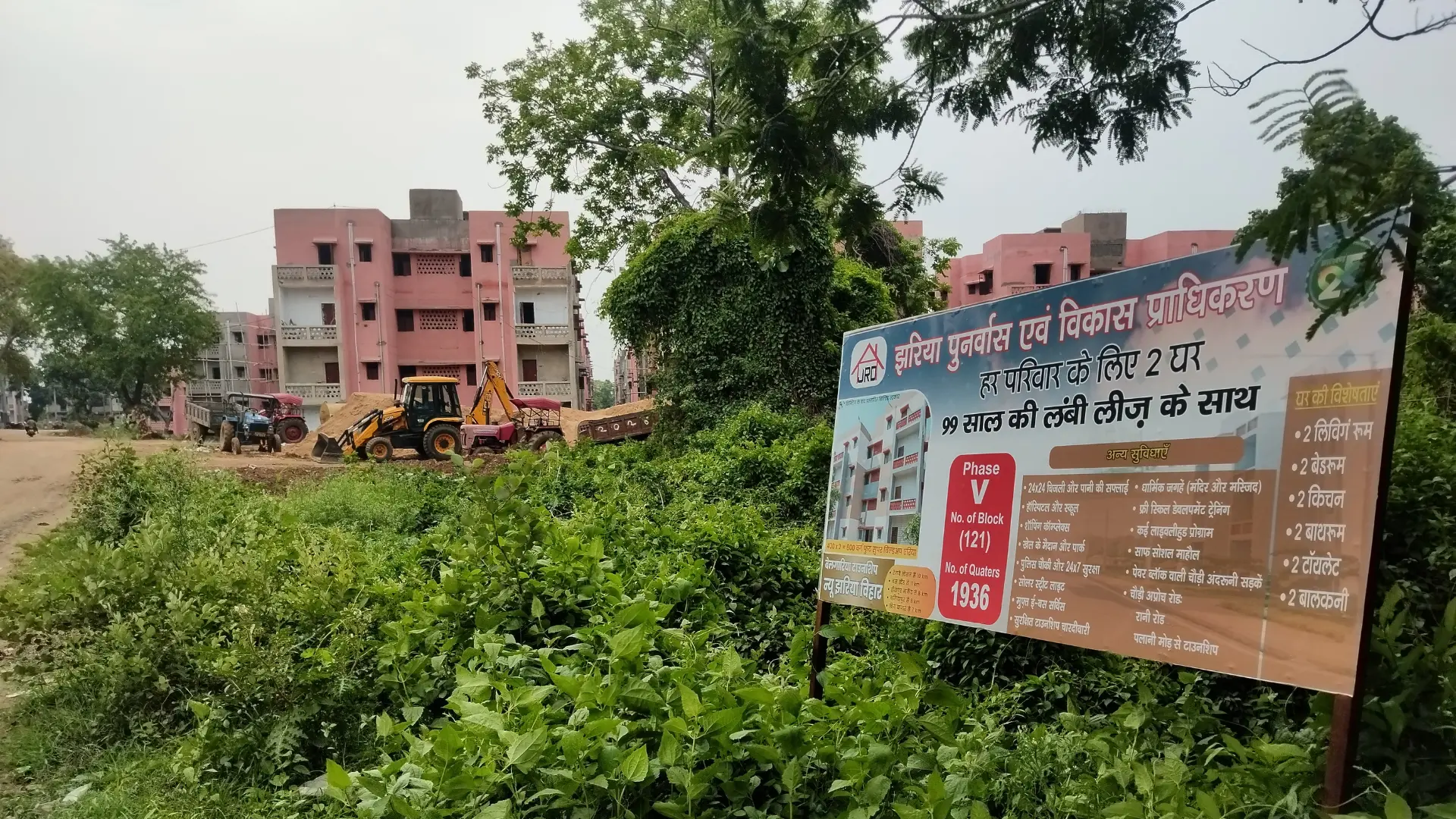
The relocation township of Belgaria, for instance, is far from Jharia. People have refused to move citing poor sanitation, lack of transport and jobs.
“If we had the money, why would we stay here? The government does not pay appropriate compensation. This is our rozi roti [livelihood]. Where will we go?” Pandit said. He added that many in the area suffer respiratory ailments from dust coming off nearby overburden dumps.
Nearly 14 years after the Jharia plan was launched, the Union government told parliament in 2023 that BCCL had scaled back its housing target from 25,000 houses to 15,713 – and had built only 11,798.
Even as new coal mines open and old ones expand, scientific closure remains an unknown term for workers and communities living alongside them.
Research estimates endorsed by the Jharkhand government project the state will add 325.9 million tonnes of coal mining capacity annually by 2047, requiring 60,643 more hectares of land.
In Thathangi village of Chatra district, Sushila Khalkho lives with her family at the edge of the Piparwar-Ashoka opencast mines. Piparwar was once Jharkhand’s largest coal mine before it shut in 2020 after its reserves exhausted. Plantation now covers over 300 of its 1,120 hectares, with 12 hectares developed into an eco-park, according to a 2025 mine closure report with the Ministry of Coal.
But Central Coalfields Limited (CCL), which owns Piparwar-Ashoka mine, plans to start an underground mine beneath it.
While the government often highlights Piparwar’s reclamation, locals say their concerns have gone unheard.
“The trees planted here are useless to us [tribals]. We had traditional knowledge of the trees and plants that grew here naturally. We used them for medicine, for feeding livestock, for fruit, for firewood,” said a resident of Piparwar and CCL employee, who requested anonymity.
The eco-park and reclamation cover only a part of the mine. Official records show Piparwar’s final mine closure plan had still not been approved till March 2025, five years after it had shut.
With the new underground project in the plans and the adjacent Ashoka opencast mine still running, people are anxious.
“There is always a fear that children playing here might fall into the mine. We don’t get piped water; BCCL sends water tankers, but we have to wait. When there is blasting in the mine, we are told to leave the house because rocks might fall due to the explosions,” said Khalkho, whose family has been told to leave with no clarity on compensation.
The Just-Transition Puzzle
What would fix this? Consultation with affected communities is often highlighted as a solution. India is one of many countries working on a Just Transition policy, one that includes scientific mine closure and fair rehabilitation, as the country shifts to renewable energy. Done right, that shift should not only be environmentally sound but also fair to workers and communities who depend on the coal economy.
In February 2022, Niti Aayog and the Jharkhand government discussed how mines “were abandoned with no restoration done by CIL [Coal India Limited] & its subsidiaries.” The meeting also noted that these abandoned mines had become “the center of illegal mining and ultimately human loss due to caving in.”
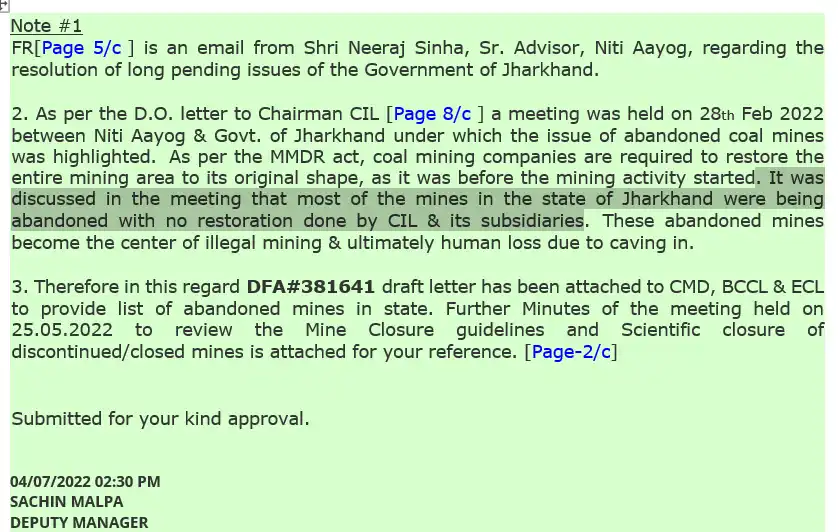
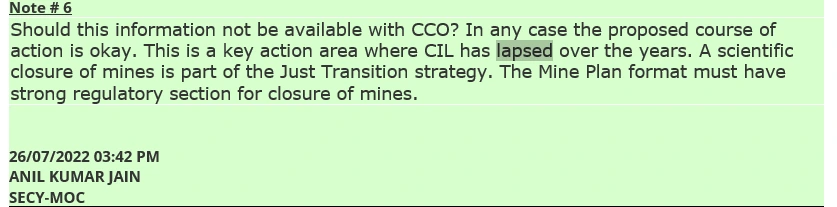
Following that meeting, the Coal ministry sought a list of abandoned mines from CIL, which redirected it to its subsidiaries. The ministry’s secretary noted internally that, “CIL has lapsed over the years. A scientific closure of mines is part of the Just Transition strategy”.
Sandeep Pai, senior lead for international energy transitions at Duke University’s Nicholas Institute for Energy, Environment & Sustainability, said “scientific closure of mined-out land is needed to prevent public health hazards, reverse environmental damage, and put the land to sustainable use.”
“If the land is not levelled and filled back in according to original geology, there is a threat of subsidence, fires and gas leaks,” he told The Collective.
While guidelines and plans talk about consulting with communities, the reality on the ground says otherwise. At Jarangdih mine in Bokaro, Jharkhand’s only scientifically closed mine, union workers have protested the closure, demanding they be consulted and that their problems, like drinking water shortage, derelict quarters, and low voltage, be addressed.
“There is a huge communication gap between the management and the people. Employees of BCCL are not given good accommodation to live in, and the people affected by subsidence are being offered damaged quarters,” said Tiwari.
In November 2022, Jharkhand government set up its Just Transition Task Force, the first such state body in the country, to recommend how that state moves away from fossil fuels, and how to finance it. In October 2023, CIL said all its subsidiaries had multi-disciplinary Just Transition committees in place to ensure mines are closed scientifically and fairly.
But the task force has no monitoring or enforcement powers, only an advisory role. A report on its website says the state will need USD 256 billion for its transition away from fossil fuels, of which USD 18 billion will be needed for reclaiming coal mines between 2026 and 2070.
The report recommends raising this funding from “bilateral institutions” and “multilateral development banks (MDBs), blending grants with long-tenor, low-cost debt.”
“We are assessing how energy security can be managed, how alternative livelihoods and greener jobs can be created. We are also looking at the financial implications of just transition in the state and how they can be mitigated,” said Ajay Kumar Rastogi, a retired Indian Forest Services officer and chairman of Jharkhand’s Just Transition Task Force.
Asked about monitoring mine closures and implementing closure plans, Rastogi told The Collective that this falls outside the task force’s mandate. It is, he said, purely an advisory body.
The task force, with the United Nations Development Programme, surveyed 15 districts to map just transition pathways. Their recommendations point to nine sectors for that state to move from a fossil fuel economy. These include fisheries, manufacturing, construction, IT, renewable energy, waste management, agriculture, tourism, and critical mineral mining.
On paper, these are sound recommendations. On the ground, the picture is different. After mines close, public-sector coal workers are transferred to other projects or given pension in case of retirement. But contract labour – those who transport coal or those who set up shops and tea stalls in the vicinity – have no safety net. The Institute for Energy Economics and Financial Analysis estimates USD 8.4 billion (Rs 76,600 crore) will be needed between 2030 and 2070 to reskill and compensate these formal and informal workers dependent on coal mining in Jharkhand.
Under India’s Green and Sustainable Development Partnership with Germany, the latter earmarked a five million euros grant to develop and implement plans for “sustainable closure and repurposing of abandoned and about to be closed Indian coal mines.” The grant has been pending Union government approval for over a year.
In response to a Right to Information application, the Coal ministry said it had not approved any such project in the state.
"The problem of just transition and mine closures is that there is no bankability or business case for securing finance for it. It is driven by regulations. It is important to focus on how districts can diversify their economy. Otherwise, since these are very poor states, you are completely relying on grants, which are very limited, and government funds,” Pai said.
Queries to the Union Ministry of Coal, the Coal Controller Organisation, CIL, BCCL and CCL regarding their plans for mine closures and their lack of engagement with communities remain unanswered. We'll update the copy as soon as we get a response.
Developed countries such as Germany, Spain, and Canada have already built comprehensive mine closure policies. In Germany’s Ruhr Valley, for instance, mine closures followed years of dialogue between all stakeholders, addressing unemployment through “supportive policies, economic diversification, collective bargaining and social partners’ support”.
Ruhr’s transition was planned for 20 years. It took 60, and consistent government subsidy to keep unprofitable mines running, to avoid a socio-economic collapse in mining-dependent communities.
Even so, the problems are still far from over. Germany, a developed economy, has spent over half a century and pledged more than 40 billion euros to move away from coal. In March, the German government was criticised for alleged misuse of a 500 billion euro special fund for climate-neutrality projects.
Even as coal mines have been closed in Germany’s Ruhr Valley, sinkholes still appear. In 2000, a 15-metre deep sinkhole swallowed two garages and three cars. Last year, the ground caved in at a train station in Essen, West Germany.
For a diverse and developing economy like India, this is the moment to build a robust just transition policy. “"The mine closure approach is very target driven for quick closure but that does not always ensure responsible mine closures. Communities and unions need to be involved at every step for the transition to be just in every sense of the term,” Pai remarked.
With additional reporting by Steve Mokaya from Germany for The Africana Voice.
The story is part of the India-Germany Climate and Energy Journalism Programme organised by Clean Energy Wire.