.webp)
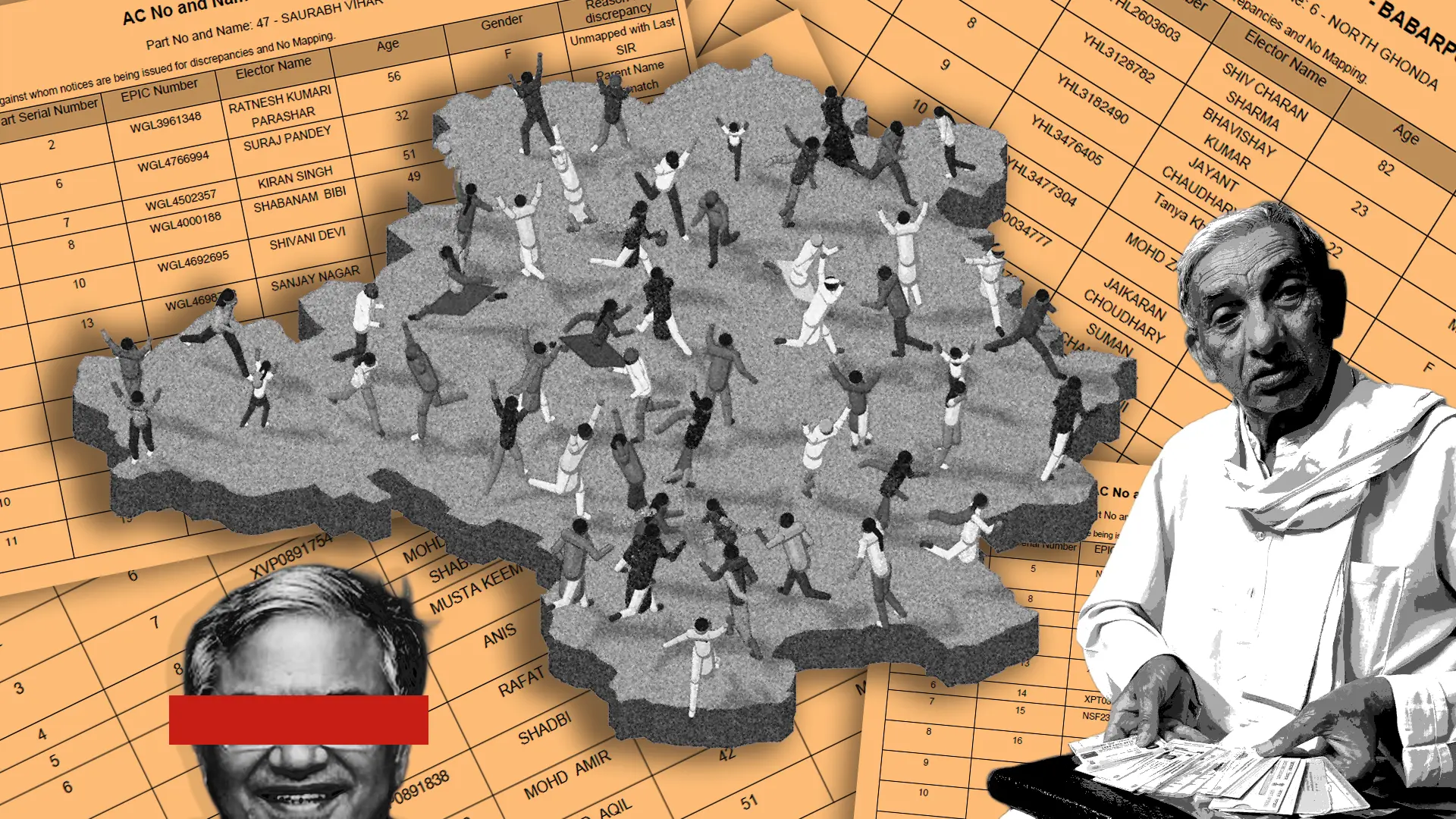


New Delhi: After labelling nearly 33 lakh Delhi voters as dubious under its special intensive revision (SIR), the Election Commission of India (ECI) ordered booth-level officers (BLOs) to visit every household to verify the voters. Instead, to clear the mess and finish the nearly impossible task within 60 days, many BLOs have set up camps in schools or offices of political parties, leaving Delhiites scrambling to protect their right to vote.
An on-ground investigation by The Reporters’ Collective has found the ECI’s orders to be a sham.
The order to send BLOs was the ECI’s damage-control move after The Collective revealed the SIR mismanagement. Our investigation had exposed that more than half of Delhi’s voting population had either been deleted from the voter rolls or put on a list of doubtfuls. Then the ECI created a hidden bypass to guarantee that ‘VIPs’ make it safely to the final voter list without the hassle ordinary citizens face to prove their identity.
We have now found that the ECI did not switch off this hidden module facilitating VIPs. But it extended the SIR hearing deadline and mandated BLOs to visit each of the 33 lakh affected citizens at home, and not just the VIPs.
To see if it is even doable, we scraped all data on booth-wise notices sent to 33 lakh voters. We analysed 2.5 lakh pages of notices to pinpoint where the voters will suffer the most from the ECI’s algorithmic distrust.
Delhi has 14,947 booths. Our analysis shows that in more than 7,473 booths, we found that each BLO has to visit a median of 215 voters in 60 days while continuing their day jobs (they have not been given leave from it).
From each voter, they have to collect multiple documents, verify them, fill internal forms and upload them to the ECI’s software. Multiple BLOs told us that, on average, they need 15-25 minutes to find a voter and resolve the case, depending on the type of red flag the ECI’s software had raised.
The BLO’s task has become more difficult as voters have been rearranged around the booths in the draft list. Now, some are not logged under the same booths where they were registered previously.
In more than 2,000 booths, BLOs have to reach more than 300 voters to verify. The worst case is that of a BLO in the Hari Nagar assembly constituency, who has to resolve 741 cases.
To understand what these BLOs, who are facing insurmountable targets, are doing to meet the ECI’s diktat, we went to the booths where the highest number of voters were marked dubious.
The answer to our question was on the expected line. The ECI’s house-to-house verification order is being flouted as they are not going to voters’ homes. The ECI has merely passed the buck to Delhi’s BLOs, leaving voters to face another round of chaos. We spoke to multiple BLOs and citizens, on and off the record, to understand how SIR is failing Delhi’s citizens, yet again.
Where it Began
The Delhi SIR began on June 30. By August 31, the draft list was prepared, and 47.56 lakh voters were removed. They were either declared absent, shifted, dead or duplicates. Then the ECI sent notices to another 33 lakh voters.
ECI’s software had failed them on one of the two tests. Either the voter was told they had not correctly identified their father on the voter roll or that there were ‘logical discrepancies’, such as names being misspelt. By the end of this phase, nearly half of Delhi’s voting population had either been deleted or put under suspicion.
We investigated to bring out these numbers and the fact that VIPs were being given a hidden pass out of the mess. The Indian Express published a report showing that two out of three commissioners at the ECI had put reservations on record about how the SIR had run. Political opposition latched on, and as the kerfuffle turned into a potential scandal, the ECI responded by passing yet another set of orders tweaking the SIR process.
Past reporting on Delhi SIR made us believe the orders were impractical, and we started investigating it again.
The Worst 50 and Rest
Our analysis shows that half of Delhi’s BLOs have to address at least 215 notices. The booth-level picture is grim, particularly for voters in parts of South West, West, South, and Outer North Delhi.
As many as 50 booths have seen at least 500 voters or more being declared doubtful. South West district has 13 such booths, eight each in West and South, and seven in Outer North.
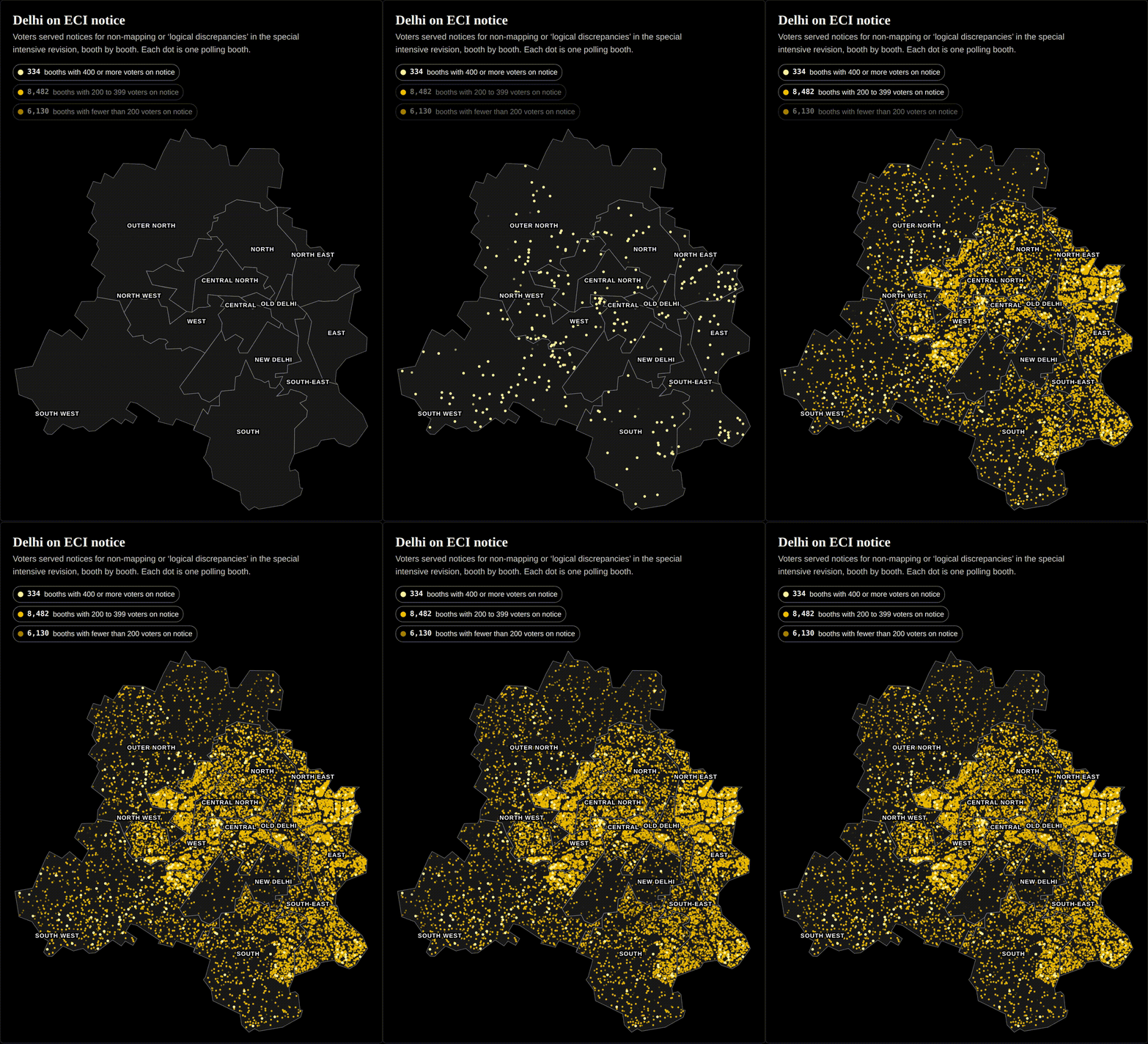
In this pool, there are at least five booths where the total voters could touch double digits if all voters marked as suspicious are removed. For instance, the number of voters at booth number 1 in Ballimaran assembly constituency in Old Delhi could plummet to just 26 voters if all the suspicious voters are ejected from the final list. Of the 635 voters in the draft list, 609 have been put on notice.
There are four other booths where the voter strength could drop below 100. They are booth number 193 in Najafgarh constituency (70 voters), booth number 84 in Rajinder Nagar (75), booth number 157 in Hari Nagar (76) and booth number 40 at Jangpura (88). The notices issued to voters in these booths range from 528 to 741.
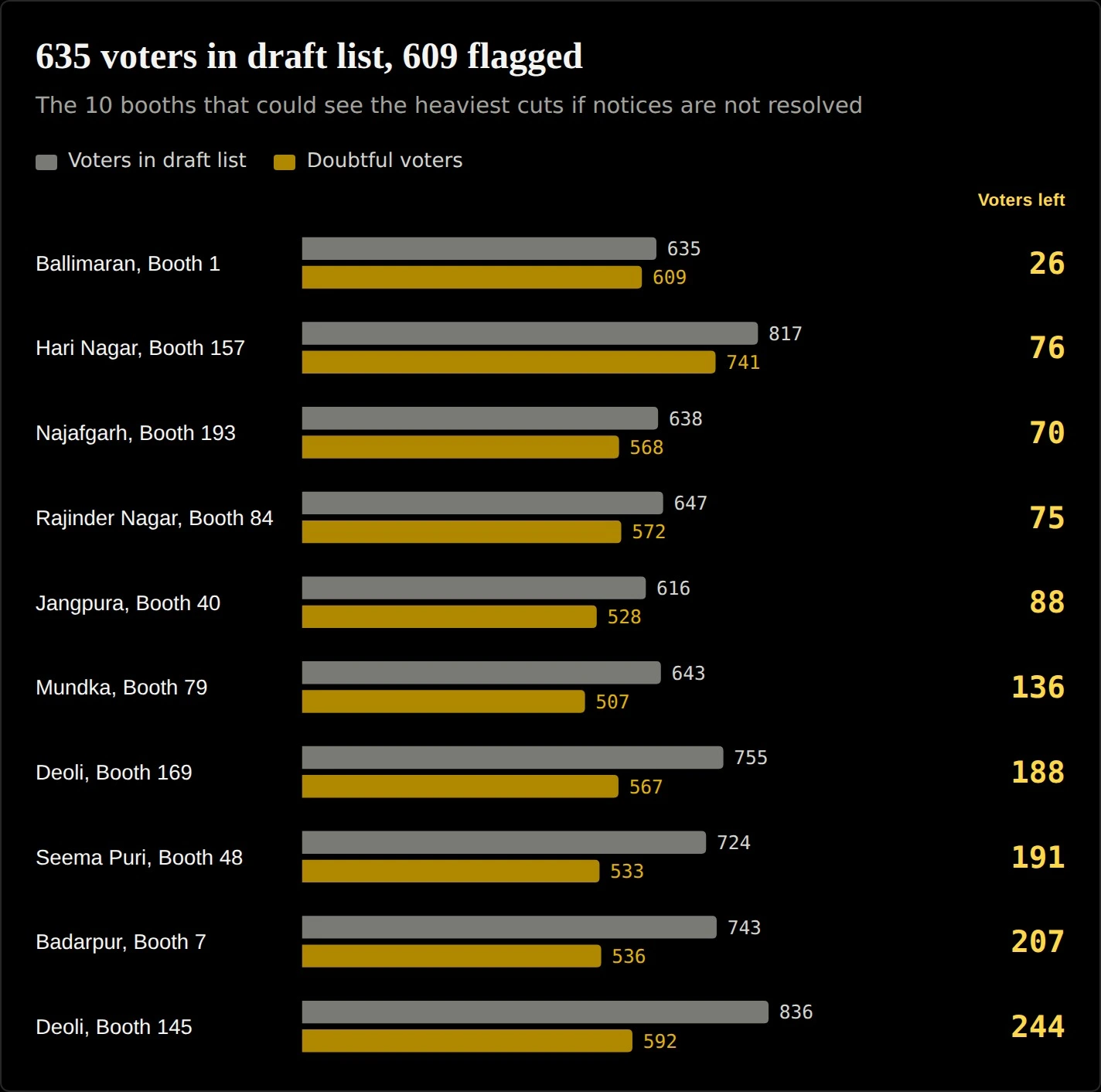
Our analysis also shows that 661 of the total booths have seen 30-70% of their voters from the draft list being declared doubtful. For the calculation, we took a base of 1,200 voters (the maximum permitted to be registered at one booth). The ECI does not make the data on actual voters at each booth easily available.
At 4,935 booths, notices have been sent to 20-30% of their draft voter strength. At 51 booths, more than 1,000 voters have either been deleted or sent notices, out of the maximum possible 1,200. The highest, 1,159, is at booth number 84 in the Chandni Chowk assembly constituency.
On Notice, in the Dark
The Collective visited nine booths in three assembly constituencies in West and South Delhi: Mehrauli, Deoli and Mundka. Of those, three booths reported the highest number of notices. They are located in unauthorised settlements and mixed colonies. Most doubtful voters belong to lower-income groups and are in a fix as they don’t know what documents they need to clear their names or where to meet BLOs.
For instance, in Sangam Vihar, which is part of South Delhi’s Deoli assembly constituency, three women of a family have been declared unmapped. The family was aware of the notice to only Anshu Chauhan. They discovered the other two notices, to Sonia and Monika, Anshu’s sisters-in-law, when we visited their house.
In disbelief, father Amar Singh Chauhan said he would take up the matter with the Delhi BJP leadership and the court.
“We have been living here since 1986 and have voted in every election. How is it possible that my daughters have been declared doubtful? We have all the documents. Now they are saying Aadhaar is not valid. What was it made for then?” wondered Amar (76), who works in a gas agency.
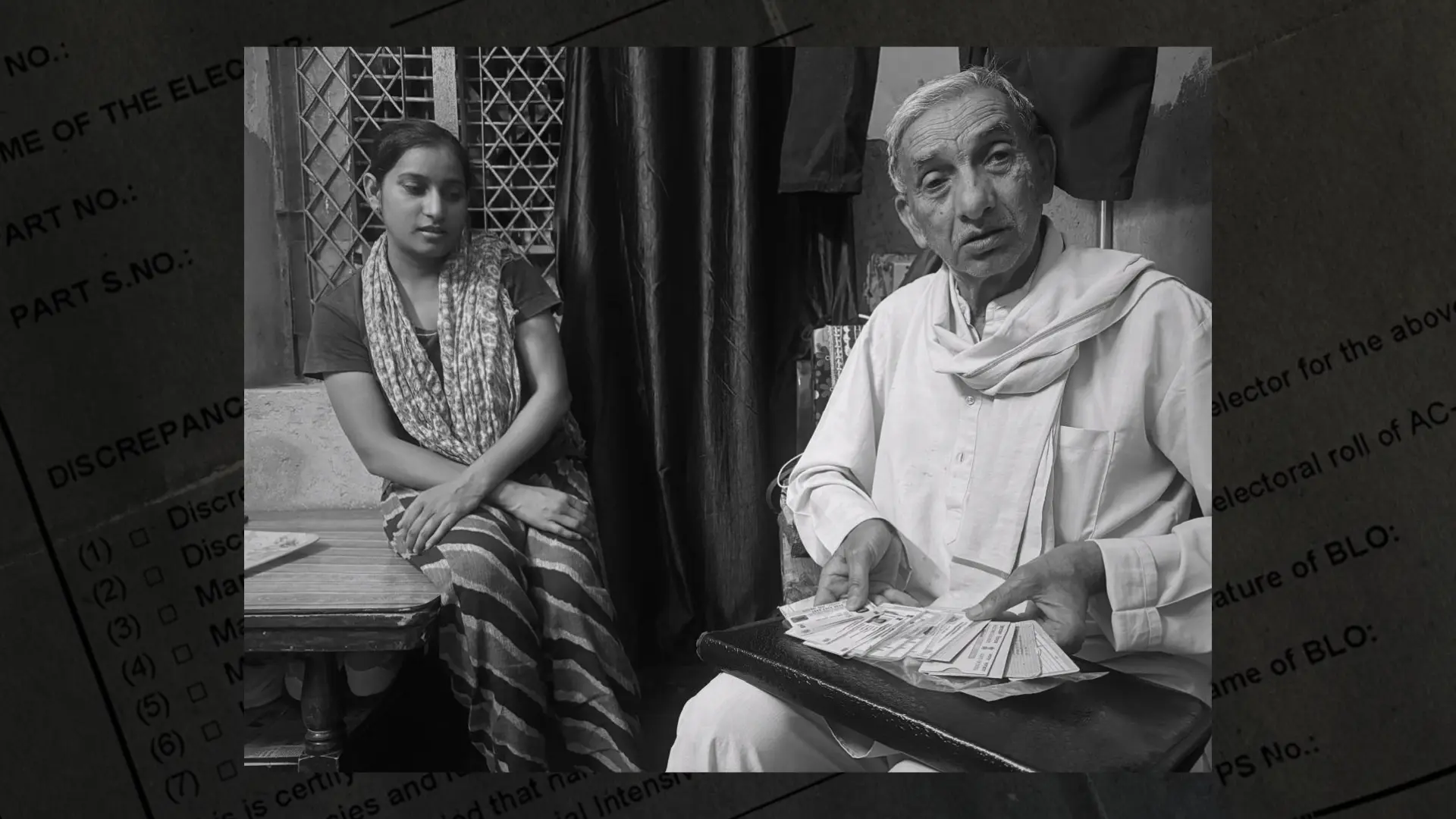
Sonia (31), who also works with her father, said she has been voting in the constituency for the past 10 years.
The three women belong to the same family, but they have been allotted three booth numbers: 142, 143 and 145. At booth no. 145, over 70% (592) of the total 836 voters in the draft list have been declared doubtful or have received notices. This is the sixth-highest across Delhi, according to our analysis.
While Amar’s daughter-in-law Anshu could not link her voter ID card to her parents in Uttar Pradesh’s Etawah, his daughters, Sonia and Monika, were flagged for a spelling error in his name. Sonia did not know what documents were required to reclaim her voting rights. Now, the three women, two of them working, have to visit BLOs to get their names restored.
Similar confusion prevails in Mehrauli assembly constituency in South Delhi and Mundka assembly seat in West Delhi.
Booth no. 75 in Mundka assembly has witnessed the second-highest number of notices. Here, in Bhagat Singh Colony, 615 of the 877 voters on the draft rolls found themselves on the notice list. Migrants from Uttar Pradesh, Bihar and Rajasthan began settling at this unauthorised colony in the early 2000s. Consequently, many of them are relying on the old SIR list of their home states for mapping – and failing.
One such voter is Chandni Kumari, 30, who could not be mapped to the last SIR. To successfully do so, the homemaker had to locate her parents’ booth number back in Bihar.
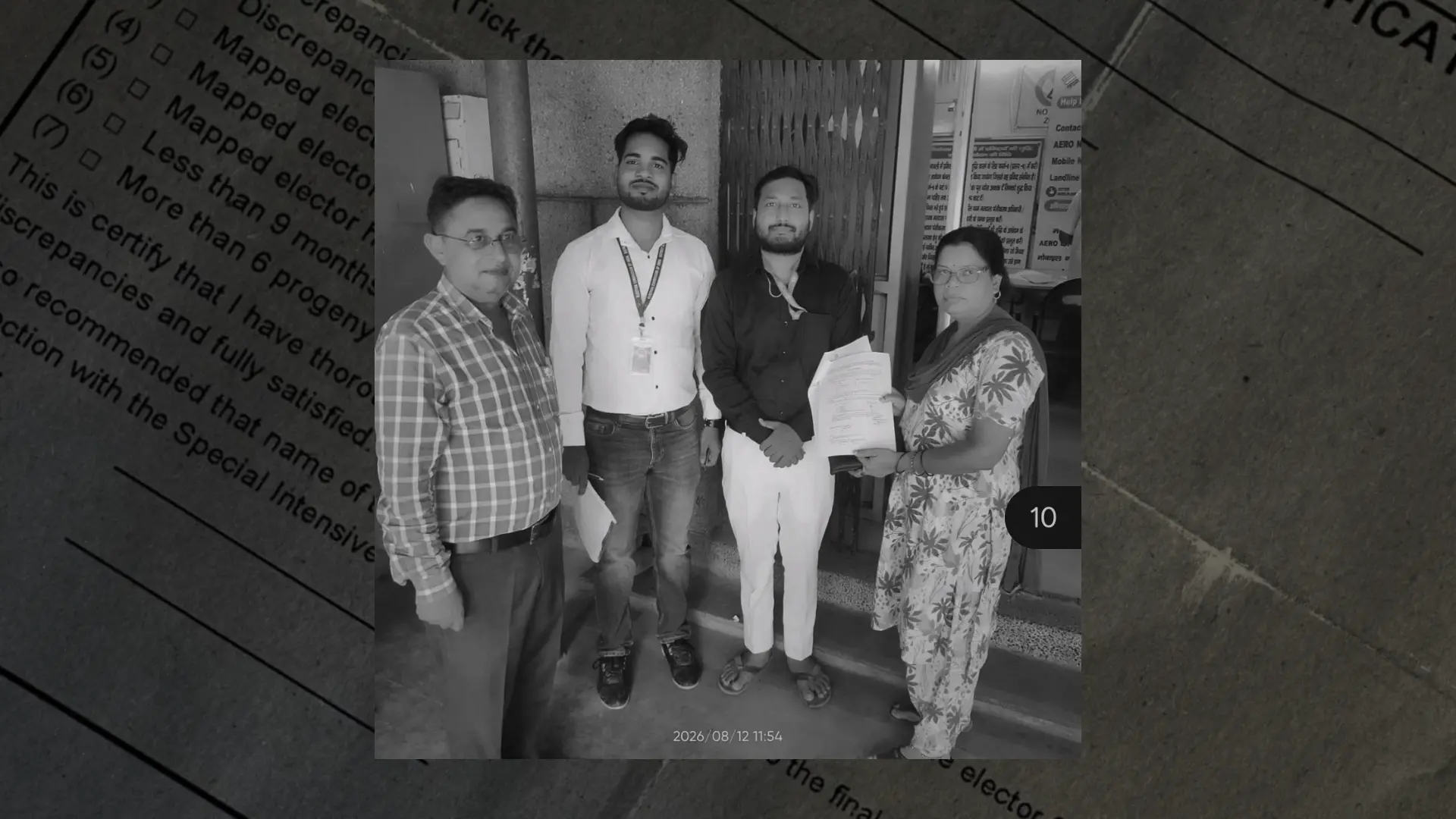
At booth number 161 in Mehrauli, Manjiri Gupta became a doubtful voter because of the name mismatch. Her name in the notice appears as Manjan Gupta. At a government school, she submitted her ID proofs to the BLO to rectify the error. At this booth, 608 of the 943 voters in the draft rolls found their names in the notice list.
At the same school, another voter from a different booth was flagged for having 12 siblings. Mapping more than six children to a single parent is one of the seven logical discrepancies. The BLO of this booth accepted three identity documents and recommended, through a declaration, that his name be included in the final voter list.
Hearings from Party Offices
The Collective posed this question to 10 BLOs. “Are you following the Election Commission’s direction to visit each flagged voter’s house?”
We were met with a wry smile and indignation. They skirted any criticism of their bosses. “If they are saying it, we have to follow it,” said one of them, but in the same breath added, “at the moment, I am calling people at my house to submit their documents.”
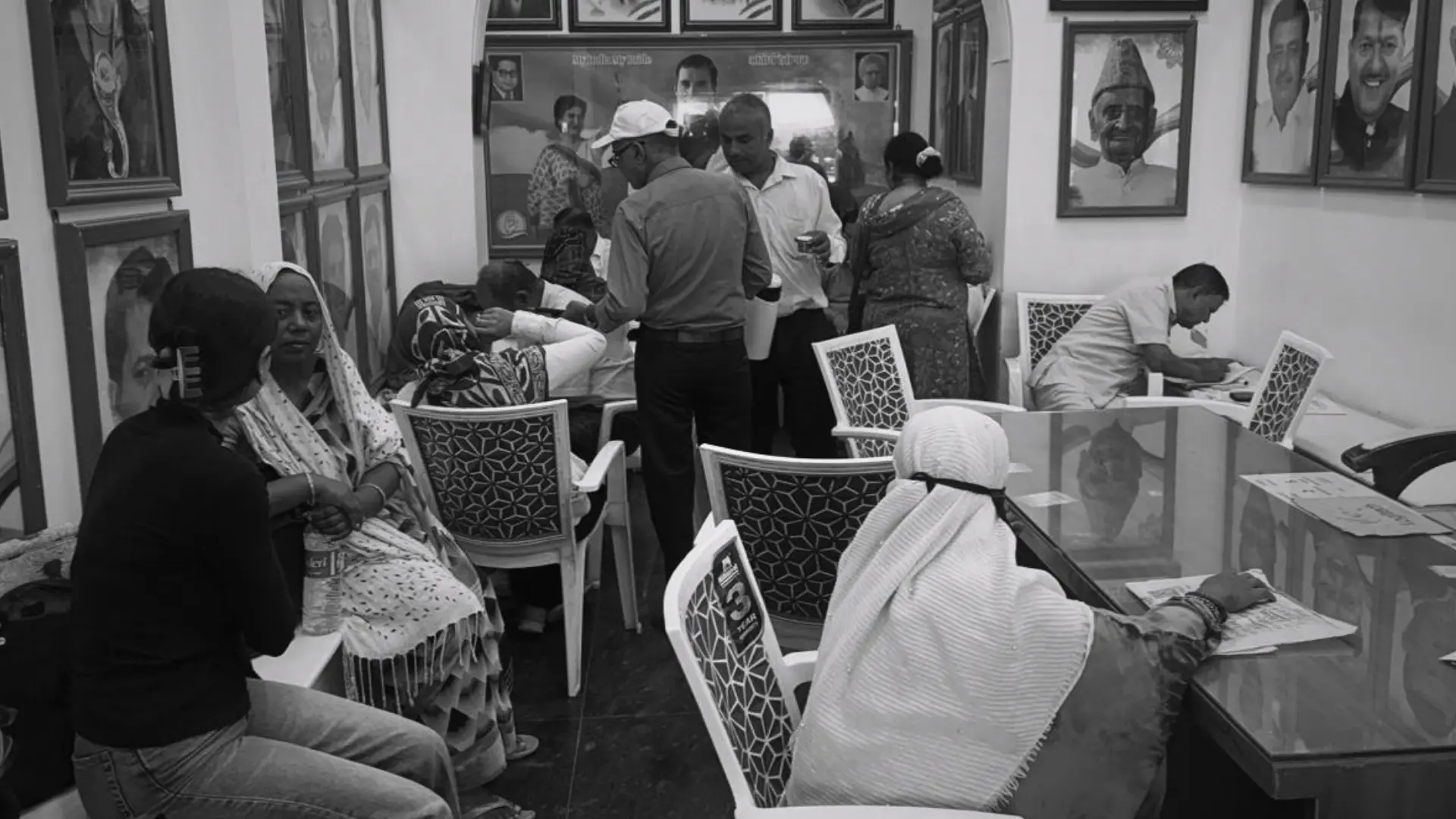
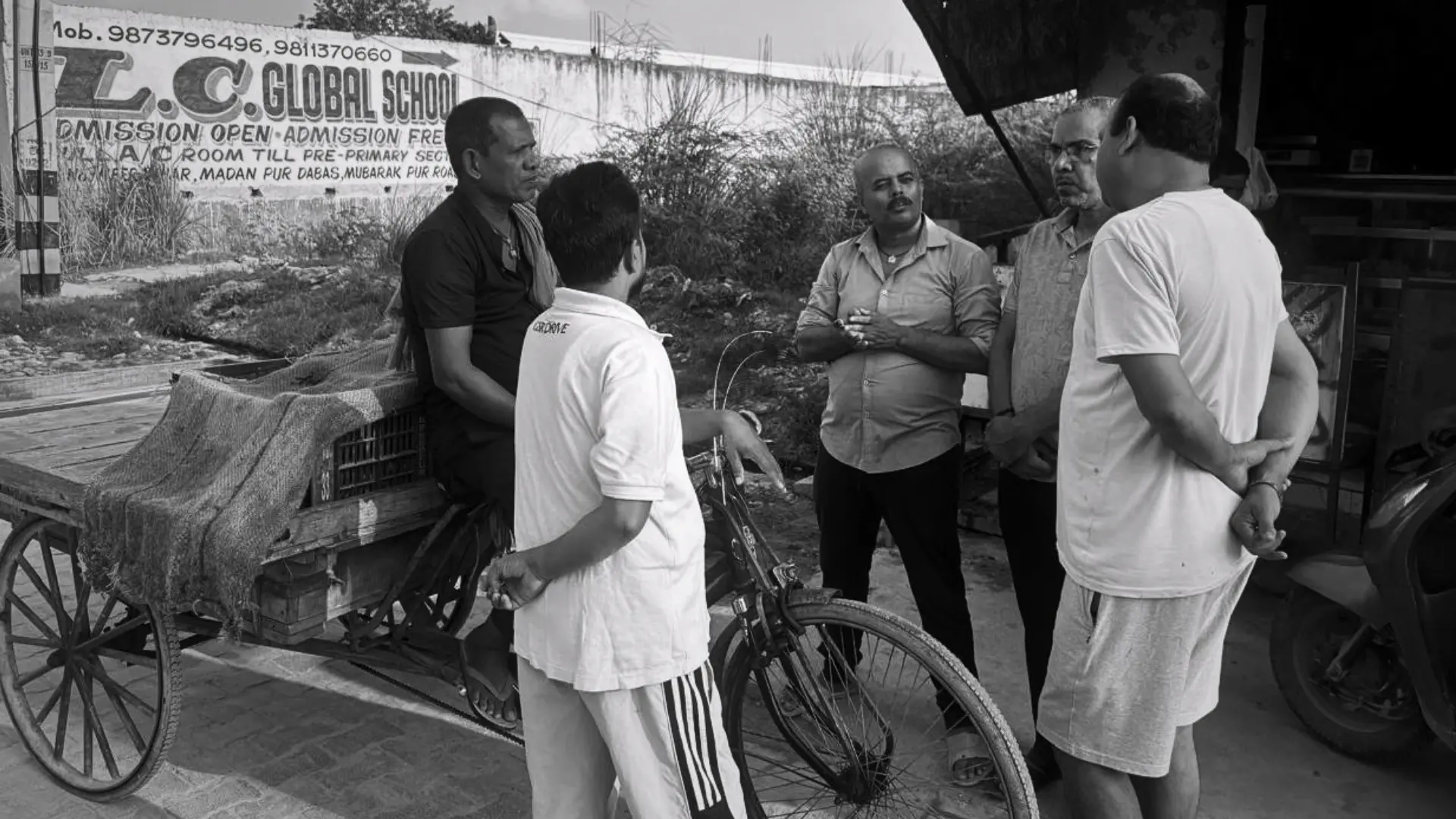
We witnessed BLOs holding hearings at political parties’ offices, schools, houses of community leaders or simply on the road. At Mehrauli, several BLOs were resolving notices at Congress’s office. In Deoli, one such location was AAP’s office, while another location in West Delhi was a shop owned by the BJP’s booth-level agent.
“It is easier at a party office. They know local people and can immediately recognise names of voters. They also help them find the last SIR list. Alone, we can’t perform this exercise,” said another BLO.
All the BLOs we spoke to were informing the doubtful voters by phone and asked them to come with necessary documents.
Two BLOs said that locating doubtful voters has been complicated with the rationalisation of booths. A week before the draft list was published, the CEO Delhi increased the number of booths from 13,033 to 14,947. This means, in many cases, electors were shifted to adjacent or new booths. This has created chaos among voters and BLOs.
“When we distributed and collected the enumeration forms, we had different booth numbers. These booth numbers have changed. Some of the voters who were with me initially have shifted to another booth’s roll. Now, it seems that each voter has to be visited by at least five BLOs,” a third BLO said.
As a result, door-to-door disposal of notices could take even longer as BLOs may have to visit doubtful voters on their list at least two to three times.
It is not only the booth rationalisation that is troubling the BLOs. Five BLOs said they could perform their SIR duty better if they were exempted from teaching duties.
“Throughout the year, we have been on the road. First, it was the pre-SIR exercise. Then came the census. It was followed by door-to-door distribution of enumeration forms. Now, we have to visit these houses again! Our students have suffered throughout the year. We are tired now,” said another BLO, who did not wish to be named.
Amid this, BLO Gyan Singh in Sultanpur Majra constituency has no house to visit. His booth number 4, with 444 voters in the draft list, has received no notices. Singh revealed his secret sauce.
“I filled out all the enumeration forms. During uploading of these forms, if the elector’s mapping with their father showed an error, I tried linking them to their mother. If that didn’t work, I linked the voters to grandparents. One of these options always worked,” he said. He completed his enumeration form distribution, collection and uploading in “10 days”. On “July 15-16”, he was invited by the Delhi CEO to train electoral registration officers (EROs) about the best practices.
Our conversations with other BLOs suggest that a high number of notices for a booth could be partly attributed to how the enumeration forms were filled and uploaded in the first leg of the exercise. In the enumeration form, for mapping, either a voter is in the 2002 electoral roll, or is mapped to parents’ or grandparents’ names in the 2002 list.
Two BLOs told us that they chose to fill out the enumeration forms without mapping voters as they were in a rush to complete the exercise.
Two other BLOs said most voters who themselves had filled out enumeration forms online were more likely to receive a notice. “It is mostly because they could not properly link their voting history with their relatives,” one of them said.
While uploading the doubtful voter’s documents on the BLO App, BLOs were also signing a certificate recommending that the voter’s name be included in the final voter list. An electoral registration officer, the top election officer in an assembly constituency, told us that the certificate helps BLOs overcome the inherent filters of the BLO App.
These filters relate to unusual age differences between siblings, parents and grandparents, and a parent with more than six children. However, we saw at least four BLOs signing the certificate for all kinds of logical discrepancies.
But a spokesperson from the Delhi chief electoral officer said such a recommendation was not new. “BLOs gave a similar undertaking during the enumeration phase,” the spokesperson said.
There is another declaration document that could be uploaded if a doubtful voter has no identity documents. The declaration is signed by BLOs to certify that the voter’s personal details are correct. Election commission officials have gone back and forth on how this declaration should be used. Earlier, they asked BLOs to use this declaration as much as possible. Now this week, BLOs are instructed to use it sparingly.
The spokesperson said they were not aware of such a declaration. “The voter has to submit at least one or two identity documents,” they said.